
Gardening
Recommended for your garden in the south of Spain: Phytolacca dioica
Ombu is easy to grow and needs little care. Its enlarged bole means it can withstand periods of drought and it can be planted in coastal gardens as it tolerates salty breezes
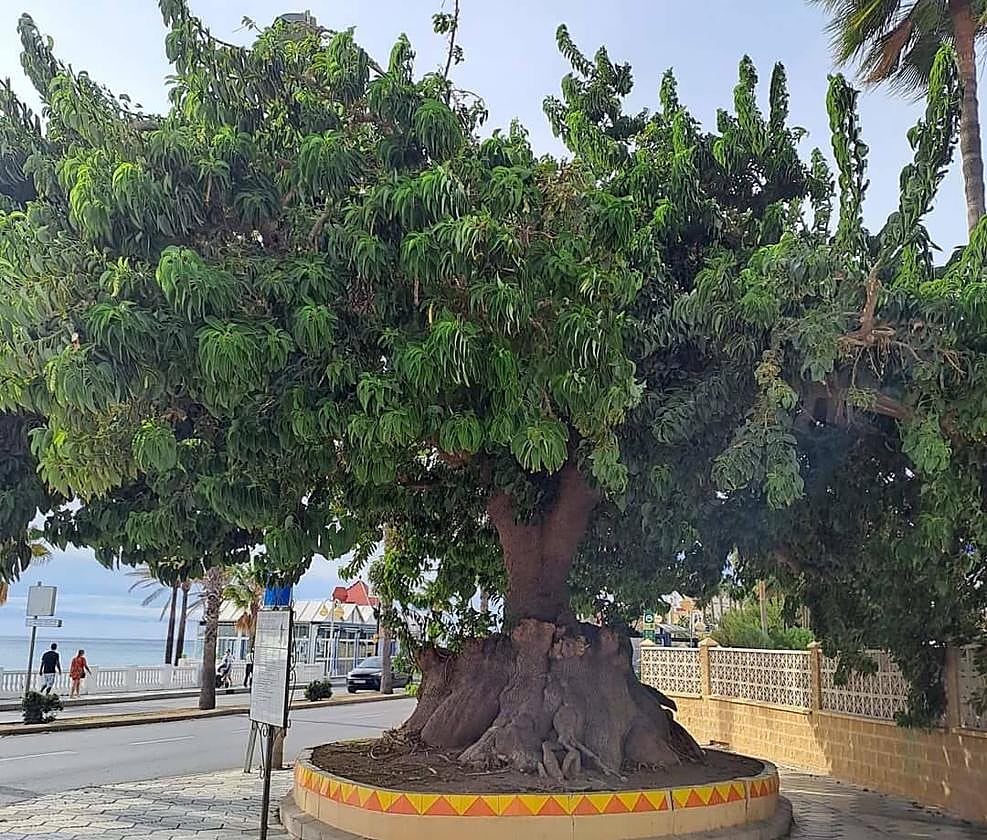

Malaga
It is an exotic looking, tree-like plant that can reach up to 15 metres tall with a crown 20m wide in ideal conditions. It is not strictly a tree, the 'wood' is soft and spongy and is designed to hold large quantities of water, it has no growth rings and is not of any use as a construction material.
The ombu can have several trunks sprouting out of an unusual, swollen bole, which makes it look like it's growing out of a small hill. There are male and female plants (dioecious) and both are needed to produce the greenish fruit. The small white flowers form on racemes and are inconspicuous.
The ripe berries (which resemble the fruits of pokeweed) were once used to make a red dye or ink. The young shoots were cooked as a vegetable but all parts are mildly toxic and consuming any part of this plant is not recommended.
Related article

Ombu is easy to grow and needs little care except for free-draining soil as it will rot if sat in water. Its enlarged bole means it can withstand periods of drought once established but it is best to give it a good soaking occasionally, once the soil has dried out. It can be planted in coastal gardens as it tolerates salty breezes.
Ombu can be propagated from seed sown as soon as it is ripe and is long-lived, up to 100 years in ideal conditions. It is a popular choice for Bonsai as the branches are easy to train.
If planted in the garden, keep it away from buildings as the roots of the ombu are very strong and can invade foundations.
Once it is well established it can withstand temperatures down to -7º but is best given protection in the winter.
![[]](http://static.vocstatic.com/voc26/latest/assets/images/favicon/surinenglish/apple-touch-icon-57x57.png)