
Politics
End in sight for ID checks and long queues of traffic on Gibraltar's land border with Spain
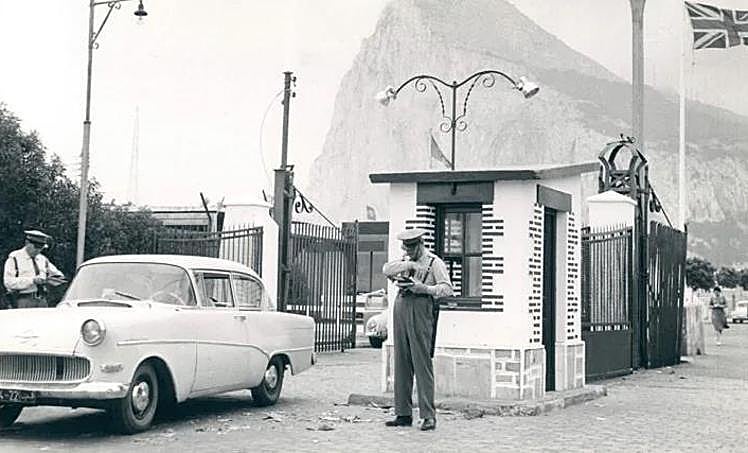
Closed in 1969 by order of General Franco and gradually reopened during the 1980s, the border has experienced decades of political tension, exhaustive controls and endless queues at the police checkpoints
M. Landeta
Cadiz
Locally known as 'La Verja', the fenced border separating Gibraltar from the Spanish town of La Línea de la Concepción, has witnessed a history of misunderstandings, diplomatic rapprochements and complex negotiations that now seem to be heading towards a definitive end.
The disappearance of this border now depends on the signing of the new treaty on the future of Gibraltar, the text of which is expected to be finalised this autumn and subsequently submitted for ratification by the European Parliament.
The next step is to put in writing the political agreement reached on 11 June on the Rock's new relationship with the European Union, a treaty that all parties hope to have ratified before the end of the year. If all deadlines are met, the agreement could be a reality in early 2026.
A bit of history
On 8 June 1969, the Franco regime ordered the closure of the fenced barrier and the stoppage of all communications (on foot and by road, air and sea). This decision lasted for years and had a strong social and economic impact on both sides of the border.
Franco intended to force London to negotiate the recovery of sovereignty over Gibraltar, which had been under British control for almost three centuries, ever since the signing of the Treaty of Utrecht in 1713 when Spain ceded Gibraltar to Britain "in full and entire ownership".
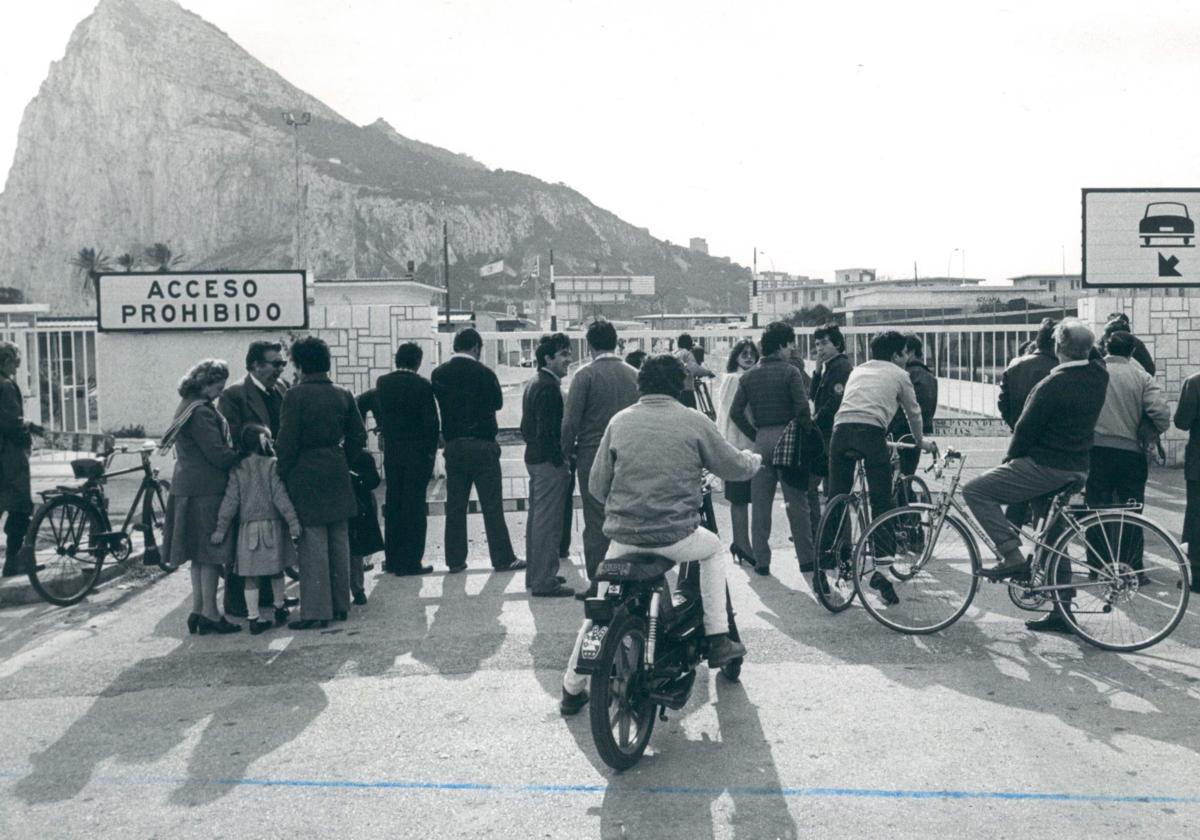
Since then, Spain has maintained its historical claim to the Rock and the UK has maintained that there will be no changes in sovereignty without the consent of the Gibraltarian people and that any agreement must be "without prejudice" to their stance on this matter. This principle has been reiterated in countless parliamentary debates and official government statements on both sides of the border.
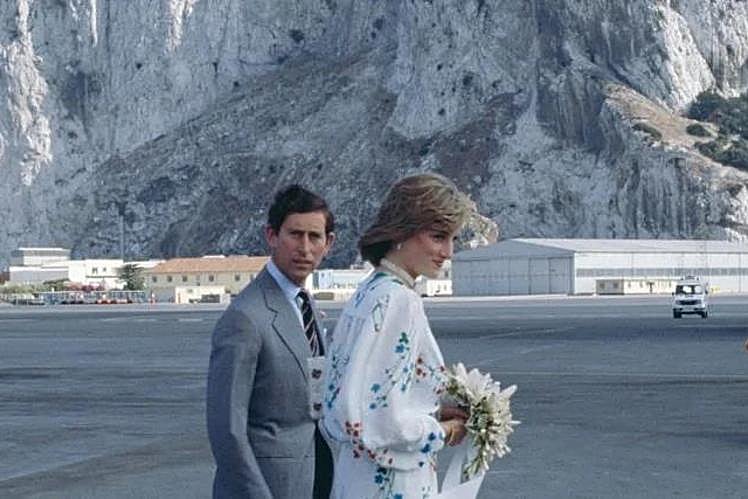
The tension reached one of its most notorious moments in 1981, when the royal newly-weds, Prince Charles and Diana, Princess of Wales, began their honeymoon in Gibraltar aboard the royal yacht Britannia, provoking an official Spanish boycott that highlighted the strength of the ongoing conflict. Thousands of families in the Campo de Gibraltar and the Rock suffered the direct consequences of that separation.
The visit, which took place when the border had remained closed since 1969, was interpreted in Spain as a political gesture of British assertion over the Rock. The Spanish government of Leopoldo Calvo-Sotelo responded with an official boycott amid a climate of strong diplomatic tension.
Barely a year later, on 14 December 1982, with Spain's fledgling democracy bedding down after the switchover on 23 February and Felipe González now Prime Minister in Madrid's Moncloa, Spain took its first step towards normalisation: La Verja was reopened to pedestrian traffic, albeit under very strict border controls. The reopening coincided with a time when Spain was finalising its entry into the European Economic Community.
This process culminated on 5 February 1985, when the border was fully reopened to road and commercial traffic, in compliance with the 1984 Brussels Declaration. This was a historic milestone that put an end to 16 years of almost total isolation. It allowed the resumption of economic and social links between Gibraltar and Spain's Campo de Gibraltar, although without resolving the underlying dispute over sovereignty.
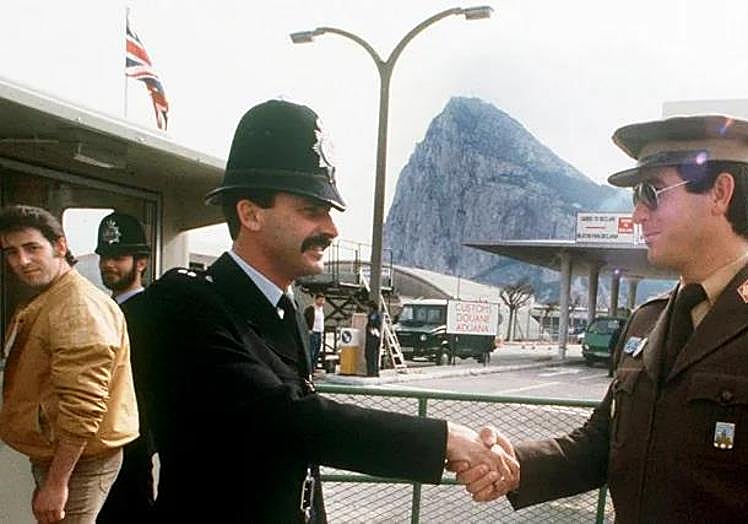
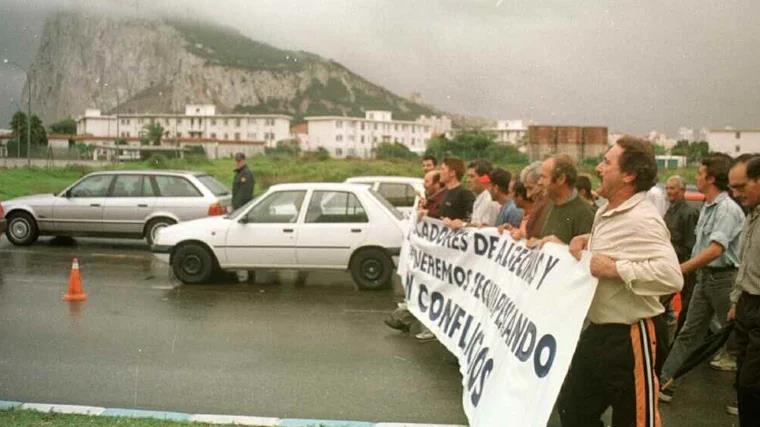
However, even with the border reopened, La Verja continued to be the scene of exhaustive border controls and frequent diplomatic tensions during the 1990s, with disputes over fishing, smuggling and the use of surrounding waters.
In 2002, the Spanish and British governments explored a formula for a type of shared sovereignty that was met with a resounding rejection by the Gibraltarians. In a referendum, 98.97% of voters were against this proposal. Four years later, in 2006, the Cordoba Agreement was inaugurated, bringing together Spain, the UK and Gibraltar in a "tripartite" forum for cooperation on practical issues.
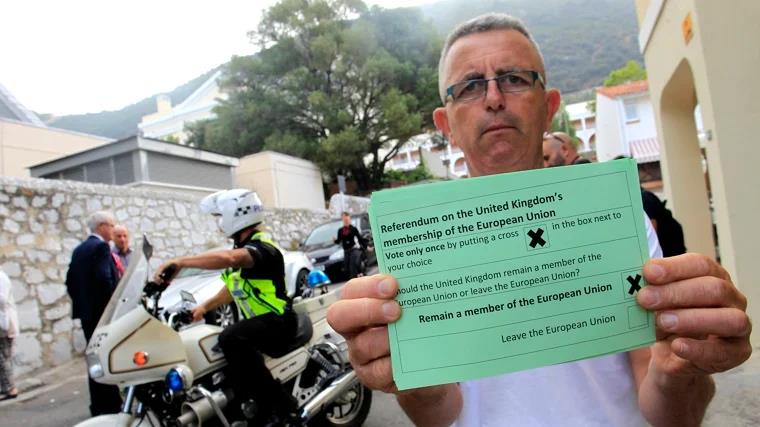
The big turning point came in 2016, when the Brexit referendum in the United Kingdom produced an almost unanimous result on the Rock: 96% of voters chose to remain in the European Union , aware of the importance of European mobility and integration for their local economy and daily lives. From this point on, the issue of the border came to the fore once again.
On 31 December 2020, Spain and the United Kingdom reached the so-called New Year's Eve Agreement, a political framework that proposed to eliminate border controls by moving them to be managed at Gibraltar's port and airport, to integrate the Rock into the Schengen area and for Spain to be the responsible state.
This roadmap has now brought us to the newest political agreement of 11 June 2025, reached between the European Union, the United Kingdom and Gibraltar, which lays the foundations for a definitive treaty: the end of controls at the border, the application of Schengen to the Rock, customs and tax cooperation and the express guarantee that the sovereignty issue will not be altered.

Shopping and working
Beyond diplomatic rhetoric, LaVerja, Gibraltar's 'fence', has shaped the daily life of thousands of people in the Campo de Gibraltar for decades. Every day, thousands of workers cross the border to earn a living on the Rock, making this border a real economic and social thermometer.
The daily hustle and bustle is not limited to work: for years it was common to cross to refuel, as it was cheaper in Gibraltar thanks to reduced taxes, or to purchase tobacco and alcohol at lower prices, products that fuelled intense cross-border trade and also smuggling, the subject of frequent police checks and a recurring source of friction between Madrid and London.
For many families in La Línea, the border has been both an income opportunity and an uncomfortable barrier that has conditioned their daily routine, with long queues, exhaustive checks and an ever-present political uncertainty.
Threecenturies after the Treaty of Utrecht and 56 years since the border was closed, the 'fence' is facing its historic demolition: La Línea and Gibraltar are closer than ever to living side-by-side without borders.
![[]](http://static.vocstatic.com/voc26/latest/assets/images/favicon/surinenglish/apple-touch-icon-57x57.png)