
Andalucía
The disasters that took their toll on Andalucía in 2026
Since January, the region has suffered the losses and devastation of the Adamuz train crash, the Grazalema precautionary evacuation and the Almeria fire
Antonio M. Romero
So far, 2026 has been an 'annus horribilis' for Andalucía.
Disasters are taking their toll on the region, starting with the Adamuz train accident (Cordoba) in January, followed by the unprecedented evacuation of the residents of Grazalema (Cadiz) due to the storms and floods in February and now the fire in Los Gallardos and Bédar (Almeria) that has claimed the lives of 13 people.
These three exceptional emergencies have tested the response capacity of the region and institutional coordination, in addition to having a significant emotional impact on thousands of Andalusians.
Related story
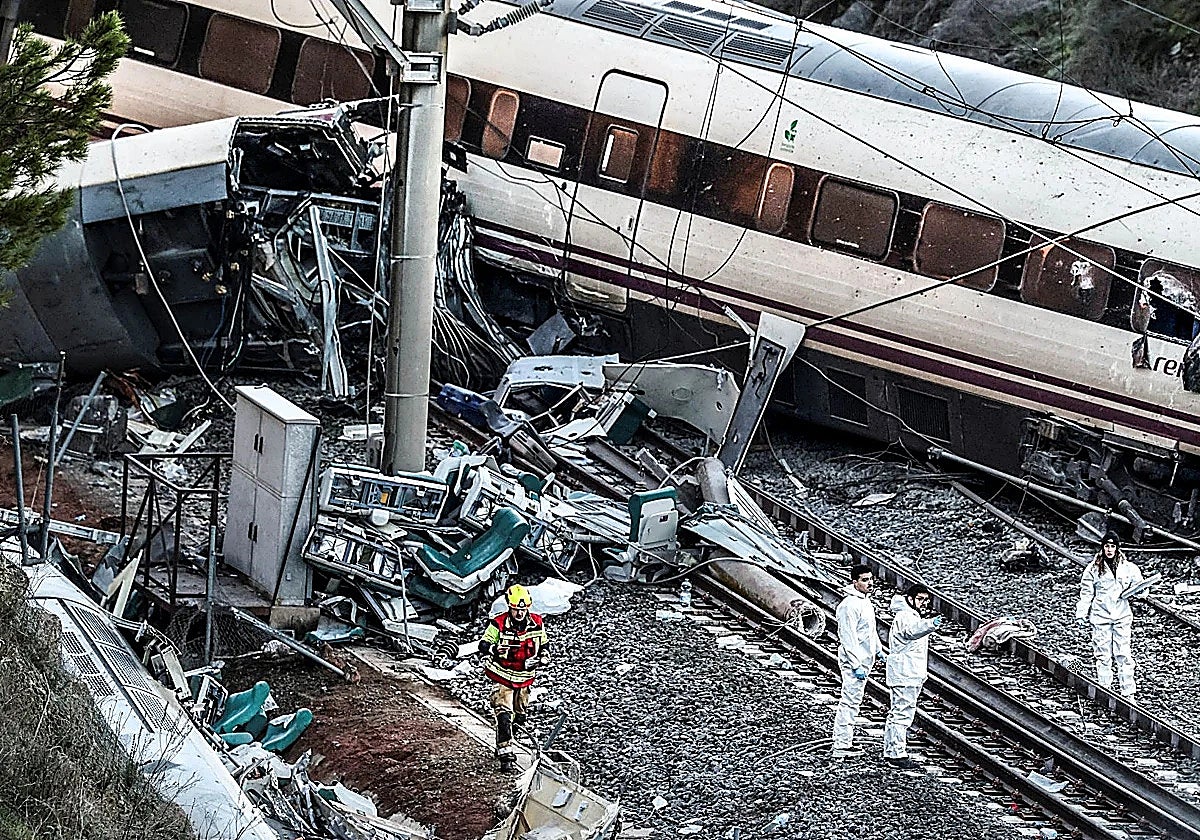
The chronicle of this tragic story begins in the evening of Sunday, 18 January, when two trains collided near the town of Adamuz in Cordoba province. At that fateful hour, an Iryo train that had departed from Malaga bound for Madrid derailed, crossing onto the opposite track and colliding with an Alvia train that had left the Spanish capital and was heading towards Huelva.
The magnitude of the tragedy grew as the hours passed and the death toll reached 46 people (29 of them from the province of Huelva). Some of the 152 injured people remained hospitalised for weeks due to the severity of their injuries.
The Adamuz accident became the worst in the history of high-speed rail in Spain, surpassing the Angrois crash near Santiago de Compostela on 24 July 2013, which resulted in 79 deaths but involved an Alvia train (not a high-speed train).
The preliminary findings of the railway accident investigation commission pointed to a fracture in the rail and a weld as the cause of the Cordoba accident.
The accident caused the high-speed rail line between Andalucía and Madrid to be closed for a month. In the case of Malaga, the closure was delayed for a couple more months, until the end of April, although with a partial reopening. Normal service on the line will not be restored until the end of the year due to the landslide in Álora.
Andalucía was still trying to recover from the impact of this accident when on 5 February the regional government decreed the evacuation of Grazalema (1,977 inhabitants) as a result of the heavy rains of storm Leonardo.
The regional government adopted the unprecedented preventive measure of evacuating a whole village due to the possibility of landslides caused by the large amount of accumulated water.
Ten days away from home
The abundant rains left a lot of damage in Andalucía. Residents saw water gushing out of electrical outlets. Many left their homes with only a few belongings, unsure of what awaited them upon their return.
The evacuees stayed either with family members and friends or at the shelters in the town of Ronda, where they remained for ten days.
During those early days of February, there were also evacuations (around 11,000 across the region) and flooding in other parts of Andalucía, such as Malaga, Cadiz, Granada and Jaén.
During that same episode of devastating rains, a woman lost her life in the Malaga town of Sayalonga after being swept away by the powerful surge of the Turvilla river.
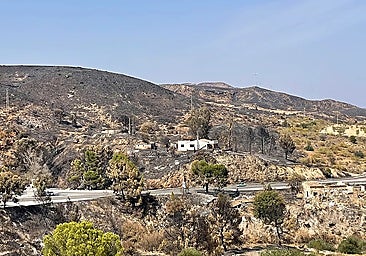
The latest tragedy began to unfold on Thursday evening when a devastating fire broke out, ravaging several thousand hectares (some 7,000 according to data from the regional governmen) in the towns of Los Gallardos and Bédar in Almeria.
The fire has claimed 13 lives, with most of the victims being British and Belgian. Four people remain hospitalised and seven are missing. The regional government also organised the precautionary evacuation of thousands of residents.
The death toll makes this the third most devastating fire in Spain, following the Lloret de Mar (Girona) tragedy in 1979 (21 victims) and the one in La Gomera in 1984 (20 victims).
Explore the main Andalucía regional news section
![[]](http://static.vocstatic.com/voc26/latest/assets/images/favicon/surinenglish/apple-touch-icon-57x57.png)