
Jet skis
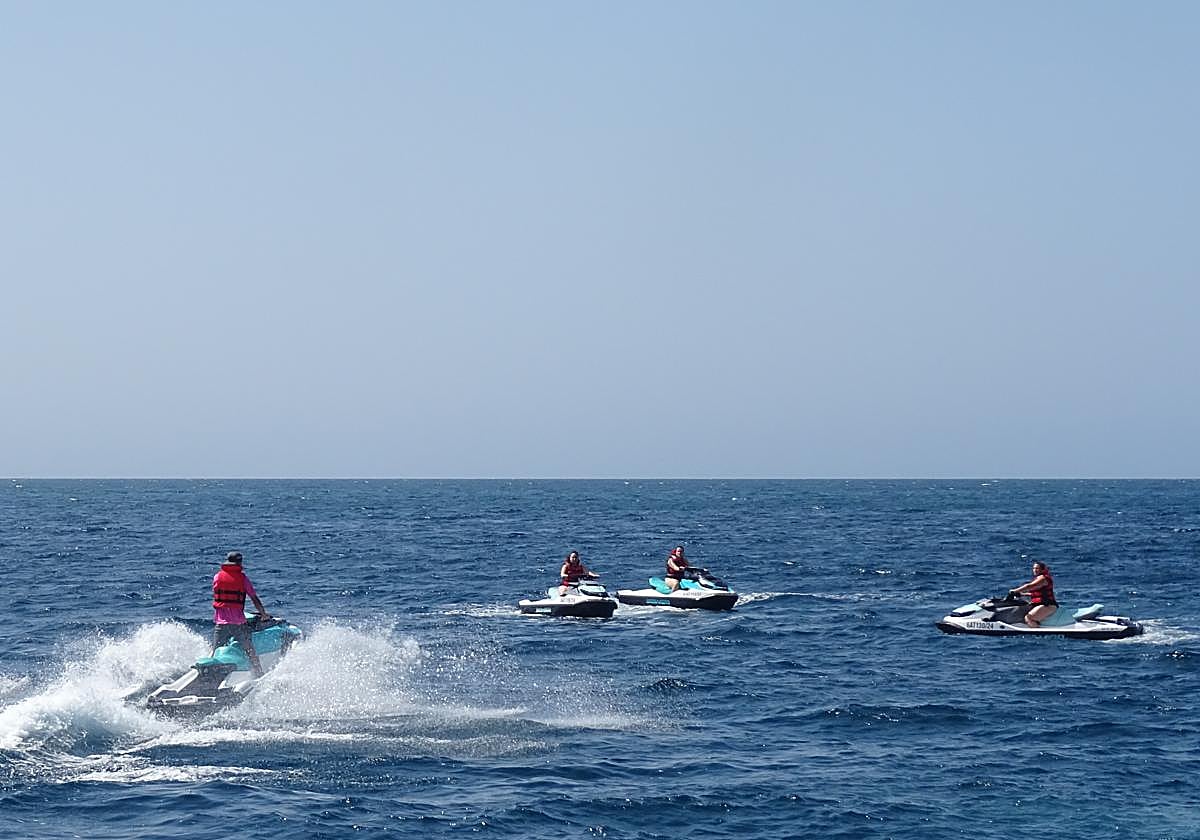
Restrictions on jet skis to come into force in Almeria's Cabo de Gata Natural Park
The Junta de Andalucía considers that the protected area "is not an appropriate space" and poses "a risk of collisions with surface-swimming species"
E. P.
Almería
The Andalusian regional government is finalising the details of a resolution restricting the use of jet skis in Cabo de Gata Natural Park in Almeria province, ahead opf its publication in the Official Bulletin of the Andalusian Regional Government (BOJA).
The measure, which has been under consideration since last year, has been subject to analysis and debate by tourism authorities and the governing board of the Cabo de Gata Natural Park, held on 23 April and 13 June of this year respectively, confirmed that Cabo de Gata-Níjar Natural Park will join other protected areas in Andalucía whose regulations prohibit the use of jet skis. These spaces include Maro-Cerro Gordo Natural Park on the border between Malaga and Granada provinces, according to the Junta de Andalucía.
Manuel de la Torre, provincial spokesperson for sustainability and environment, said, "We believe that the coastline of the natural park is not the right place for jet skis." He went on to say, "The noise pollution they generate has an impact on the fauna and also annoys visitors who are looking for a space of maximum environmental quality, and the high speed they reach means a risk of collisions with species that swim on the surface and can affect the safety of users of the coast."
According to Salvador Parra, director of the natural park, "This measure, which we are adopting after a period of analysis and work in the participatory bodies of the natural area, is the continuation of the work that has been carried out in recent years" to ensure that "tourist activities linked to the coastal environment are compatible with the conservation of the ecological and landscape values of the park".
In 2017 the regulatory criteria for active tourism activities established the need for authorisation during the summer period for recreational activities carried out by groups of more than five canoeists. Subsequently, in 2018 motorboat activity was regulated and since 2021 and with the aim of conserving protected coastal and marine habitats and safeguarding the safety of visitors during the summer period, the regional government has marked out eleven beaches with more than a hundred buoys to enforce the temporary restriction of access for sailing and motorboats.
Proliferation of jet skis
In recent years the use of jet skis has proliferated and the high speed at which they travel, the pollution they generate and in many cases, the imprudence with which they approach unmarked swimming areas, have negative consequences for the natural environment, pose a risk of diminishing the ecological, scenic and geological value of the protected area and threaten the public and free use the sea and coastline for everybody.
Cabo de Gata-Níjar Natural Park is home to more than 1,350 marine species, many of which are legally protected and therefore require special attention from the environmental administrations. The area is also recognised as a 'Habitat of Community Interest' that led to the designation of Cabo de Gata-Níjar as a special area of conservation in 2012.
In 2001, the importance of the marine ecosystem of the Cabo de Gata-Níjar Natural Park was recognised by the United Nations Environment Programme as a Specially Protected Area of Mediterranean Importance (SPAMI).
In recognition, not only of the natural and scenic values it contains, but also of the population of its territory and its socio-economic development compatible with the conservation of natural resources, the UNESCO Man and Biosphere Programme declared Cabo de Gata-Níjar a Biosphere Reserve in 1997.
With its inclusion in the list of UNESCO Global Geoparks in 2015, Cabo de Gata-Níjar Natural Park has become one of the most internationally recognised protected areas, not only in Spain, but also at European and even global level.
![[]](http://static.vocstatic.com/voc26/latest/assets/images/favicon/surinenglish/apple-touch-icon-57x57.png)