
Disaster planning
Andalucía strengthens its healthcare response to disasters with a comprehensive plan
The measure brings together out-of-hospital, hospital and psychological care to enable a swift and effective response to 18 potential risks

Sevilla
The Andalusian regional government has put forward its new roadmap to prevent chaos from taking hold of the healthcare system when the alarm is raised ... over a major disaster.
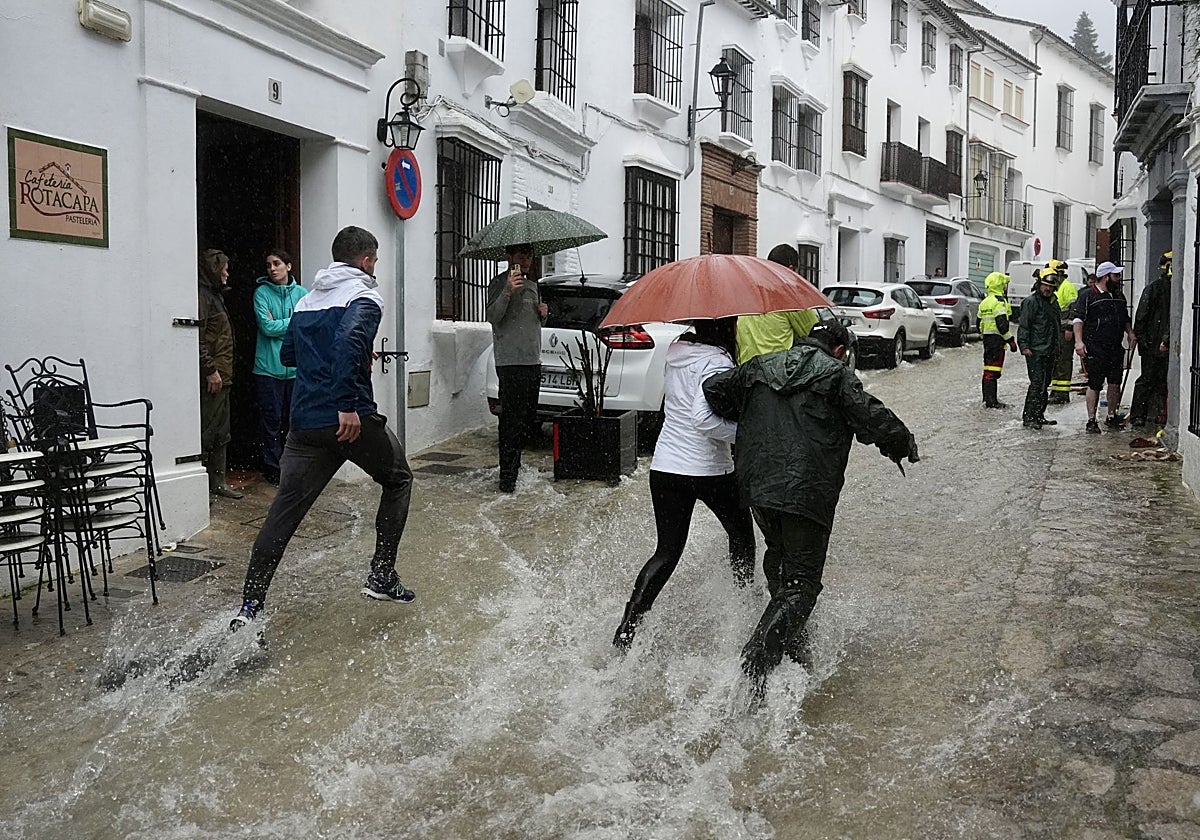
The governing council’s approval of the Andalusian sectoral plan for collective health emergencies (PSSECA) comes at a particularly significant time. It has been approved in the midst of a particularly difficult year for the region, which has been hit hard by the tragedy of the Adamuz train crash, torrential downpours and devastating floods, and ravenous wildfires that have pushed the region’s infrastructure to its limits.
Behind this move lie figures that explain the regional government’s urgency to refine its protocols. As revealed by the regional minister for health, Antonio Sanz, the pressure on emergency services has soared relentlessly.
While throughout the whole of 2025, professionals from the Andalusian health service (SAS) responded to 73 mass emergencies, the figures for 2026 are staggering: between January and September, 95 critical situations were recorded. That is 22 more disasters in just nine months - a stark reality that has made it necessary to restructure the healthcare response capacity on the ground.
The new plan, drawn up jointly by the regional ministry of the presidency, health and emergencies and the SAS, aims to ensure that the healthcare system runs like clockwork when the usual resources are overwhelmed.
Following a meeting in Seville with senior managers and frontline healthcare workers, Sanz made it clear that the aim is to tackle the crisis on every possible front. The strategy is not limited to the transfer of the injured: it comprehensively covers out-of-hospital care, the reorganisation within healthcare centres, public health alerts and, for the first time as a key component, psychological support for victims and their families from the very outset.
In the first nine months of 2026, there were 22 more emergency situations than in the whole of 2025
The framework forms part of the Andalusian civil protection territorial emergency plan (PTEAnd), which was updated last March. The idea is simple but vital: that GPs, hospitals and psychologists speak exactly the same language as the 112 emergency service, the fire service, rescue teams and the police. The document sets out in black and white up to 18 extreme-risk scenarios capable of putting the population in jeopardy: from flash floods and wildfires to chemical spills, nuclear or biological (NBCR) emergencies, epidemics, widespread disruption caused by cyber-attacks, or deliberate attacks resulting in multiple casualties.
The minister pointed out that the race against time does not begin in the operating theatre, but in local A&E departments and in pre-hospital care. These outlying emergency centres act as a crucial buffer to prevent the A&E departments of large hospitals from becoming overwhelmed all at once when there is a mass influx of casualties.
Tailored response
One of the key new features of the document is that it avoids one-size-fits-all solutions: the response is tailored to the scale of the disaster.
The plan provides for a modular, tiered system that allows for adjustments to be made as the incident unfolds. If the incident extends beyond the local area, the regional government activates automatic mechanisms to mobilise doctors, ambulances and supplies from other Andalusian provinces or, if the severity of the situation so requires, to request support from other autonomous communities and the central government itself.
Related story
-

Héctor Barbotta
In the chaos of an emergency, the chain of command becomes clear. The first doctor to arrive at the scene of the disaster will provisionally take charge of the out-of-hospital medical command, organising triage and first aid until the 061 specialists arrive, at which point they will take the reins on the ground. At the same time, hospitals will activate the hospital external emergency plan (PEX), a crisis protocol that frees up beds, reorganises operating theatres and mobilises on-call staff to receive waves of casualties without losing control.
The Andalusian strategy also aims to ensure that efforts do not cease once the emergency appears to have passed. To this end, it includes a recovery phase focused on restoring basic care services in the affected areas and providing mental health support for both those affected and the exhausted professionals themselves. For scenarios involving chemical or biological risks, the protocol sets out strict rules, including pre-decontamination areas and special protective equipment to prevent contamination from reaching healthcare centres.
Drills
Sanz placed particular emphasis on the fact that effectiveness on the day of a disaster is determined months in advance during training exercises. Andalucía has carried out or scheduled 28 drills so far this year, testing coordination in the event of fires at airports and in industrial areas. The real test came on 10 November in Granada with the ‘Respuesta26’ exercise, a full-scale earthquake drill that mobilised more than 200 people in a realistic seismic scenario.
With a comprehensive review scheduled every five years, the regional government is confident that it has put in place a system capable of withstanding future crises. Because, as the minister himself has made clear, when a disaster strikes, every second counts, but what really makes the difference between life and death is knowing that there is a team behind the scenes ready to respond.
