
Emergency response
Marbella tests disaster response in major earthquake and tsunami drill
Up to 40 emergency personnel deployed air, land,and sea assets to simulate a beach evacuation following a seaquake alert

Marbella
At a glance
-
Emergency Exercise: Marbella Town Council has staged a live earthquake and tsunami response drill at El Faro beach to test rapid deployment and inter-service coordination.
-
Multi-Agency Deployment: Forty personnel from six blue-light and rescue services took part, using drones, jet skis, rescue boats, ambulances, and quad bikes.
-
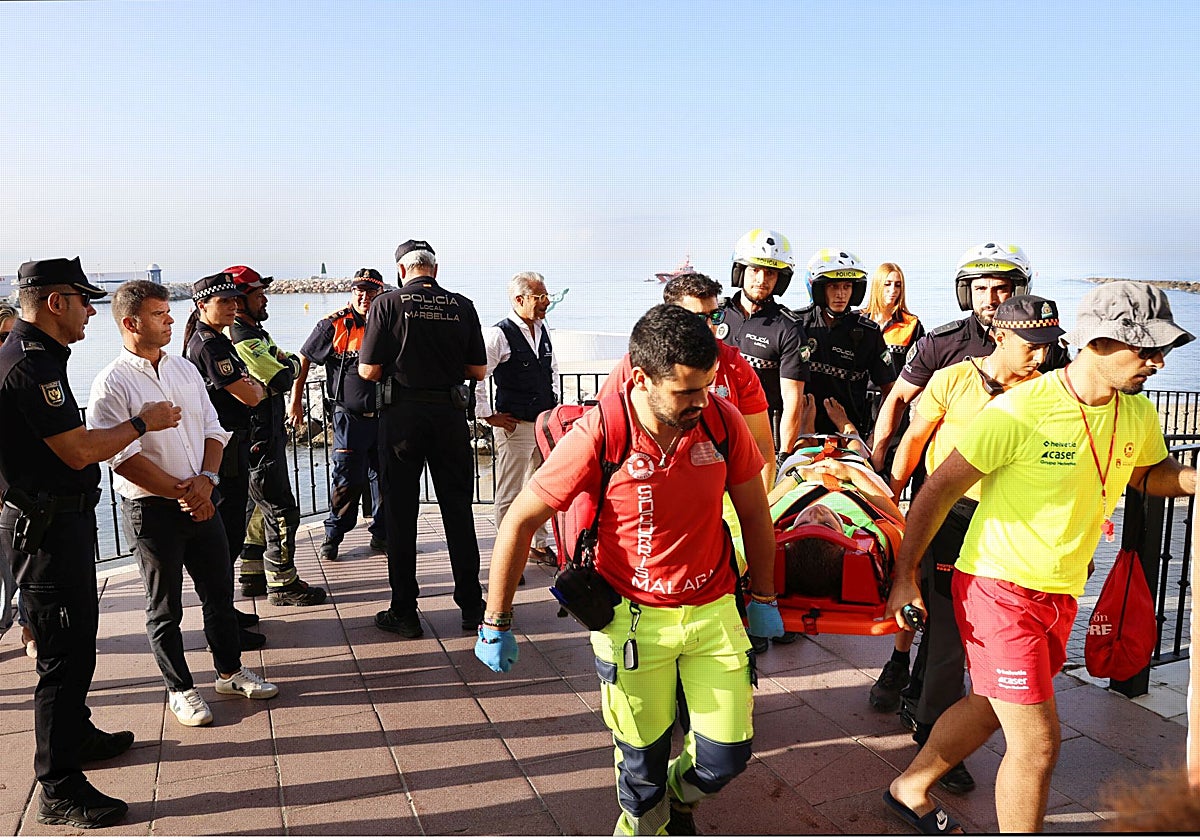
Public Evacuation: Emergency crews treated one injured victim on the shore and successfully evacuated 20 people from the water to safe ground along the Duque de Ahumada promenade.
-
Low Risk, Critical Timing: Although Marbella's tsunami risk remains "very low," municipal studies warn that wave arrival times range from 522 seconds at Calahonda to 693 seconds at Guadalmina.
The telephone rings in Marbella. It is a call from the 112 emergency coordination centre, and the alert leaves no doubt as to the urgency ... of the situation: there has been an earthquake and there is a risk of a tsunami at El Faro beach.
A response plan is immediately activated, involving the deployment of a forward command post – the temporary control centre that mobilises the emergency services and coordinates the response to disasters or fires in real time. This is how the response drill organised by Marbella council began, with the aim of assessing the services’ response to an event of this nature.
Emergency services in Marbella were placed on high alert during a major live-action drill simulating an earthquake and subsequent tsunami along the Costa del Sol coastline.
The exercise began with an urgent emergency call from Andalucia’s 112 coordination centre, warning of a seaquake and an imminent tsunami threat at El Faro beach. Municipal authorities immediately activated Marbella's forward command post - a mobile control unit designed to direct emergency services and coordinate disaster response in real time.
The operation served as a practical test for two local emergency blueprints: the Local Action Plan for Tsunami Risk and the Local Action Plan for Seismic Risk, both approved in March 2026 by the standing committee of Andalucia’s Civil Protection service.
Air, land and sea deployment
A total of 40 personnel from the Local Police, National Police, Fire Service, Civil Protection, Lifeguard Service, and Maritime Rescue were deployed to the beach area.
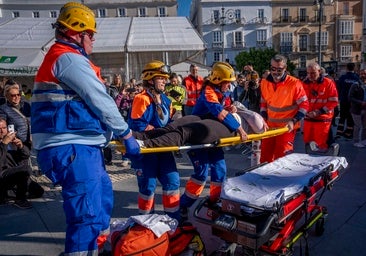
Rescue teams used a wide range of specialized equipment during the exercise, including aerial drones, quad bikes, land ambulances, rescue boats, and jet skis.
Related story
-
Emergency services
José Luis Piedra
During the drill, paramedics treated one 'injured' victim directly on the sand while rescue craft retrieved 20 people from the sea. Emergency crews then escorted them along pre-planned evacuation routes to the elevated Duque de Ahumada promenade, designated as a secure high-ground assembly point for the public.
According to municipal risk assessments conducted prior to the approval of Marbella's emergency plans, the overall risk of a tsunami striking the municipality is classified as "very low."
However, coastal studies confirm that a risk exists nonetheless, with any potential seismic waves expected to reach heights between one and three metres.
The eastern coast of Marbella contains the highest density of exposed buildings, with Alicate, Real de Zaragoza, and Las Chapas identified as the most vulnerable shorelines.
Protocols and coordination
Following the completion of the exercise, participating emergency heads held a joint debrief to analyse response times, radio communications, and inter-service coordination.
José Eduardo Díaz, Marbella’s councillor for public safety, attended the exercise alongside beaches councillor Diego López. He stressed the necessity of practical testing in real-world conditions.
"This exercise enabled us to test on the ground how the protocols work, the coordination between the various emergency services, and response times in a real-life scenario with members of the public present on the beach," Councillor Díaz said.
Francisco Javier Flores, head of Marbella Civil Protection, added that the primary goal was to ensure seamless coordination across all participating blue-light services during a sudden natural disaster.
![[]](http://static.vocstatic.com/voc26/latest/assets/images/favicon/surinenglish/apple-touch-icon-57x57.png)