
Toledo train crash 2026
Toledo train crash: Guardia Civil investigate whether there was pressure to move trains and avoid further delays behind human error
Spain's railway accident investigators have identified human errors, excessive workloads and poor instructions in three previous incidents, while unions have spent five years warning of pressure to keep trains running when safety systems fail
Melchor Sáiz-Pardo
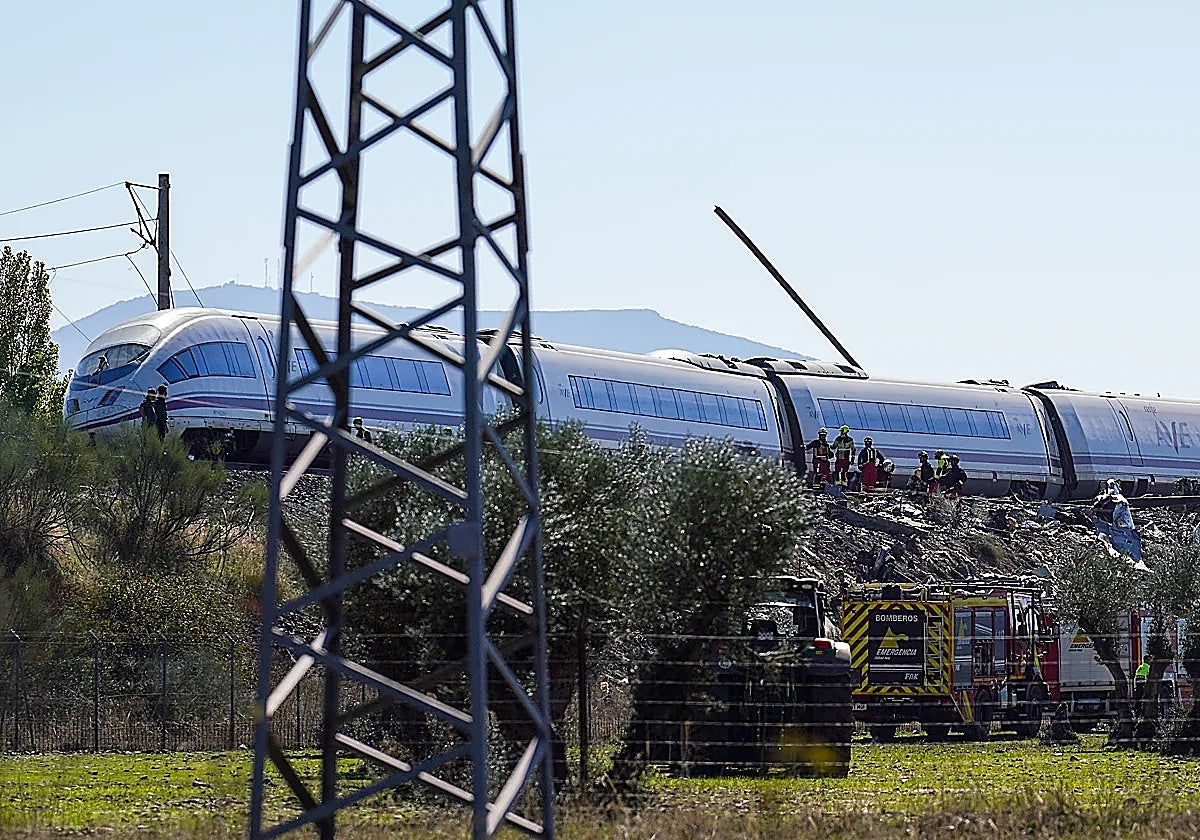
Spain's Transport Minister Óscar Puente has stated with certainty that the cause of the train crash in Urda (Toledo) is human error. The Adif controller at Madrid-Puerta de Atocha's CRC (control and regulation centre) authorised the AVE train to move forward at normal speed while another train stood ahead of it.
The minister described the controller's decision, which he claims the worker made on his own initiative, as "inexplicable". According to Puente, that authorisation alone led to the tragedy, which has so far claimed 68 lives. Investigators, however, have many more questions than the minister has raised.
The Guardia Civil and the CIAF (railway accident investigation commission) interrogated the controller on Wednesday, the day of the accident. Sources from both organisations have told Sur that the investigation remains open.
One of the key questions investigators want to answer is why an experienced train controller authorised such a manoeuvre without even requiring the train to proceed under the so-called "marcha a la vista" operating rule. This procedure applies when an obstacle or hazard may lie ahead, requiring the driver to proceed with particular caution.
Did the controller act on his own initiative? Were there instructions, pressure or other circumstances that might explain the decision? Unions have spent years warning that railway staff face pressure to keep trains moving when protection systems such as LZB fail or when block systems and signals break down. Such situations require alternative procedures, including the BSL, as well as additional safety checks.
"The control centre made the decision to resume running under circumstances that, from our point of view, are inexplicable," Peunte said. The minister also stressed that the controller had experience and support, which, in his view, made the incident even harder to understand.
Six trains brought to a halt
Puente provided two details that judicial police are now examining closely. First, he said the situation at Atocha had become extremely tense because an LZB system failure had automatically stopped six trains along a stretch of just over 60 kilometres.
Second, he described an especially revealing exchange. Another train driver had also received an instruction to resume normal running, but challenged the control centre: "It can't be normal running. It has to be 'marcha vista'." The controller acknowledged the mistake and corrected the instruction: "Oh, yes, 'marcha vista'." The same precaution never reached the AVE train that crashed.
Puente stated that the incident was exceptional and unprecedented. Yet the Guardia Civil are examining several strikingly similar cases.
At least three official railway accident investigations have identified safety failures linked to human decisions, omitted checks, excessive workloads or inadequate instructions. They add to a series of union complaints, some made very recently, warning of pressure to keep trains running even when safety systems fail.
One of the closest parallels to the Urda crash occurred on 28 March 2024 on the Valladolid-León line. Semaf (Spanish train drivers' union) accused Adif of continuing to send trains along a 35-kilometre stretch despite a failure in the automatic block system and signals that remained permanently red.
Between Santas Martas, El Burgo Ranero and Sahagún, drivers had to stop, request authorisation and proceed under restrictive conditions. Despite the ongoing fault, trains continued to depart without the telephone block system that Semaf considered necessary to maintain safe distances between them.
The union described this approach as "exporting risk", arguing that it transferred responsibility to drivers that safety systems would normally handle. It also reported "commercial pressure" while defending a driver who had decided to end his shift after reaching the legal limit for driving time. The union called for an audit and for those responsible to be held accountable.
The CIAF's investigations reveal even more troubling precedents. On 8 February 2019, two trains collided head-on near Castellgalí, in Barcelona province, killing a train driver. Investigators found that certain controllers had turned exceptional operating procedures that bypassed mandatory checks into routine practice.
When the CIAF reviewed movements before the crash, it identified nine irregular movements among the 12 departures examined. Controllers had also interpreted a correct indication on their screens, showing that the track was occupied, as a false signal. Internal inspections had failed to identify or correct these practices.
In its submissions to the investigation, Semaf complained of the "usual tensions and time pressure" that, according to the union, Rodalies (Catalan rail) drivers faced when working with degraded safety systems. The union linked those conditions to the normalisation of exceptional procedures, although the CIAF did not include pressure among its findings on the causes of the crash.
Another incident occurred in Mataró on 20 April 2019. A storm-related fault forced controllers to manage train movements while signals remained red. One controller authorised a train to proceed along a route that had not been set correctly, creating a risk of collision.
The driver was proceeding on sight, noticed that the points were incorrectly positioned and managed to stop the train. The CIAF found that the faults had significantly increased workloads and highlighted a shortage of staff and inadequate procedures for dealing with recurring failures in degraded operating conditions.
In Xeraco, Valencia province, on 4 March 2020, another technical failure led to an incorrect movement authorisation. A centralised control operator allowed a train to depart without correctly establishing the block system while another train travelled in the opposite direction. The operator spotted the problem and managed to order the train to stop.
The CIAF identified human error as the direct cause, but also pointed to ambiguous instructions and shortcomings in the coordination of automatic systems. It recommended clarifying instructions and changing procedures to prevent exceptional situations from creating further risks.
Warnings this October
Union warnings continued almost until the eve of the Urda disaster. On 21 October, just seven days before the crash, the SCF (railway traffic controllers' union) wrote to Adif and the state railway safety agency to complain that certain operating instructions placed responsibility on workers to compensate for technical limitations in signalling interlocking systems.
The union was referring to instructions in the north-eastern and north-western regions that, in its view, left too many safety decisions to individual staff members. The SCF called for train crossings to be prohibited at the stations concerned until the instructions had undergone a review.
The union also challenged the application of the so-called "just safety culture", which requires investigators to examine technical and organisational factors before assigning personal blame. It complained that Adif had launched disciplinary proceedings against controllers over human errors or lapses without adequately assessing their working conditions.
The complaints went back further. In December 2025, the SCF rejected Adif's annual safety plan for 2026 because, it said, the document ignored proposals to reduce workloads at control centres and review procedures linked to signalling failures identified in 2024 and 2025.
Working under 'constant pressure'
On 23 January 2026, the general works council sent a letter to Adif's president about working conditions in its control centres. It warned of "constant pressure" on staff responsible for critical decisions and called for additional personnel to reduce risks.
The SCF illustrated the problem with one example: a controller had been required to transmit 104 formal railway messages during a single shift. While handling calls and writing up communications, the union warned, the worker also had to monitor screens showing train positions and movements.
It was one of these control centres that Puente identified as the starting point of the Urda disaster. According to his reconstruction, a computer failure at around 8.30am knocked out LZB, the system that continuously monitors train movements and can automatically apply the brakes.
Six trains came to a halt along a stretch of approximately 63 kilometres. The protection systems had worked correctly up to that point. The problem arose when the Atocha control centre decided to authorise trains to resume running.
At 8.36am, according to the sequence of events outlined by the minister, Renfe's AVE train received permission to resume normal running. Just 17 minutes later, it ran into the stationary Iryo train ahead. Puente said there had been enough time to spot and correct the mistake.
Running under restricted conditions
When the LZB fails, trains can continue operating under an alternative protection regime known as the BSL, provided they meet the regulatory requirements. The automatic system no longer continuously monitors the train, making signals, checks that the track is clear and movement authorisations from controllers especially important.
The 'marcha vista' rule requires the driver to travel slowly enough to stop if any obstacle appears ahead. Under the circumstances Puente described, the train should have been limited to 40 kilometres per hour. The authorisation to resume normal running allowed it to travel without that precaution, even though another train remained stopped in front of it.
Investigators must now reconstruct communications between the control centre and the trains, examine records of the system failure, establish which checks staff carried out and determine what instructions the controller received. They must also examine the working conditions at the time and establish whether anyone urged staff to restore normal traffic more quickly after the system failed.
Access the broad Spain national news archive
