
Barcelona
The Sagrada Família: God, Gaudí and gobs of tourists
In 1926, Catalan architect Antoni Gaudí passed away in a Barcelona hospital after being hit by a tram, leaving behind his unfinished magnus opus, the Sagrada Família. One hundred years later, the church is still not finished, but attracts millions of visitors every year
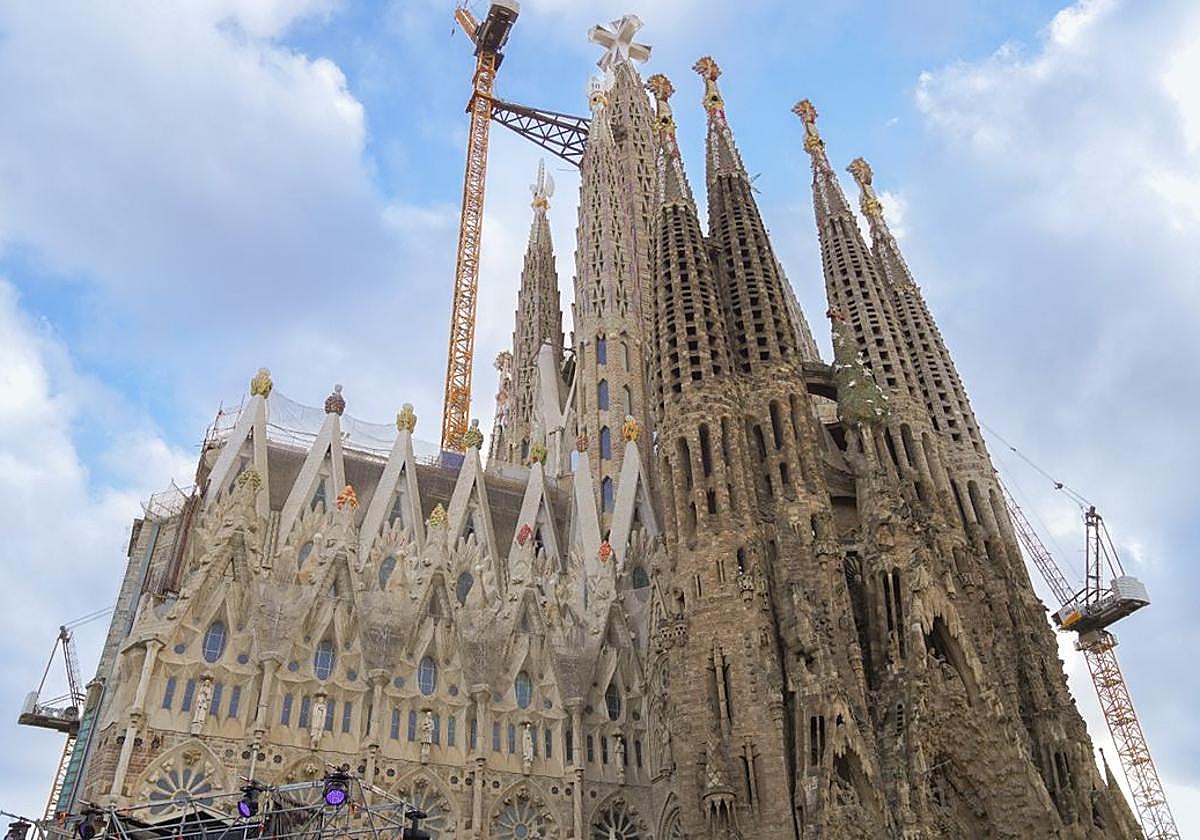
Jan-Uwe Ronneburger, DPA
It's been 100 years since Spain's most famous architect was hit by a tram while on his way to church.
No one initially wanted to help the badly injured man because he was poorly dressed and passersby thought he was a beggar.
Three days later, Antoni Gaudí died on 10 June 1926 in a Barcelona hospital for the poor at the age of 73, leaving his monumental work, the Sagrada Familia, only 15% complete. The cornerstone for the church was laid in 1882. The crypt and the outer wall of the apse had been built, the Nativity façade was partly and four towers half-finished.
Related story
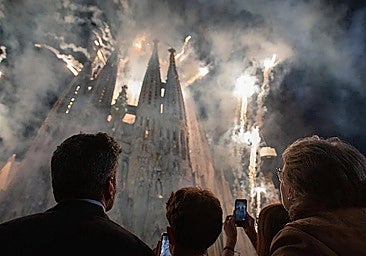
When asked about when the house of worship would be completed, Gaudí had said: "My client is in no hurry."
That still applies today, as the completion of the monumental structure is not expected until the 2030s.
Spanish Civil War devastating for the Sagrada Familia
After Gaudí's death, construction could only be continued with great difficulty. In the Spanish Civil War that broke out in 1936, his studio was destroyed and the building plans, plaster models and drawings were largely lost.
Architects who had worked with the Catalan helped reconstruct the designs from fragments of the models and photographs, a task made easier by Gaudí's mathematically determined designs.
Gaudí avoided the straight line because, he said, according to tradition, "it belongs to man," while "the curved line belongs to God." Accordingly, the columns inside the church resemble trees that branch out towards the ceiling and form a stone forest.
The light from the colourful stained-glass windows moves from green for birth to red, which symbolised suffering and death, he said. Gaudí spoke of "mystical light". Despite the reference to nature, the spaces sometimes seem otherworldly. The interior of the Mary Spire, for example, could serve as the backdrop for a science-fiction film.
The church, located in central Barcelona, is financed solely through donations and entrance fees. In 2025, nearly 4.9 million visitors generated revenue of 134.5 million euros. This makes the basilica Spain's most visited building.
Tourists: A blessing and a curse
Lace travelled from Vietnam with his wife and daughter to see the acclaimed structure.
"We are Catholic and are here mainly for the magnificent architecture but also for religious reasons," the young man says.
Jessica from the US state of Tennessee sees it similarly. The basilica is breathtaking, she says.
But success has its price. The neighbourhood around the cathedral is choking under masses of tourists. Rents rise, residents are pushed out, housing gives way to tourist accommodation and small businesses are converted into souvenir shops.
"Right now people are buying more than usual," says Alex from Nepal, who is standing at the entrance to his shop, which is filled mainly with Gaudí and Barcelona knick-knacks made in China.
Carmen, however, is annoyed.
"I need half an hour to get the few blocks to a supermarket, there are so many tourists constantly about," complains the saleswoman at a small shop for Mexican food.
George from Romania, however, rarely seems in a hurry. He sits on the pavement in front of a cafe, a few coins in a white paper cup in front of his feet and the basilica across the street. "If I'm lucky, I make €7 a day," says the man, who sleeps on cardboard in a park. "People are giving less at the moment, it's a crisis," he adds with a shrug.
No longer a church for the poor
Gaudí originally envisaged the church as a "Bible in stone" providing comfort for workers and their families, who were often unable to read and who toiled under unspeakable conditions during industrialisation. But this idea seems to have long been forgotten.
Tickets from 26 euros have to be bought around two weeks in advance and anyone who wants to attend the free masses in the church would be better off queuing a few hours earlier.
"As a child I was often in the Sagrada Familia with my parents but today that is far too difficult because of all the tourists," complains Nuria, a 55-year-old Catalan woman who lives near Barcelona.
Cross made in Germany makes it world's tallest church
In February, the Jesus tower at the centre of the basilica reached its final height of 172.50 metres with the installation of a walkable double cross.
Made of steel and glass, the structure was manufactured in Germany. Its addition made the Sagrada Família the highest church in the world, a title previously held by the Ulmer Münster church in south-west Germany.
Related story
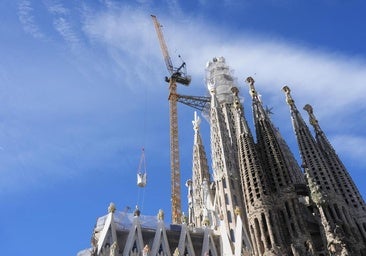
The almost 100-tonne cross is expected to be accessible to the public from 2027 and will then allow a breathtaking panoramic view over the Mediterranean metropolis.
Even Pope Leo XIV, who visited the church in June to commemorate the 100th anniversary of Gaudí's death, was not allowed up.
The motto of his visit - "Raise Your Gaze" - will be, at least for the near future, not just be a reference to God.
![[]](http://static.vocstatic.com/voc26/latest/assets/images/favicon/surinenglish/apple-touch-icon-57x57.png)