
Ceuta migration crisis
Tension in Ceuta during migrant transfer from beaches to port reception centre
The Guardia Civil began the operation at 6.30am, but they needed National Police reinforcements after the crowd began running
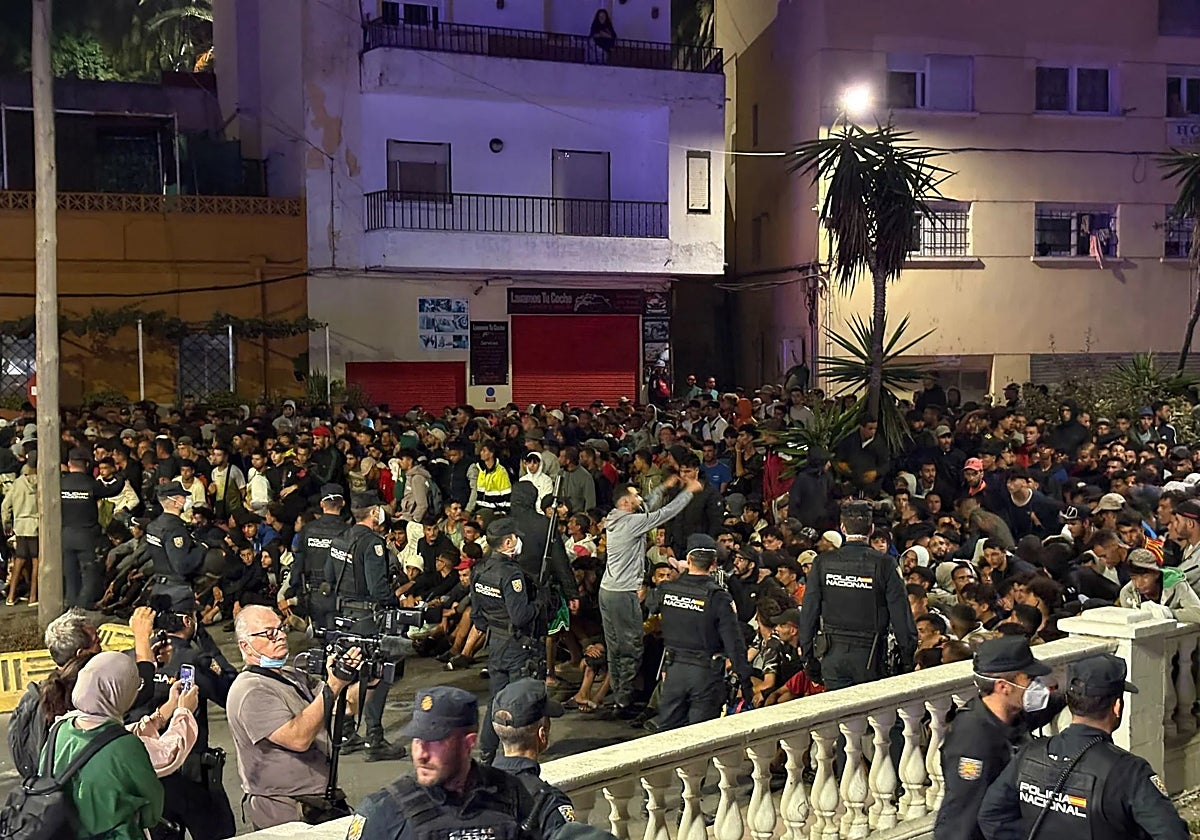

Tension rose in Ceuta early on Friday as authorities began moving many of the migrants living in settlements on Trampolín and Benítez beaches to a ... reception facility in the port.
Security forces accompanied the group towards the facility, which can accommodate only 1,800 people, despite estimates that more than 4,000 migrants are currently living across the two beach settlements.
The operation began shortly after 6.30am, when several Guardia Civil patrols were deployed to Trampolín beach. Their aim was to gather the migrants together and then escort them to the new reception facility in the port.
Related story

Tensions rose as the first groups reached Benítez beach, where another settlement is located. The migrants there joined the group, significantly increasing the number of people moving towards the port.
National Police reinforcements
As the crowd continued along the road beside the beach, people initially began jogging and then, minutes later, running. The police deployed at the scene were initially unable to stop them from advancing.
The situation was brought under control near the end of Benítez beach, close to the industrial area leading towards the port and the reception facility. National Police reinforcements joined the operation at this point and managed to stop the crowd.
The migrants are currently in the area while police organise the group and prepare to resume the transfer to the port facilities in a controlled manner.
The main challenge facing the operation is the significant gap between the number of people living in the settlements and the capacity of the reception facility. More than 4,000 migrants are estimated to be living between the Trampolín and Benítez settlements, while the facility at the port has around 1,800 places.
Meanwhile, Juan Manuel Doncel, president of the Ceuta Port Authority, has expressed strong dissatisfaction with what he described as a lack of coordination. He criticised the fact that communication from the ministries involved and the central government delegation had been "conspicuous by its absence" throughout Friday's operation.
Doncel also criticised the situation at the port, saying that the area had been "occupied for 50 days". In comments to RNE, he questioned the effectiveness of the government's response, saying it was difficult to understand how "a country capable of processing thousands of tax returns is unable to process the deportation files of 10,000 people".
The head of the port authority, who had already formally opposed locating the reception facility within the port, again called for alternative accommodation outside the site.
"Security is not something to be taken lightly," he said, urging the authorities to find an open plot of land where the migrants could be accommodated appropriately. He warned that using the port in this way could jeopardise the logistics operations and security of critical infrastructure in the city.
Government delegation concerned about overcrowding
Sources at the government delegation have expressed concern about the risk of surges as people enter the facility, particularly once it reaches capacity and some of those taking part in the transfer are unable to get inside.
In previous operations of this kind, some migrants who were unable to access reception facilities have tried to force their way in, increasing concerns about security during the operation.
The government's decision to use the port facility follows Thursday's ruling by the National Court, which lifted a temporary injunction preventing its use.
The central government stated that opening the facility is the only immediate way to maintain a minimum level of control, order and administrative oversight over the steady flow of people in the area.
According to the government's position, providing services within the port allows medical care, registration and the distribution of basic supplies to be centralised within a defined area, while preventing people from becoming dispersed across the urban areas of the autonomous city.
However, this approach has been strongly criticised by police union Jupol, which said the port area is not suitable from an operational or security standpoint for accommodating such a large number of people.
The union stated that bringing such a large group into infrastructure that has not been properly equipped could expose migrants to overcrowding and poor sanitary conditions, while also placing state security forces at risk of being overwhelmed and facing assaults or surges that would be difficult to control.
The stark gap between the 1,800 available places and the more than 4,000 people being moved has left the operation facing a major logistical challenge.
With the government seeking to demonstrate that the facility can operate despite the legal dispute surrounding it and police representatives warning of inadequate infrastructure, authorities now face the difficult task of managing the transfers safely and in an orderly way.
![[]](http://static.vocstatic.com/voc26/latest/assets/images/favicon/surinenglish/apple-touch-icon-57x57.png)