
Rail strike
Spanish rail operator Renfe reports failure to maintain minimum services during Tuesday's strike
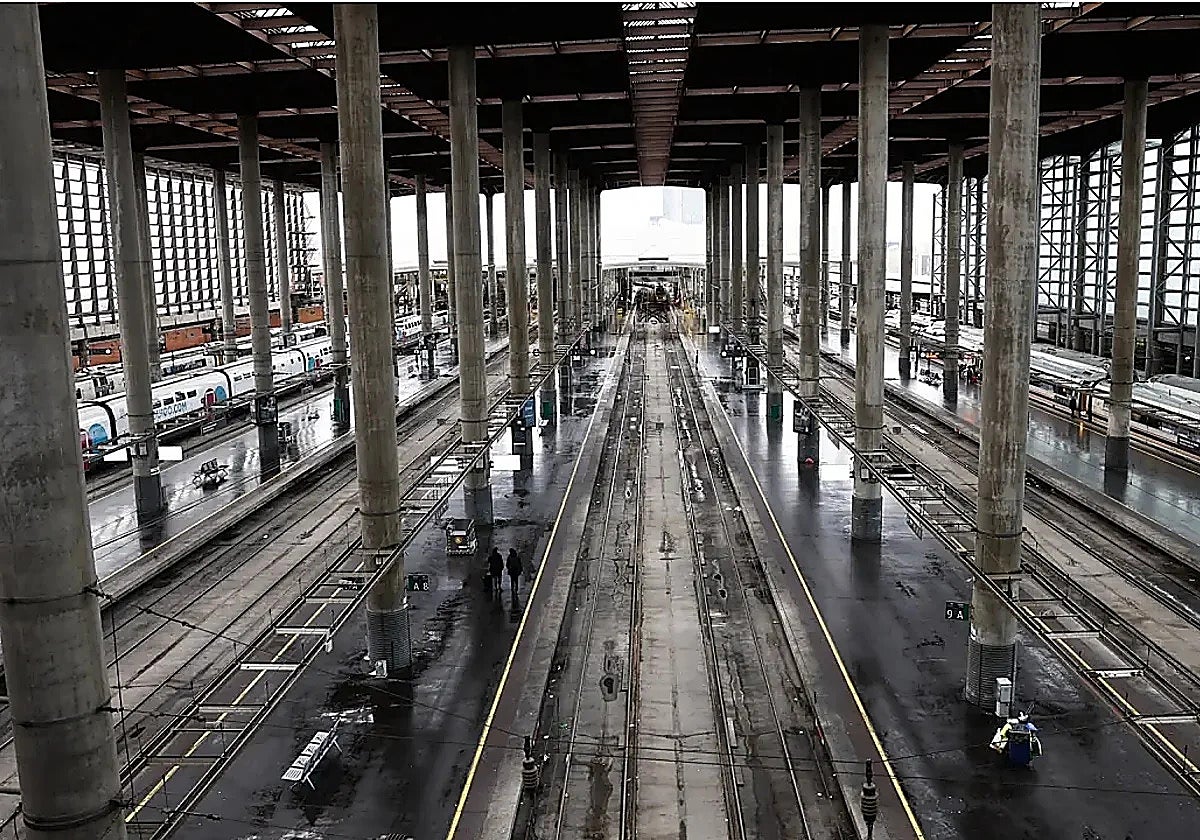
The strike is having a particularly severe impact on the Madrid commuter line, where services have been almost entirely suspended

Madrid
Spanish rail operator Renfe has condemned the failure to comply with the minimum services required for the strike this Tuesday, 17 November, in various parts ... of Spain.
According to a press release, the strike has had a particularly severe impact on the Madrid commuter rail network, where services have been virtually brought to a standstill, with 97.64% of minimum services cancelled. On Rodalies de Catalunya, 40% of essential services have been cancelled.
Related story
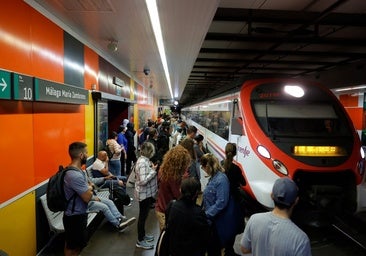
Nationwide, the strike has suspended 37.84% of the minimum services of the Cercanías, Rodalíes, Avant and Media Distancia services, with disruption also affecting the Avant trains connecting Valladolid (43.7%), as well as services in Extremadura (11.1%), Galicia (8.33%), Andalucía (6.8%), Valencia (6.09%), the Basque Country (2.7%), Asturias and Cantabria (0.8%).
786 passengers affected on commercial services
Meanwhile, on Renfe's commercial services, including AVE, Avlo, Alvia, Euromed and Intercity trains, 12.2% of the minimum services have been cancelled, affecting 786 passengers.
By route, the northeastern corridor, which links Madrid with Aragon and Catalonia, has been worst affected, with 21.4% of minimum services cancelled. All the cancellations involved high-speed trains. The Levante and Mediterranean corridor, connecting Madrid with Castilla-La Mancha, the Valencia region and Murcia, comes next, with 13.3% of AVE and Avlo services cancelled and 244 passengers affected.
By contrast, the northern corridor, linking Madrid with Castilla y León, Galicia and Asturias, has not experienced disruption of this kind.
Renfe is advising passengers to seek alternative transport because delays are lasting "several hours". The company says it has also made it possible to change or cancel tickets free of charge.
Third day of protests
The disruption continues a period of severe problems on Spain's rail network following the tragic accident at Urda, in Toledo. A series of strikes affecting the service began on 10 November, with a 24-hour stoppage called by train drivers' union Semaf. Minimum service levels were also breached during that strike.
The following day, a nationwide general strike again disrupted rail transport in several parts of the country. One week after the first day of protests, Tuesday's action has caused similar problems.
Calls for safety improvements
Rail workers are taking industrial action to demand improvements to safety across Spain's rail network and better working conditions for staff at Adif and Renfe, including increased staffing levels.
This latest strike has been called nationwide and runs for the full day, from midnight to 11.59pm.
According to Renfe figures, 12.08% of eligible employees took part in the strike across the night and morning shifts. By company, the highest participation rate was at Renfe engineering and maintenance, where 25.79% of eligible staff joined the action. The figure was 8.49% at Renfe Viajeros and 7.96% at Renfe Mercancías.
The Ministry of Transport set the minimum service requirements for Renfe. These ranged from 50% to 75% on Cercanías, depending on the time of day, and stood at 72% for high-speed and long-distance services.
On Cercanías, the minimum service level was set at 75% during peak periods: from 6am to 9am, 1.30pm to 3.30pm and 6.30pm to 8.30pm. For the rest of the day, half of the usual trains were supposed to run.
On Media Distancia routes, an average of 65% of trains were guaranteed, while the figure for high-speed and long-distance services was 72%. Freight services were required to operate at 26% of their planned capacity.
Catalonia set minimum service levels on the Rodalies network at 66% during peak hours and 33% for the rest of the day.
Following the latest breach of minimum service requirements during a strike, Catalan regional minister for territory Sílvia Paneque has warned that employees could ultimately be dismissed if they repeatedly face disciplinary proceedings.
"The usual procedure is to issue an initial disciplinary sanction, which can mean between 40 and 180 days without work or pay. If that behaviour is repeated, it can indeed lead to dismissal," she said in an interview with Catalunya Ràdio.
Paneque also criticised the workers involved. While defending their right to take industrial action, she described the failure to comply with minimum service requirements on Tuesday as "unacceptable" and said they had no right to disrupt the lives of so many people.
