
Rail transport
Spain's rail service faces four days of strike action over eight working days over lack of solutions in safety dispute
Strikes are set to begin this Tuesday with state rail operator Renfe and will culminate on 17 November with a strike call that extends to Adif and private operators
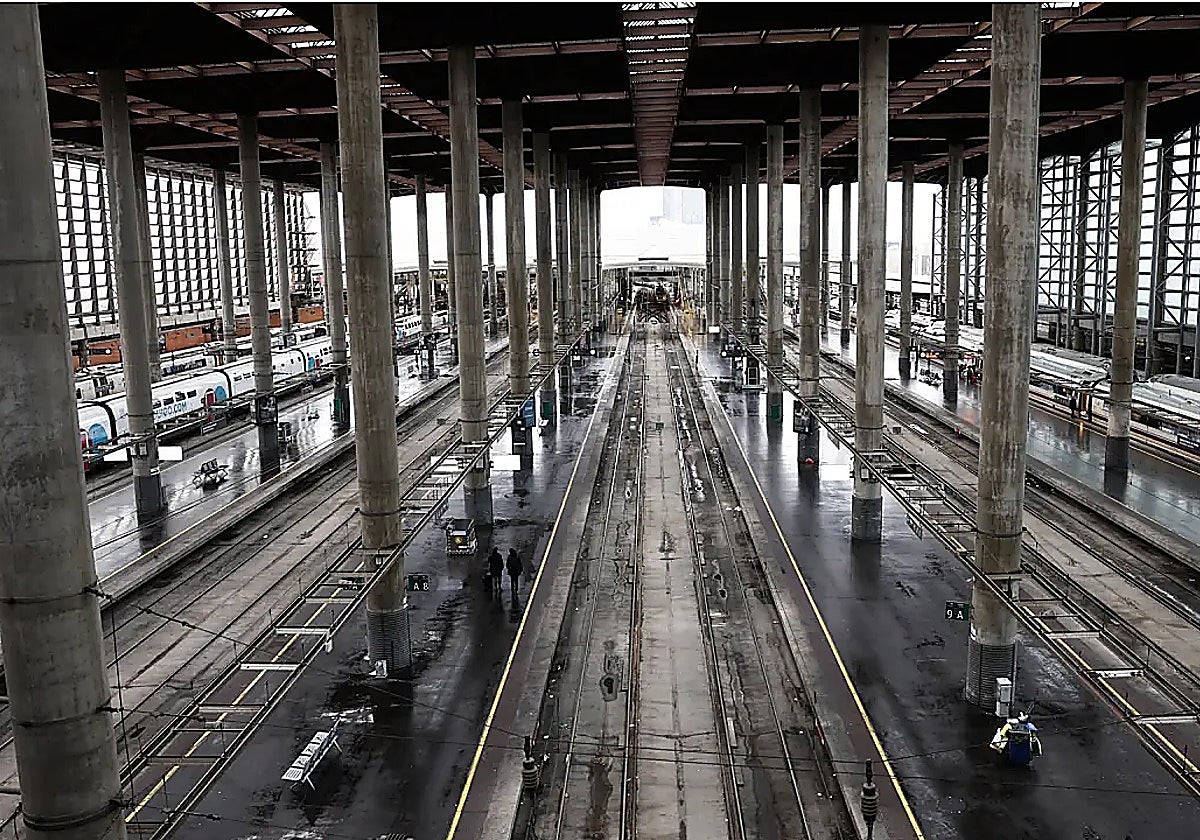

The Spanish government is facing another critical week in the rail sector. Renfe train drivers are set to begin a 24-hour strike this Tuesday, ... followed by two further days of industrial action on Wednesday and Thursday, while the threat of a strike involving virtually the entire rail sector on 17 November looms large.
Newly appointed Transport Minister Carlos Cuerpo has stepped up negotiations with the trade unions since taking up his post last week, but these talks have not yet succeeded in resolving a dispute that has been dragging on since February over outstanding safety commitments.
Pressure is mounting on Cuerpo, who this Monday is taking part in the meetings of the Eurogroup and the EU Economic and Financial Affairs Council in Brussels, with no plans for a further face-to-face meeting with Semaf before the first day of the strike.
Related story
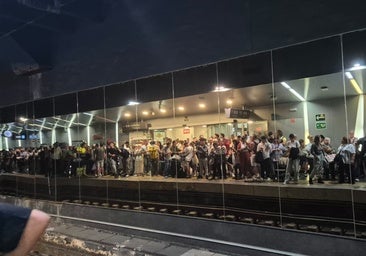
The union has acknowledged a greater willingness to negotiate on the part of the ministry, but considers the progress to be insufficient. "As of today, we remain at the same point and nothing has changed," it warned following the latest meeting on Friday.
The industrial action begins this Tuesday, 10 November, with a 24-hour strike by Renfe train drivers. On Wednesday, a general strike will take place, which Semaf will not be joining due to its statutes, while on Thursday drivers will once again halt work during three separate time slots.
The action will continue until Tuesday, 17 November, when Adif workers and train drivers from Ouigo, Iryo and various freight companies are also set to take part in a sector-wide protest.
Minimum services
The Ministry of Transport has set minimum services in an attempt to minimise the impact the strikes will have on passengers. On the Cercanías commuter rail network, it will guarantee 75 per cent of the usual services during peak hours, between 6am and 9am, 1.30pm and 3.30pm and 6.30pm and 8.30pm. During the rest of the day, these services will drop to 50 per cent.
For high-speed and long-distance services, minimum service levels will be 72 per cent for the train drivers' strikes on Tuesday and Thursday, while for the general strike on Wednesday, they have been set at 73 per cent.
On medium-distance services, an average of 65 per cent of scheduled trains will run, while for freight services the percentages will range from 20 per cent to 26 per cent, depending on the day.
On Tuesday, Renfe train drivers are set to take part in a 24-hour strike, from 12.01am to 11.59pm. On Thursday, the strike action will be partial and will take place in three time slots: from 6.20am to 9.20am, from 2.20pm to 5.20pm and from 9.20pm to 11.20pm.
In Catalonia, the minimum service levels for the train drivers' strikes on Tuesday and Thursday will differ. On Rodalies and regional services, 66 per cent of services will be guaranteed during peak hours and 33 per cent during the rest of the day.
Unmet commitments
The origin of the dispute can be traced back to the commitments the government made to the railway unions in February, following the Adamuz accident. Those agreements made it possible to call off a strike, but workers' representatives say that many of the measures promised have still not been implemented.
Semaf's main demands include the adoption of specific protocols for operating in adverse weather conditions, a review of the numerous temporary speed restrictions in place across the rail network and the establishment of working groups to draw up new operational standards and procedures to enhance safety.
Cuerpo has sought to speed up the talks since taking up his post at the ministry. On Thursday, just one day after taking over the department, he held an initial meeting with Semaf, during which the train drivers' representatives set out their main demands. On Friday, they met again to discuss the proposals in greater detail.
Government sources described this second meeting as "very productive" and stated that they had made "concrete progress". According to sources, Cuerpo put forward solutions to address the security concerns and both sides agreed to finalise the details of the regulatory proposals as a matter of urgency.
With the first strike less than 24 hours away and a sector-wide strike planned for next week, however, the government's room for manoeuvre to prevent further disruption to services is narrowing.
Fenadismer (the national federation of transport associations of Spain) expressed its "perplexity and concern" on Monday after the Ministry of Transport failed to set a minimum service percentage for the general strike called for next Wednesday.
The ministry agreed to minimum services exclusively for rail freight transport, in addition to passenger bus transport, without providing any specific measures for road freight transport. The federation questions leaving the supply of essential goods by road unprotected.
