
Immigration
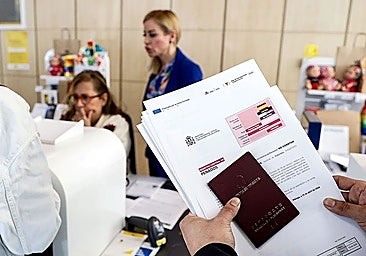
Spain gives work permits to over 800,000 migrants that have benefited from extraordinary regularisation
The Minister of Inclusion stated that more than 70 per cent of the applications have been accepted for processing, meaning that foreign nationals also have provisional authorisation to reside in the country


Spain's government has accepted 70 per cent of the applications it received for the extraordinary regularisation process for migrants, which closed on 30 ... June with a total of 1,174,978 applications.
This represents an increase of 18 per cent compared with the figure recorded less than a month ago. Consequently, 822,000 migrants now hold a provisional permit to live and work in the country, according to a statement Minister of Inclusion Elma Saiz made on Thursday.
This will have a positive impact on the forthcoming enrolment figures the Ministry of Social Security will release in early August.
Related story
By the end of June, 160,000 foreign nationals had already registered as a result of the extraordinary regularisation process, which exceeded the government's expectations. Initially, it had anticipated that only half a million people living in Spain without papers would apply for residency.
160,000
new foreign contributors
joined the Social Security system in just two months
The government was also initially cautious about linking the Social Security enrolment figures to the extraordinary regularisation process it launched in April.
At the latest press conference, Secretary of State for Labour Joaquín Pérez Rey admitted that this process is "boosting" employment, with the number of Social Security contributors exceeding the 24.4 million mark in June: a figure never seen before.
In May, migrant workers accounted for almost half of the new registrations and for up to a third in June.
In total, foreigners contributed 197,931 new Social Security contributors in just two months, fuelling the boom in the Spanish labour market, which is currently Europe's driving force in job creation.
The immigrant workforce now accounts for 15.3 per cent of the Spanish labour market. In June, it reached a record figure of 3.4 million Social Security contributors, 350,163 more than a year ago.
Opposition-led regions in Spain have criticised the government for what they describe as an "opaque immigration policy" and lack of a "genuine willingness to engage in dialogue".
In response to their rejection of the process, Saiz condemned the "numerous obstacles" that they have placed in the way of a process that "grants rights, restores dignity and brings thousands of people out of the margins".
![[]](http://static.vocstatic.com/voc26/latest/assets/images/favicon/surinenglish/apple-touch-icon-57x57.png)