
Malaga records highest number of migrant regularisation applications in Andalucía
Almost 40,000 applications were submitted from the province during the temporary scheme, which has now closed and is entering the decision-making stage
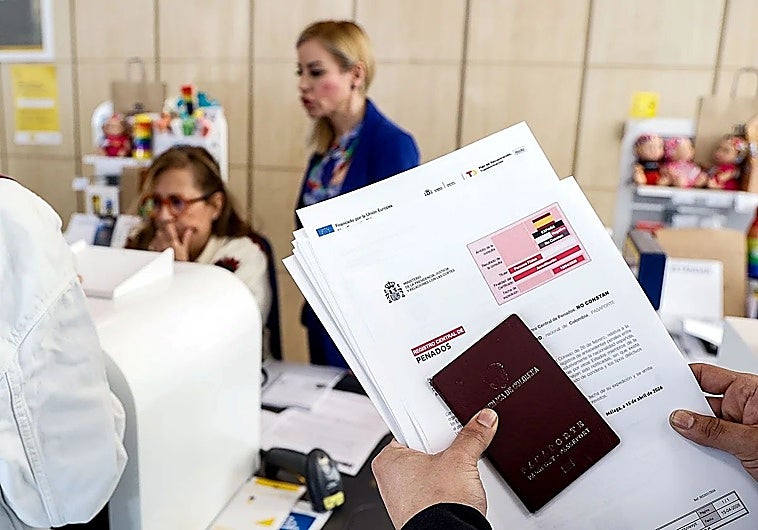

Malaga has recorded the highest number of applications of any Andalusian province under Spain's extraordinary scheme to regularise the status of undocumented migrants, ... with 39,899 submissions.
The province accounted for almost one in every four applications lodged in Andalucía, where the total reached 161,557. Across Spain, more than 1.17 million applications were submitted, with Andalucía accounting for almost 14 per cent of the national total.
Around half of all applications have already been accepted for consideration, although only about 11,000 people have so far been granted legal status.
Among Spain's autonomous communities, Andalucía ranks fourth for applications, behind Catalonia (257,602), Madrid (202,424) and the Valencian Community (167,286).
At provincial level, Malaga ranks sixth nationwide, behind Madrid, Barcelona, Valencia, Alicante and Murcia, broadly reflecting its position as Spain's sixth most populous province.
Within Andalucía, Seville recorded the second-highest number of applications with 33,690, followed by Almeria (32,638), Granada (16,629), Cadiz (11,641), Huelva (10,359), Cordoba (9,951) and Jaén (6,750).
The application window opened on 16 April after the scheme was approved by Spain's Council of Ministers and closed on 30 June. It was available to people who had applied for international protection before 31 December 2025, as well as undocumented migrants who had been living continuously in Spain for at least five months by that date.
Applicants in the second category had to prove their residence using official documents, such as registration on the padrón (Spain's municipal register of residents), or private documents, including tenancy agreements or bills. Priority was given to people with established ties to Spain through employment, close family members or situations of particular vulnerability.
Applicants were also required to submit criminal record certificates from Spain, their country of origin and any other country where they had lived during the previous five years. The authorities now have three months to rule on the applications.
Applicant profile
No province-specific breakdown is available for Malaga, but across Andalucía, the largest group of applicants came from Colombia, accounting for 23.8 per cent of the total, followed by Morocco with 20.3 per cent.
Venezuelans represented 8.6%, Senegalese 7.7%, Peruvians 5.7%, Paraguayans 5.6%, Nicaraguans 4%, while Hondurans and Argentinians each accounted for just over 3%. Algerians made up 2.1%.
The figures are broadly in line with the national picture, where the three largest groups of applicants came from Colombia (25.9%), Morocco (13.3%) and Venezuela (11.8%).
Men accounted for 58.2 per cent of applicants in Andalucía, compared with 41.8 per cent for women. The largest age group was those aged 25 to 34, who represented 32.9 per cent of applicants. Those aged between 35 and 44 accounted for 21.9 per cent, followed by 16 to 24-year-olds on 17.4 per cent. Applicants aged between 45 and 54 made up 11.9 per cent, while children aged up to 15 represented 9.5 per cent. The proportions were much lower among people aged over 55.
32,9%
of applicants in Andalucía
are aged between 25 and 34
The Ministry of Inclusion, Social Security and Migration said 79.6 per cent of applications nationwide were submitted under the category of exceptional residency based on established ties to Spain after at least five months of continuous residence. The remaining 20.4 per cent came from applicants for international protection.
Most applications across Spain, 83.2 per cent, were submitted online. However, documents could also be lodged in person by appointment. In Malaga province, this was possible at 26 post offices and two offices of the National Social Security Institute in Malaga city.
More than 15 social organisations and trade unions in the province helped migrants complete the required paperwork, while almost 500 charities and trade unions provided advice and support across Spain.
The role of local councils
Local councils were responsible for issuing vulnerability reports required by some applicants under the scheme. Those who were not applying for international protection had to demonstrate employment, qualifying family ties or vulnerability.
To prove vulnerability, applicants needed a certificate issued either by their local council, which is responsible for social services, or by an approved third-sector organisation working with the Ministry of Inclusion.
Malaga town hall handled applications for these certificates through its 12 community social services centres across the city's 11 districts, as well as at its Puerta Única centre for homeless people. It received 2,703 applications and approved 2,633 of them.
![[]](http://static.vocstatic.com/voc26/latest/assets/images/favicon/surinenglish/apple-touch-icon-57x57.png)