
Ceuta migration crisis
Spain's Interior Minister announces 35 million euros to prevent future mass influxes into Ceuta and calls for end to violence
Grande-Marlaska appeared before the lower house on Friday to report on his department's response to the migration crisis in Ceuta
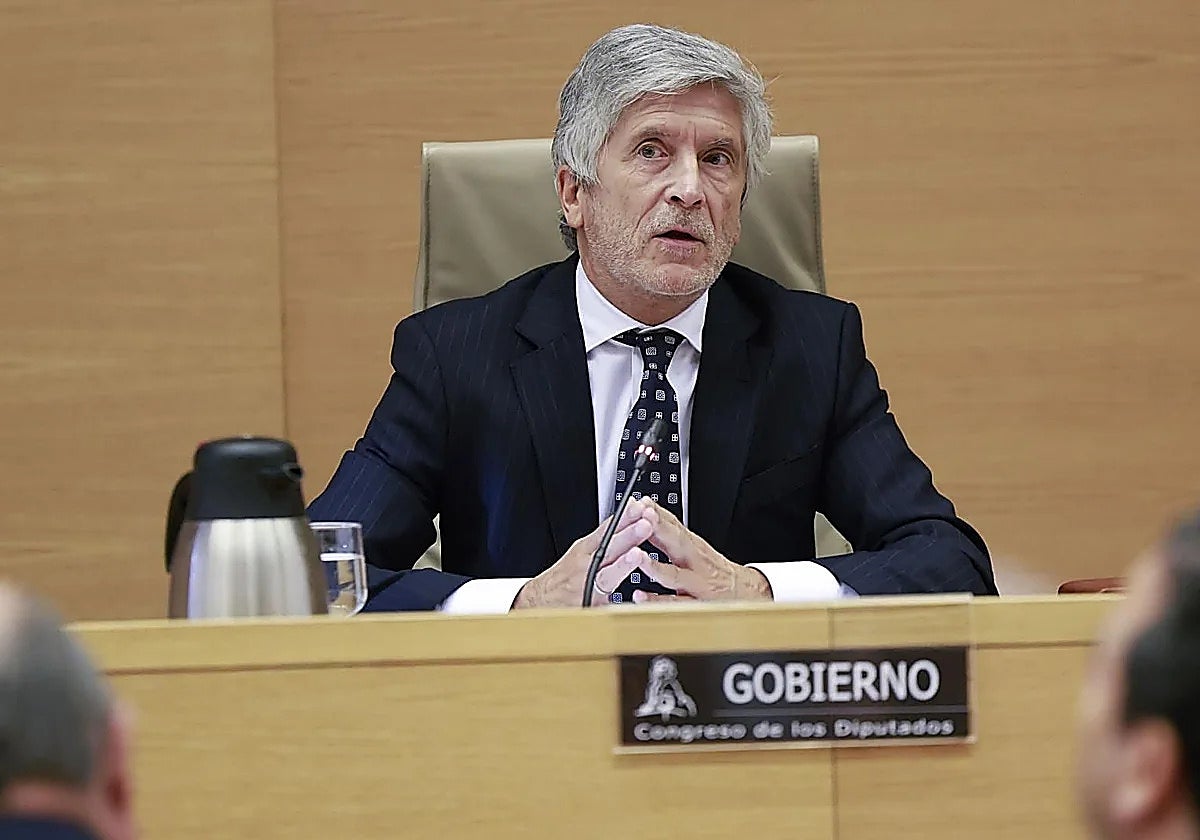

Spain's Interior Minister, Fernando Grande-Marlaska appeared before the lower house on Friday to report on the government's response following the events in Ceuta on 30 July ... .
During his speech, the minister struck the same tone as the other members of the government who have appeared before Parliament and defended the government's handling of the situation in Ceuta, while also calling for calm following the recent disturbances and episodes of violence.
"Violence is not the way to resolve any problem," Grande-Marlaska stated, after calling for political confrontations to be set aside so that they can resolve the emergency as fast as possible.
Related story

The minister also announced that he had applied for European funding to invest 35.6 million in Ceuta and the extension of the El Tarajal and Benzú border breakwaters, among other "extraordinary" structural measures to prevent future mass crossings such as the one that occurred on 30 July.
The government's plan includes the installation of a permanent maritime containment system using moored buoys and the construction of a new permanent temporary reception centre for foreign nationals (CATE) with capacity for 800 people, all of which 90 per cent co-financed by the EU through the Border Management and Visa Instrument.
Grande-Marlaska stated that Moncloa, the Spanish government's headquarters, is working to ensure that migrants "who do not meet the conditions to stay" are returned to Morocco, while those who request "international protection" and meet the asylum criteria receive it.
The minister described what happened as an "attack on Spain's territorial integrity". He highlighted the speed and willingness with which the crowd crossed back over the border in the hours that followed as clear evidence. According to Grande-Marlaska, the collaboration of the Moroccan authorities proved crucial in managing the returns and achieving a complete halt to arrivals from 1 August onwards.
Grande-Marlaska emphasised the strengthening of the police force in the area. According to figures, as of June 2026, the number of police available in Ceuta has increased by 16.3 per cent compared with the figures recorded in 2018. This brings the rate to 15.1 officers per thousand inhabitants, four times the average for Spain as a whole.
According to the minister, this "enabled a swift response" following the events at the end of July, with the deployment of an extraordinary operational force that currently numbers over 1,600 officers on the ground.
Grande-Marlaska referred to the Supreme Court ruling of 8 July, which prevented the application of the "return at the border" mechanism. Since the ruling, the Ministry of the Interior has stepped up maritime surveillance by deploying 70 more Guardia Civil officers in early July for perimeter control and seven vessels with crews of 30 officers each.
The deployment has further increased since the events on 30 July.
![[]](http://static.vocstatic.com/voc26/latest/assets/images/favicon/surinenglish/apple-touch-icon-57x57.png)