
Urda train accident 2026
European prosecution and Guardia Civil launch investigation into fraud involving EU funds in connection with Urda tragedy
The investigation covers, among other things, the contracts concerning the LZB systems that failed during the accident
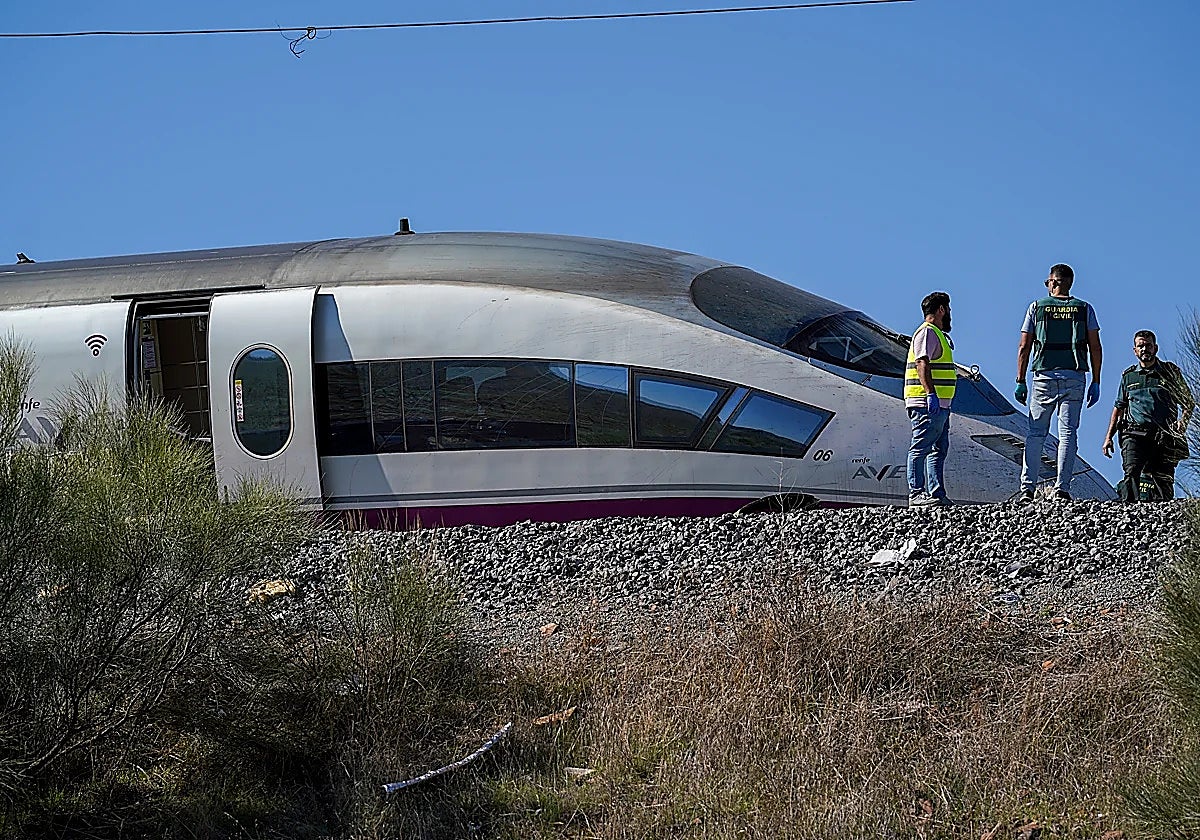

The European public prosecution and the UCO (central operational unit) of the Guardia Civil launched a major operation on Friday morning to investigate possible fraud ... involving EU funds earmarked for the modernisation of the high-speed rail line between Madrid and Seville, where the Urda tragedy happened on 28 October.
According to sources close to the investigation, the UCO is carrying out operations at three public bodies to gather information on these investments.
The operation involves state infrastructure company Adif, the AESF (state railway safety agency) and the court of auditors. Adif Alta Velocidad was, in fact, at the centre of another UCO operation just this Thursday, this time linked to the alleged rigging of public works contracts in the Koldo and José Luis Ábalos case.
Related story
-

Adamuz train accident 2026
Melchor Sáiz-Pardo
Related story
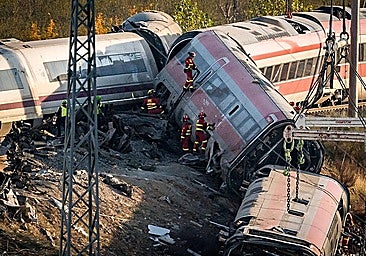
This Friday's operation, however, has nothing to do with Thursday's searches and arrests. It stems from the interest the European prosecution has shown in the EU funds that Spain invested in upgrading the railway line to Andalucía, following news of the Urda accident and in the wake of the recent incident at Adamuz in January.
Sources close to the investigation have stated that the probe covers several public contracts relating to the ERTMS and LZB systems, precisely the two railway safety systems that have taken on particular significance following the accident.
According to the official statement, the investigation "was launched on the European prosecutor's own initiative (ex officio)" and is supported by the UCO. This is an unusual decision. Of the 108 investigations the EU body launched in 2025, only four it opened on its own initiative. The rest were prompted by reports, complaints or other means of bringing potential irregularities to light.
The European prosecution stated that "this exceptional confirmation follows significant public interest" and warned that "no further details will be provided at this stage of the investigation".
The investigation following the accident in Toledo is the second case the European prosecution has brought concerning the same high-speed rail line in the space of just ten months, the first being the Adamuz accident.
At the centre of the investigation is EU funding earmarked for the modernisation of Spain's oldest high-speed rail corridor. In June 2024, the European Commission awarded a grant of 111,646,340 euros from the ERDF (European Regional Development Fund) to renovate the Madrid-Seville line.
The European prosecution is seeking to determine whether the funds were used for the works and activities for which they were intended. As part of the investigation following the Adamuz incident, the prosecutor requested from Adif the signed contracts and the reference numbers corresponding to the section of track where that accident occurred. Now, following the Urda incident, the requests have extended to include contracts for the renewal of railway safety systems.
At present, the European prosecution has not officially identified the specific contracts under scrutiny in this second investigation, nor has it clarified whether there are any links between the two proceedings. It has also not provided any information regarding individuals under investigation, arrests or house searches.
The involvement of the European prosecution introduces a new criminal dimension to the investigations into the tragedy.
The collision in Urda occurred at 8.53am on 28 October, following a fault in the LZB railway protection system. The AVE received authorisation from Adif's control centre in Atocha to resume travel at normal speed and eventually caught up with the Iryo, which was stationary.
The technical investigation examines both the cause of the fault and the subsequent chain of events, as well as any organisational and safety procedure failures.
The Madrid-Seville line was undergoing a modernisation programme that included the roll-out of the ERTMS system and the refurbishment of signalling and control facilities. Part of this work was funded by the EU.
In December 2021, technology firm Thales announced two contracts to modernise the signalling and railway protection systems on this line, with a combined cost of nearly 98 million euros, excluding IVA.
The European prosecution has not specified whether these Thales contracts are among the files currently under examination.
