
Toledo train disaster 2026
'It wasn't one person who failed, the whole system has failed: the network is in ruins'
Rail safety experts blame 34-year-old LZB signalling system failure in Urda train disaster on outdated software, severe lack of maintenance and component 'cannibalisation'
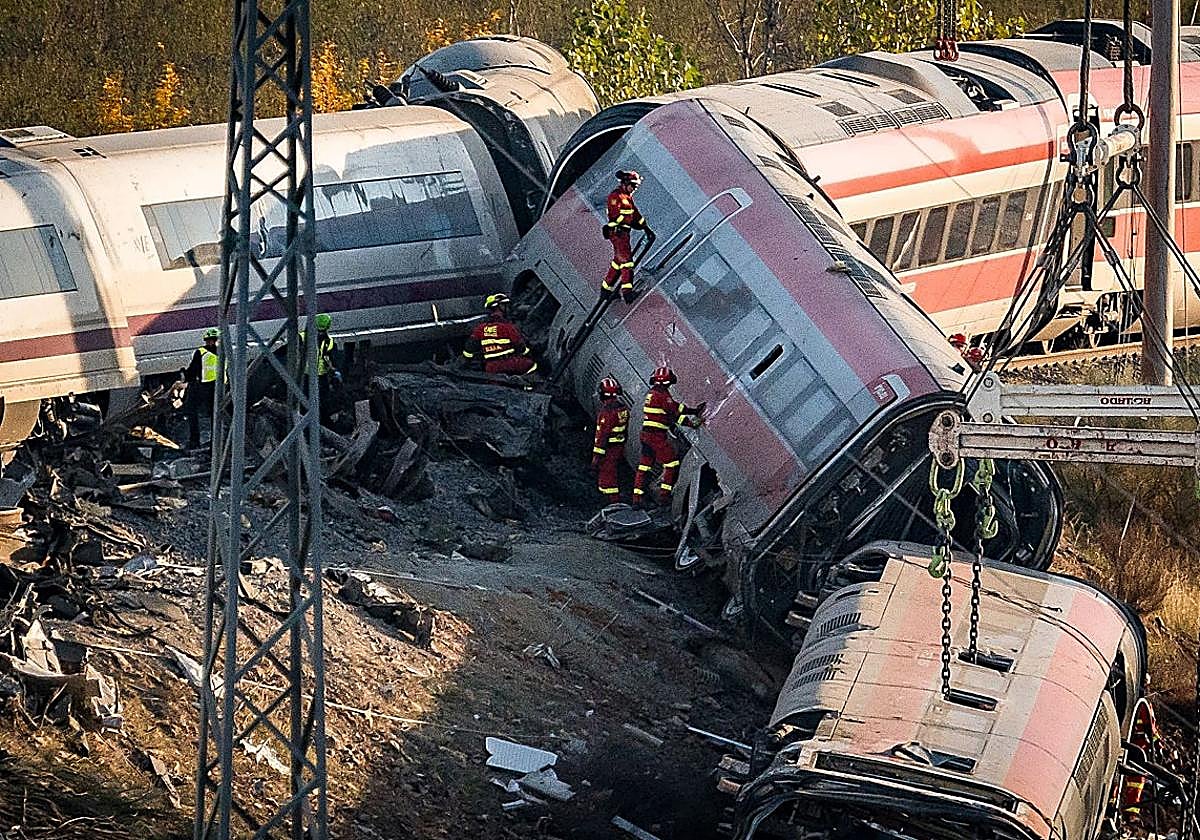

‘If you have a very old car, it’ll spend the whole day in the garage. And if you don’t get it repaired, ... it’ll just get worse and worse.’ According to engineer Antonio Martín-Carrillo, one of the men who introduced the LZB railway safety system in Spain in 1992, the lack of maintenance of technology that is more than four decades old is believed to be among the causes of the tragic train accident in Urda , which has claimed the lives of at least 69 people.
LZB technology, he explains, dates back to the 1980s; it is German and “very good, very safe, but it is many years old, and anyone who knows anything about IT realises that everything has changed a great deal since those days’, says Martín-Carrillo, a member of the Spanish Institute of Engineering and a leading authority in the field of railway safety.
Siemens has stopped manufacturing this system, which is being replaced by a more modern one, the ERTMS, which the European Union has called for to be implemented to facilitate the interconnectivity of the continent’s rail networks. Until now, each country had its own system, which complicated connections. The ERTMS is already installed on more modern high-speed lines, such as the Madrid–Barcelona and Madrid–Valencia routes, but not yet on Spain’s oldest high-speed line, which connects the capital with Andalucía.
Siemens has stopped manufacturing the LZB system, which is being replaced by the ERTMS
According to Martín-Carrillo, the system has suffered from ‘utter neglect’, as the electronic components that make up the system – which are distributed along the tracks – have not been replaced, and for which ‘there are no longer any spare parts because the system is no longer in use and they are hard to come by’. “Spare parts are being sourced by cannibalising the system, taking them from one part to fit on another,” he adds.
According to his colleague at the Institute of Engineering, José María Pérez Revenga, a possible failure to update the software used by the system could have contributed to the LZB’s failure. Just as with home computers, “versions change, and the most up-to-date ones are the ones that should be installed. And that depends, above all, on maintenance,” says the expert.
The causes of the accident will not be known until the trains’ black boxes – known as JRU – have been opened and analysed, says Pérez Revenga, who worked for 34 years in senior management roles at Renfe and is now a consultant on safety certification. But “we technicians, who know a thing or two about this, can effectively guess what happened, and that is that those systems were not up to date,” he notes.
Among the major European countries, Europe lags behind in investment in rail infrastructure
The lack of maintenance of the road network goes beyond safety systems. Among the major European countries, Spain ranks lowest in terms of investment in rail infrastructure. It allocates 241 million euros per 1,000 kilometres of track (prioritising new construction – 84 per cent – over maintenance – 16 per cent) compared with 328 million in Germany, 444 in France and 661 in Italy, according to data from the OECD’s International Transport Forum.
Accidents, as Antonio Martín-Carrillo points out, do not usually happen in isolation: ‘An accident is surrounded by other incidents – a “oops, we nearly collided”, a “phew, that was a close call today”… The thing is, nobody shows us the number of near-misses that have occurred before that accident, which is why we’re so taken aback when an accident does happen. But of course, when that’s happened hundreds of times, it’s only to be expected that it will end badly.”
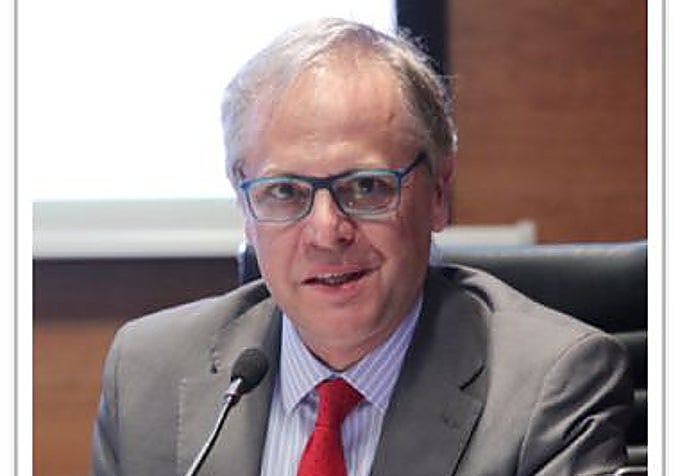
System errors are frequent – so much so that the Minister for Transport, Óscar Puente, admitted during his appearance on Friday that there have already been 170 LZB failures in 2026, that is, more than one every two days – a fact which he nevertheless played down. “It is not an uncommon occurrence and the system is designed to cope with it, to the extent that the possibility of the LZB experiencing transmission problems is covered in the railway traffic regulations themselves. In other words, it is so common or so likely that an LZB transmission failure is covered by the regulations themselves,” said Puente.
Why is the system crashing more and more often? “Perhaps because the ERTMS system is already being installed on the Madrid–Andalusia corridor and investment in LZB maintenance has been halted,” replies Carlos Gutiérrez Hita, a lecturer in Industrial Economics and a specialist in Transport Economics at Miguel Hernández University. Gutiérrez Hita explains that a traffic control manager has told him that “every day this month, the LZB has failed on some section of the line – every single day”.
Explanations of Puente
At his press conference, Óscar Puente attributed the faults to factors other than a lack of maintenance. “Vandalism, cable theft, damage resulting from infrastructure works or maintenance, or damage caused by adverse weather conditions,” he listed. The minister also sought to mount a staunch defence of the LZB, which he asserted is “just as robust and reliable as the ERTMS”. “It is the system used by 80 per cent of the high-speed network in Germany and Austria, and by regional railways in the United Kingdom,” he pointed out.
For Antonio Martín-Carrillo, “everything has gone wrong”. “It wasn’t just one person who failed. No, no. Everything has gone wrong here. The LZB system has failed and so has the ASFA system, which is used on conventional trains. In short, everything has failed.” The engineer believes that both Renfe and Adif “urgently need an overhaul and a technical audit, as well as a return to a safe system, because right now the system is completely run-down; everything is in ruins.”
