
Spain wildfires 2026
Inside Spain's wildfire evacuations where residents refuse to leave their homes
Farmers and elderly residents are refusing to leave their homes, which are under threat from the flames

Borja Méndez
Ávila
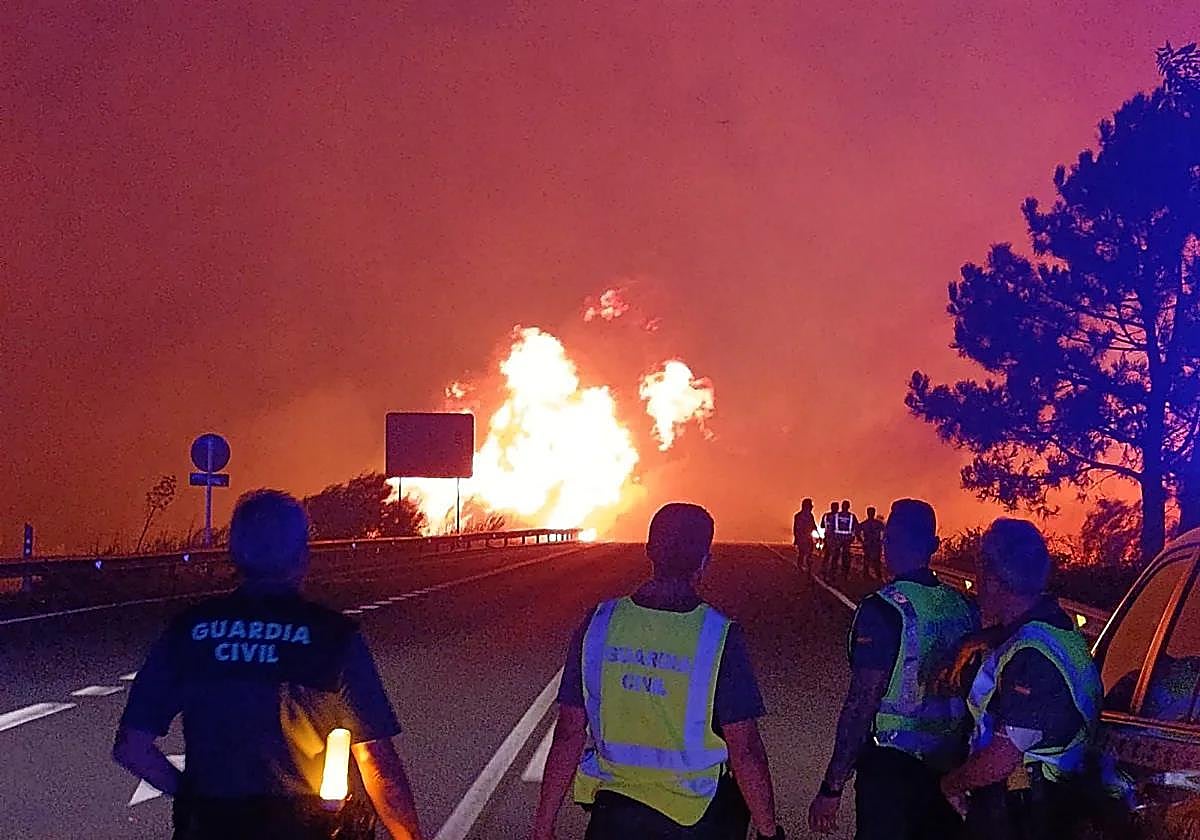
The flames are closing in on the towns of Ávila like a river of lava flowing down the mountain, devouring everything in their path. The ... rain is no longer water but ash. Against this apocalyptic backdrop, hundreds of Guardia Civil officers are working tirelessly, racing against the clock to save lives. It is proving far from easy.
They are confronted with heart-wrenching stories of people who refuse to leave their homes, and there is little they can do. “Leave me here alone with your gun,” was one of the things an octogenarian in a care home told them as he refused to be evacuated.
ABC - sister site to Sur in English - has gained a first-hand insight into the evacuation efforts currently underway in the small towns of Ávila province. These are the experiences of one of the Guardia Civil officers from the Public Safety Unit (Usecic), who has been involved in the evacuation of small towns across the province since the fires first broke out.
Related story

The officers are exhausted after marathon shifts without a break. They spend whatever free time they have left sleeping. However, during one of those brief moments, this officer spoke to ABC. “Sorry about the cough, but yesterday I had to take my mask off,” he says, referring to the constant clearing of his throat that has left him hoarse on numerous occasions.
Usecic is working closely with the Reserve and Security Groups (GRS). They are patrolling the ghost towns to prevent them from being looted in circumstances similar to those experienced during the storm in Valencia. The fact is that misfortune can be exploited by a few to cause harm. So far, no such thefts have been detected.
Madrid, Ávila, Toledo, and Castellón: the Guardia Civil is on the ground with hundreds of officers at the most challenging hotspots of this wave of fires ravaging the entire Iberian Peninsula. Any help is welcome and much appreciated. The officers on patrol in Burgohondo are being assisted by a Portuguese gendarme. This officer was walking the Camino de Santiago when he was caught up in the flames. He decided to lend a hand and join the Spanish operation. The scale of the fire means they have to start their shifts earlier practically every day. Their shift runs from half past eleven in the morning until three in the morning. “We’re very tired. Our area consists of housing estates that have become small villages in the lower part of the Tiétar Valley,” he explains.
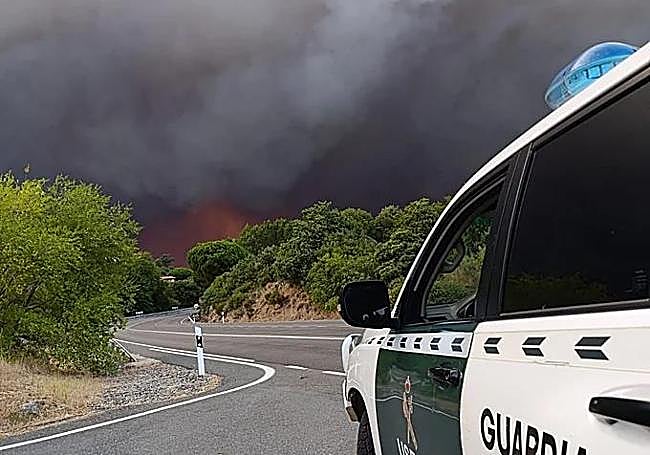
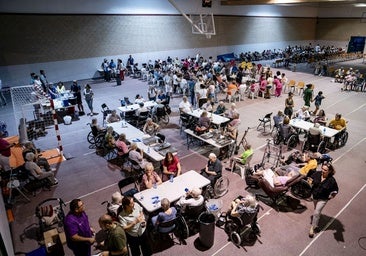
The work of these officers focuses on evacuating all residents from areas threatened by the flames. Other members of the Armed Forces are tasked with blocking access to the villages. They are also transporting residents who are unable to leave. One of the things that has struck them most is the willingness of the people in these villages to help. They have even received assistance in evacuating care homes. “The fire front is very extensive and you need to get a lot of people out quickly. Some people can move about on their own, but others are disabled and use wheelchairs. Everyone in the villages is doing their bit. They’re giving their all to save them, and it’s truly admirable,” explains this officer.
“Many people don’t understand why they have to leave their homes. Especially the livestock farmers, who refuse to leave their villages. Their livestock is their life and their family. We try to persuade them, but in these cases all we can do is ask for their details so we can contact them if anything happens,” laments the Guardia Civil officer. Despite their refusals, officers try every possible means to convince them. “We can’t arrest them or force them,” he emphasises.
One of the problems they are encountering during their operations is the attitude of some local mayors who “proclaim themselves to be the ‘little bosses’ of the response and start directing volunteers to clear certain areas” when the professional firefighters’ orders are quite different: that they should leave the area. “They pay no heed and won’t listen to reason,” criticises this officer.
Beer and the end of the world
Some people seem unaware of the seriousness of the situation. A case in point was when officers were going round the Sotillo de la Adrada area to evacuate residents. “In one of the bars, people were sitting calmly, having a few beers. These are scenes straight out of a typical end-of-the-world film,” he remarks. Such circumstances arise at a time when the authorities themselves are emphasising that this fire is ‘unputoutable’.
The fact is that many of those being helped get anxious and have nowhere else to go. The most dramatic scenes are taking place in care homes. “Physically, they can’t move, but they’re perfectly lucid. It’s shocking to see the elderly crying,” he says. It was at one of these care homes that they experienced one of their most tense moments. An octogenarian told them, “Leave me here alone, give me the gun.” In such difficult moments, the officers have to steel themselves, keep their cool, and try to reassure the man.
Related story
-
S. Vallejo / M. G. Casallo / J. M. L.
“You touch them, comfort them, encourage them, and it all ends peacefully. Just think of it as an outing with the rest of your mates,” he said to the elderly man who was leaving the place that had been his home for the past few years. Fortunately, and despite all these obstacles, the rescue operations have saved many lives. Indeed, the Guardia Civil officers themselves have found themselves in dangerous situations. One of the most tense moments occurred last night (Sunday) when they received an immediate order to take shelter in buildings or safe places due to ash rain.
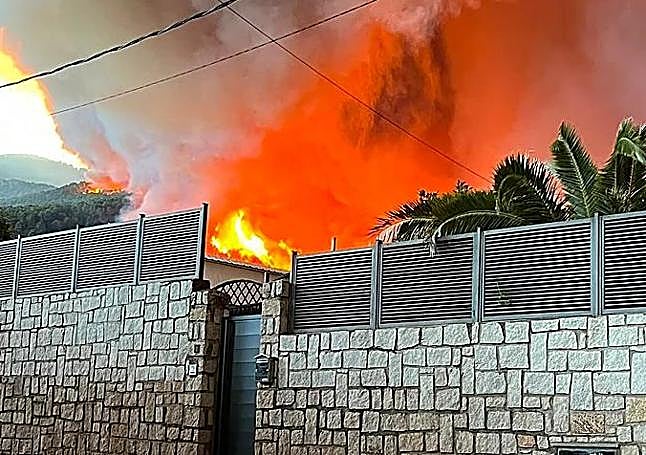
Officers watched from their vehicles in the twilight as a river of 'lava' advanced. The dry vegetation is fuelling this dangerous advance. “This area is beautiful, and the flames have destroyed everything,” he says. Despite the tremendous work carried out over the past few days, a change of guard is inevitable. The contingent is made up of Guardia Civil officers from different parts of Spain. “You can’t stay in such high-pressure situations for more than 24 hours. You don’t react in the same way and you don’t have the same empathy with the local residents,” he explains.
A moment of respite arrives, but the battle against the fire will soon resume, whilst the cries of the elderly residents in the care homes continue to echo in his mind. Their faces reflected the sadness of having to wander aimlessly to save their lives.
![[]](http://static.vocstatic.com/voc26/latest/assets/images/favicon/surinenglish/apple-touch-icon-57x57.png)