
Spain declares state of emergency as Europe sends firefighting aircraft to help tackle Madrid and Ávila wildfires
With 11,500 people forced from their homes, Interior Minister Fernando Grande-Marlaska took the decision, allowing central government to assume overall command and coordinate emergency resources

S. Vallejo / M. G. Casallo / J. M. L.
Spain is facing another critical day in its battle against a series of wildfires, as more than 11,500 people have been forced to leave ... their homes, prompting the declaration of a national emergency for only the second time in Spain's history.
As major blazes continue to burn in the Madrid and Ávila areas on Friday morning amid unfavourable weather conditions, the government in Spain has requested assistance from the European Union.
Related story
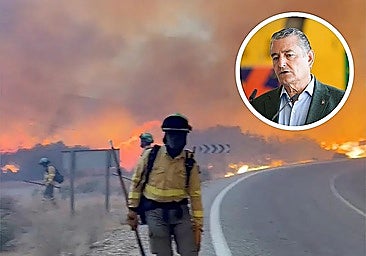
At the request of Spain's Military Emergency Unit (UME), the government called for the activation of the European Union Civil Protection Mechanism, plus at least four fixed-wing firefighting aircraft.
Government sources confirmed to Europa Press that Greece had accepted the request and would provide two Canadair CL-415 water-bombing aircraft. A preparatory meeting for their deployment was due to take place later on Friday.
Emergency measures
The national emergency was declared by Interior Minister Fernando Grande-Marlaska, allowing the central government to assume overall command and coordinate national and regional emergency resources.
The decision followed a request from the Madrid regional government to activate Operational Situation Level 3 under Infoma, the region's forest fire civil protection plan.
The measure was deemed necessary to mobilise a large volume of resources because of the simultaneous wildfires. It's only the second time Spain has declared this level of emergency, the first being during the nationwide power outage in 2025.
Prime minister Pedro Sánchez said on social media: "We're living through a dramatic situation, not only in several Spanish provinces but also in neighbouring countries.
"I want to express my solidarity with everyone watching the flames destroy their forests and threaten their homes. I'd also like to thank the BRIF wildfire brigades, the UME, the security forces, Civil Protection and all the emergency services who are working day and night to stop the spread of the fires."
Three fires continue to burn
The three wildfires burning in the Madrid region remain neither contained nor under control, with more than 10,000 residents still unable to return home. Regional authorities said firefighters had made effective progress overnight despite the challenging conditions.
That said, strong winds are once again expected to hamper firefighting efforts on Friday. More than 270 emergency personnel worked overnight using 40 ground vehicles, supported by UME crews in Villa del Prado and San Martín de Valdeiglesias, according to Europa Press.
The first blaze began on Wednesday in Almorox, Toledo province, before spreading into the Madrid region, although it has now been stabilised. Another broke out the same day in Villa del Prado and has spread to Aldea del Fresno. A third fire started on Thursday in San Martín de Valdeiglesias after a vehicle caught fire and has also affected Pelayos de la Presa.
In neighbouring Ávila province, concern remains focused on the wildfire in Burgohondo, which is expected to spread towards the Madrid region because of the weather conditions. Around 1,500 people have been evacuated there, bringing the total number displaced to more than 11,500.
Smoke forced the lockdown of Burgohondo, Navaluenga and El Tiemblo on Thursday afternoon and into the night, while authorities also evacuated the La Atalaya residential estate in El Tiemblo, a rural holiday accommodation complex in Valle de Iruelas, two rural cottages, a campsite and, overnight, a residential care home for older people.
Castilla-La Mancha
In Castilla-La Mancha, wildfire conditions remain mixed. The blaze at La Mierla, which began on 16 July and is the year's largest wildfire, has entered the stabilisation phase after burning 32,000 hectares. Its emergency level has been reduced from Level 2 to Level 1, although it has not yet been brought under control.
The flames have remained within the fire's 120-kilometre perimeter, allowing the UME to withdraw on Friday. Responsibility for the operation has now passed to the regional authorities and Guadalajara provincial council (Diputación).
Following a meeting of the Integrated Operational Coordination Centre (CECOPI) in Tamajón, residents of six more villages were authorised to return home. The burned area has now reached 35,000 hectares, around 95 per cent of it within the Sierra Norte Natural Park.
The park is recognised for its high ecological value, with forests of oak, beech, holm oak, birch, juniper and pine providing habitat for species including Bonelli's eagle, the Iberian wolf, the golden eagle, the European wildcat, the beech marten and the European pond turtle. Some 260 vertebrate species have been recorded there, of which 195 are protected.
Elsewhere, the wildfire at Selas has been brought under control, while the fires at Mazarambroz and La Pueblanueva, both in Toledo province, have been extinguished.
Meanwhile, in the Castile and León region, improving conditions at the wildfire in Castropodame, León province, allowed evacuated residents of San Pedro Castañero and Turienzo Castañero to return home late on Thursday.
![[]](http://static.vocstatic.com/voc26/latest/assets/images/favicon/surinenglish/apple-touch-icon-57x57.png)