
Archaeology
280 Ice Age engravings discovered in Spain’s Cova de la Font Major tourist cave
Archaeologists from IPHES-CERCA and Universitat Rovira i Virgili have found 55 prehistoric animal figures - including horses, aurochs, and a rare bear - hidden in plain sight along a popular Catalan cave tour route
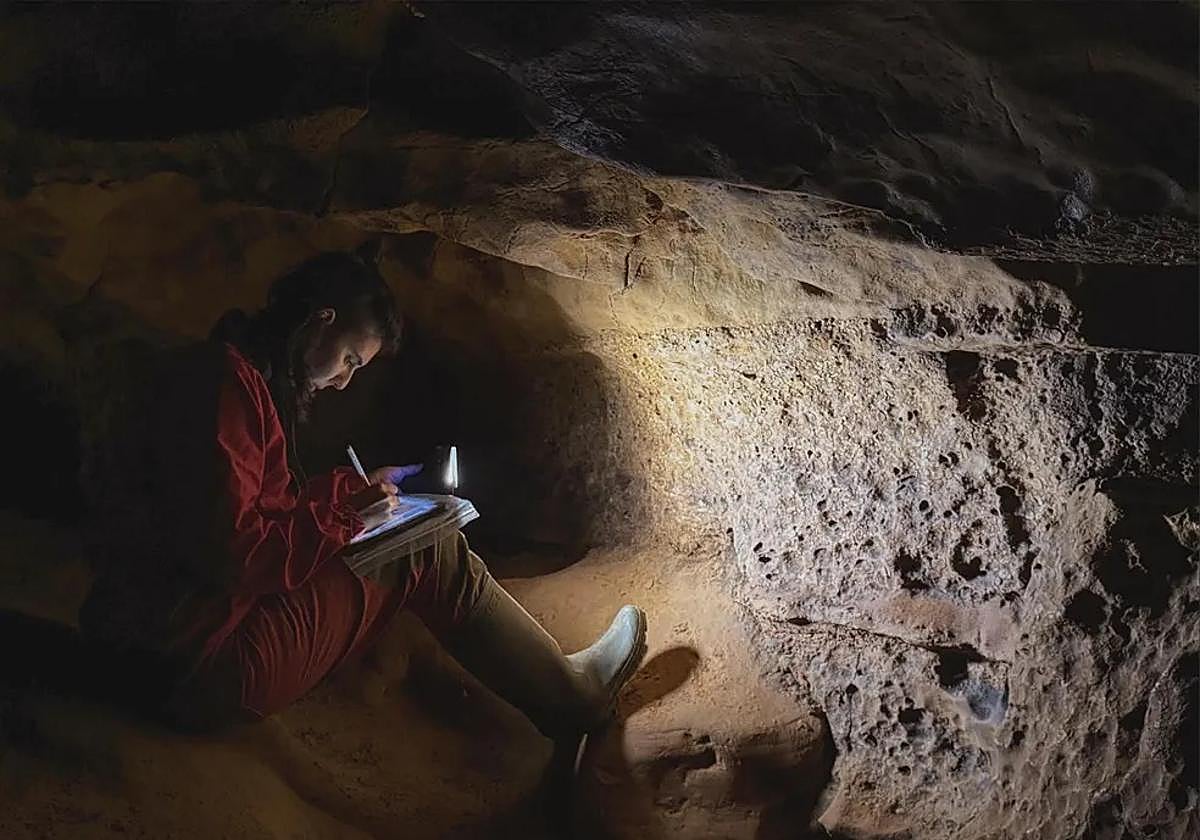
Dilip Kuner
For more than 60 years, thousands of visitors have walked right past a massive collection of Ice Age engravings inside a popular tourist cave in north-eastern Spain.
Some even scratched their own names and dates over the ancient lines, completely unaware of what lay beneath their hands.
Related story
-

Archaeology
Dilip Kuner
A new study in the journal Antiquity reveals that the Cova de la Font Major, near the village of Espluga de Francolí in Tarragona, holds 280 Palaeolithic motifs, including 55 distinct animal figures.
That puts the site in third place for the largest collection of Ice Age cave art along the entire Iberian Mediterranean coast - a finding that upends decades of archaeological thinking about the region.
Shattering an archaeological myth
Northern Spain’s Cantabrian region and southern Andalucía are famous worldwide for their dense clusters of Palaeolithic cave art. Catalonia and the north-eastern Iberian Peninsula, by contrast, were long written off as a virtual blank spot on the prehistoric map. Before this study, archaeologists knew of only two isolated Upper Palaeolithic wall engravings in all of Catalonia.
Study authors Josep Maria Vergès Bosch and Míriam Salas-Altès, of the Institut Català de Paleoecologia Humana i Evolució Social (IPHES-CERCA) and Universitat Rovira i Virgili, say the find "now calls this apparent artistic lacuna into question" and "calls for a reconsideration of regional preconceptions."
Across Spain's Mediterranean side, from the Pyrenees down to Gibraltar, roughly 75 per cent of known Palaeolithic rock art sites contain five animal figures or fewer, and over 90 per cent have 20 or less. With 55 animal depictions, Cova de la Font Major trails only Ardales and La Pileta in southern Spain.
Related story
"As such, the cave represents the first and, to date, only major Palaeolithic cave art assemblage documented in the eastern peninsula, establishing it as a key reference point for the study of Mediterranean Palaeolithic graphic expression," the researchers write.
Overlooked along an "Adventure Route"
Workers cleared the cave entrance in 1957 and turned the site into a museum in 1993. The galleries holding the art - known as the Gatoneres de Cal Palletes, about 250 metres from the entrance - eventually became part of a tourist "Adventure Route."
For decades, specialists assumed the cave wouldn't hold ancient art because its walls are mostly rough, irregular limestone conglomerate. That changed during an excavation on 30 October 2019, when Vergès Bosch spotted unmistakable Palaeolithic traits peeking out from beneath modern graffiti. A closer look showed that prehistoric artists had intentionally sought out soft, smooth layers of marl sandwiched between the jagged conglomerate rock.
"For more than six decades, thousands of visitors passed directly in front of the engraved surfaces, and in some cases inscribed names and dates over them, without the Palaeolithic origin of the figures being recognised," the authors note.
Because decades of tourist traffic and modern graffiti have worn away parts of the fragile marl walls, the team suspects the original prehistoric gallery was even larger than the 280 motifs surviving today.
Horses, aurochs, and a rare bear
Using high-resolution 3D modelling, the team mapped shallow grooves - most between 3 and 7 millimetres wide - carved through simple incisions and scraping. The animal figures include horses, wild goats, female deer, and wild cattle (aurochs), alongside a rare bear depicted with front-facing ears and a slightly open mouth. In several spots, the artists worked the cave's natural geology into their designs, using jagged breaks in the rock as ground lines and horizontal cracks to suggest water or earth.
Mixed in with the wildlife are abstract patterns, including clusters of parallel lines and one striking panel covered in hundreds of interconnected, loop-shaped engravings.
Pre-Magdalenian roots and new horizons
The team plans to run uranium-series dating on calcite crusts covering one of the animal figures in a future phase of research. For now, stylistic clues and radiocarbon dating of charcoal from the inner galleries point to an early Upper Palaeolithic origin, showing humans ventured deep inside the cave between 40,810 and 25,850 years ago. Specific artistic quirks - such as animals drawn with "double-Y" hind legs and "trilinear" heads - tie the work firmly to pre-Magdalenian cultures.
The find has already spurred fresh surveys in other Catalan caves, turning up new Palaeolithic rock art at Cova Simanya. Ultimately, the researchers say Cova de la Font Major offers a clear lesson for fieldwork everywhere.
"Cova de la Font Major not only fills a significant geographical gap in the distribution of Palaeolithic parietal art," the authors conclude, "but also demonstrates that no cave should be dismissed a priori, regardless of the suitability of its wall and ceiling surfaces or the intensity of human visitation."
