
Employment
Malaga achieves unprecedented tech employment growth with almost 30,000 workers
The majority of the province's employees in the tech sector are based in Malaga city

Málaga
Just ten years ago, Malaga province had fewer than 14,000 workers in the technology sector - a far cry from the 30,000 employees it had last year.
This unprecedented rate of growth has placed Malaga city third in terms of the increase of the tech sector's weight in the labour market in ten years (after Barcelona and Valencia).
According to a report by the Cotec foundation, the increase in employment in the whole province over the past decade has been 119 per cent, three times the rate of growth in other sectors. Malaga has gained momentum and become one of the most dynamic tech hubs in the country, especially over the past five years.
Malaga has undergone a tourist boom, the 'Google effect', the 'panedmic effect' and the digital nomad phenomenon, all of which have contributed to the emergence of the technology sector.
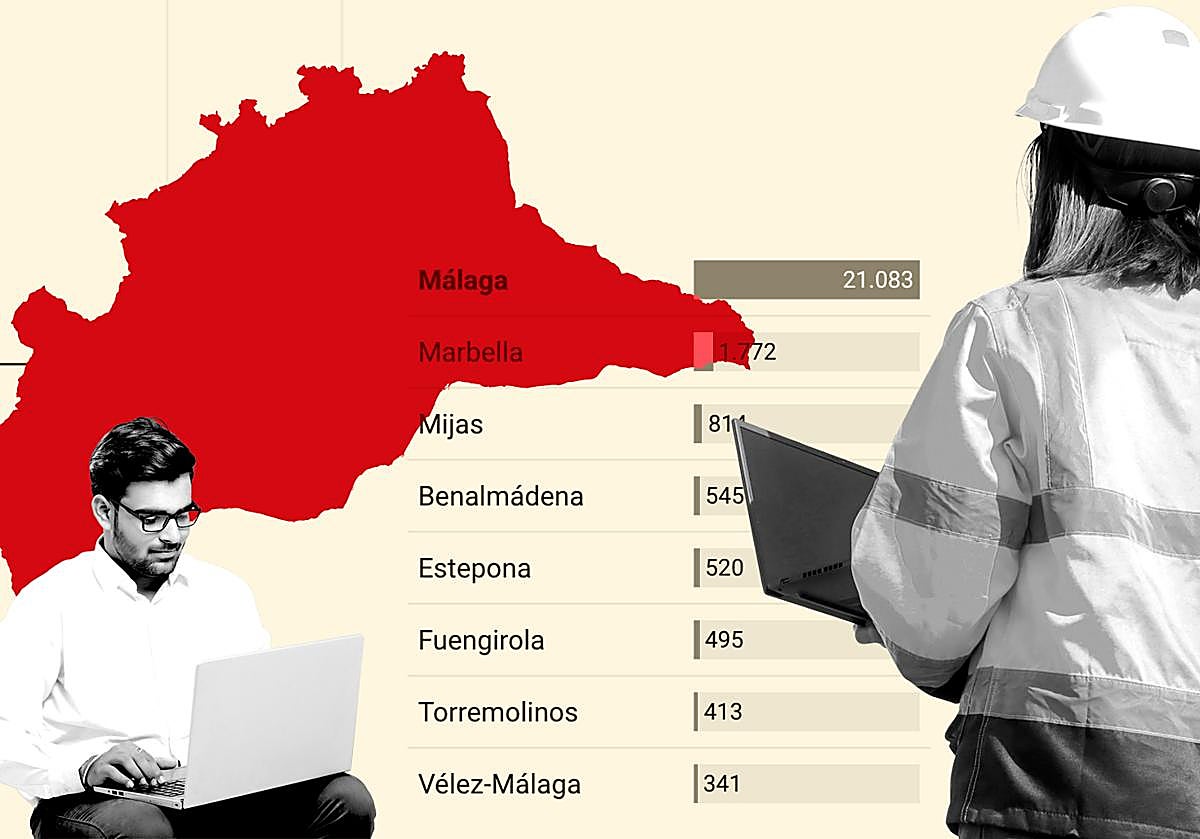
The majority of tech employees in the province (21,000) are based in Malaga city. The city carries the undisputed weight of tech job creation in the province: it added nearly 12,000 affiliates between 2015 and 2025.
Malaga TechPark is the obvious generator of employment. The technology park is thriving thanks to the boost provided by IMEC with its future microelectronics R&D centre, as well as the investment boom in dual-use technologies (which combine civilian and military applications). Recently, for example, Indra inaugurated an advanced avionics centre with 700 professionals.
The presence of technology workers in other municipalities of the province is much more limited than in Malaga city. Marbella, second in the ranking, has only 1,772 workers in this sector, and Mijas, third, falls below 800.
The tech sector is growing fast, but it's still small
Appreciating Malaga's rapid progress in this race shouldn't obscure the long road ahead. Despite its remarkable growth, the size of its tech ecosystem remains modest compared to other Spanish cities. In terms of total tech employment, it ranks last among major cities (the order is: Madrid, Barcelona, Seville, Valencia, Zaragoza and Malaga).
Seville, for example, has more than 10,000 more tech workers. In terms of the proportion of tech jobs relative to total employment, Malaga also ranks last, with six per cent, compared to Barcelona's 12.4 per cent.
The report makes it clear why it is in Malaga's interest to continue prioritising the creation of technological employment. "There is a clear correlation between the presence of technological employment and the level of income in the regions, provinces and municipalities of Spain," the authors of the study say.
It is true that Malaga is still at the bottom of the per capita income and average salary, just as it is true that workers in the tech sector are at the top of the salary pyramid, with an average of more than 36,754 euros per year, compared to the province's overall average of 21,479 euros.
Tech employment involves a large range of jobs, from the obvious software and programming to telecommunications, R&D, pharmaceutical manufacturing and chemical and electronics industries. Eurostat also considers film production and media as tech-related economic activities.
![[]](http://static.vocstatic.com/voc26/latest/assets/images/favicon/surinenglish/apple-touch-icon-57x57.png)