
Analysis
Why hundreds of thousands protested in Malaga and Spain over the Ceuta migration crisis: Key causes behind the rallies
Analysts and sociologists view mass turnouts as a display of social cohesion and solidarity amid rising political polarisation over migration crisis

Málaga
Key takeaways of this story
-
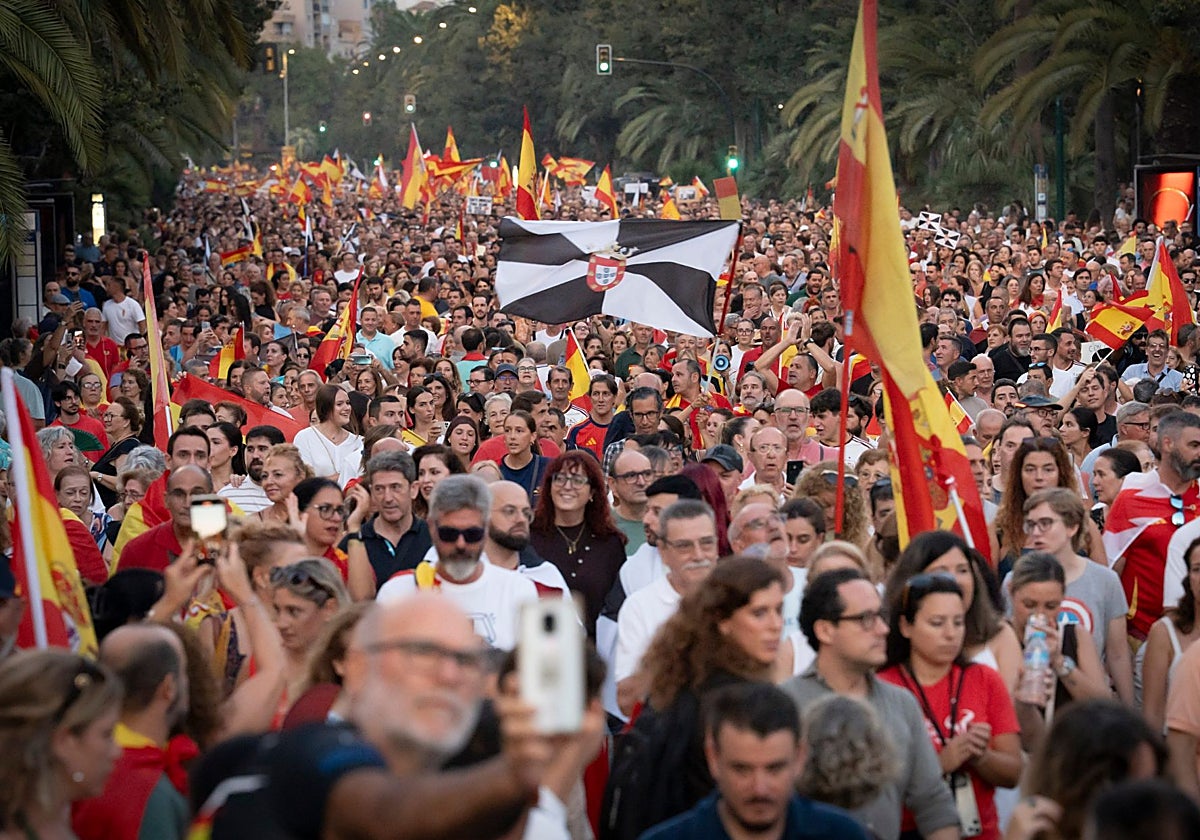
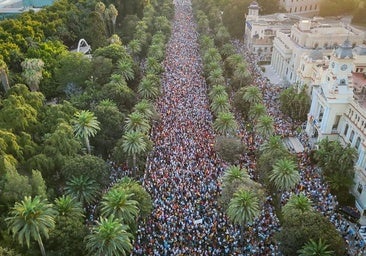
Massive turnout: Over 200,000 residents across Malaga province demonstrated on Wednesday in support of Ceuta following recent border tensions and migration escalations.
-
Sociological consensus: Experts at Malaga University (UMA) note the mobilisations were driven primarily by civic solidarity and shared national identity rather than pure party politics.
-
Political divide: Ruling PP representatives praised the civic response, while opposition PSOE officials faced criticism from local leaders for boycotting the rallies under central government orders.
-
Key turnouts: Rally numbers peaked in Malaga city (over 120,000), Fuengirola (15,000), Marbella (10,000) and Vélez-Málaga (5,000).
Thousands of people in Malaga province responded on Wednesday to the call from various organisations to take to the streets in support of Ceuta. ... The slogans and banners displayed a mix of political messages, the majority of which called on the government to take decisive action to resolve the migration crisis.
There were also direct attacks on the government and, in particular, on Prime Minister Pedro Sánchez.
SUR has spoken to sociologists, lecturers at Malaga University (UMA) and political representatives to analyse the causes and possible consequences of one of the largest protests in Spain's recent history.
Related story
Constitutional Law lecturer at the UMA Pablo Sánchez Molina summed up the situation as follows: "There has been an attack on Spanish sovereignty, in one of the most serious incidents in our recent democratic history. Ceuta is a fully Spanish city. Its inhabitants enjoy all the rights and freedoms of the Constitution."
Sánchez Molina said that the public reaction is not driven by "ideological divisions", but by "a sense of belonging and solidarity towards fellow citizens whose rights and freedom have been compromised".
He highlighted that the absolute priority is the protection of Ceuta and its population, regardless of their religion or other characteristics.
Although Spanish residents do not mobilise as consistently as, for example, the French, they always respond resolutely at crucial moments in history, as was the case during the years of terrorism, the Covid-19 pandemic and now in the face of this external aggression.
Sánchez Molina believes that the demonstration of public discontent and the defence of the people of Ceuta represent "a legitimate exercise of the constitutional rights to freedom of expression and civic participation".
The lecturer said that the central government must take note of the public's discontent and assume responsibilities. Otherwise, it will have to face the elections next year with weakened support.
Unity in the face of polarisation
Sociologist and researcher Elisa Chuliá interpreted the outpouring of support for Ceuta as evidence that, despite political polarisation, there is a capacity for mobilisation around certain causes.
"There is also a desire for unity, provided there are reasons that warrant it," she said. "Society is indeed capable of reaching an agreement on issues that are key to the country."
Although the motivations may have varied, she believes that support for the residents of Ceuta was a key factor. "What has prevailed most is the desire to let the people of Ceuta know that they are not alone and that Ceuta and Melilla are part of Spain."
The images of women crying, concerns about safety, acts of aggression and children unable to go out to the park all contribute to that reaction. "All of this really moves you," Chuliá stated.
Does that mean there was no mobilisation against the government? Chuliá does not think so. "It is clear that some people attended the demonstrations to protest against the handling of the conflict. That is indisputable, but determining how significant that reason was would require data that does not exist."
Chuliá also believes that the rallies were driven more by a sense of collective belonging than by a strictly patriotic sentiment.
"Feeling Spanish or a sense of national pride has undoubtedly played a part, but I would say that what has prevailed most is the feeling of a community that feels under attack and empathises with those who are suffering," she stated.
Chuliá sees this as the source of empathy capable of mobilising even people who could do little from a distance. "Taking to the streets became a way of showing that we haven't forgotten them and that we are concerned about what has happened."
Beyond the differences, Chuliá sees in these demonstrations a desire to reclaim shared spaces in the face of polarisation. "I'm sure that society also wants to overcome this trend."
Political reactions
Political reactions to Wednesday's mass rallies in the province's major towns followed one after another on Thursday, although the truth is that almost all of them have come from those who supported the call for the rallies.
A spokesperson for the local opposition party, PSOE (leading party in the central government), in Malaga stated that they would not be issuing any statements or press releases assessing the rallies.
The Andalusian regional government's representative in the province, Patricia Navarro, declared Wednesday "a day to remember". "Ceuta is not for sale, Ceuta is to be defended," she said.
According to Navarro, this is not just about defending Ceuta, but about defending Spain and the EU. "Let us not forget that Ceuta is a border for our country, but also for the whole of the EU. Therefore, defending its interests means defending the interests of us all."
Given the scale this crisis has reached, Navarro is urging the Spanish government to "take responsibility" and "rise to the challenge, because Ceuta needs to return to normality as soon as possible". "We cannot turn our backs on it," she stated.
President of the provincial authority Francis Salado estimates that more than 200,000 residents of the province took to the streets on Wednesday to show their support for Ceuta.
"It was a demonstration of responsibility, courage and strength for that sister city. A clear, democratic message to the Spanish government," he said.
Secretary-general of the local ruling party in Malaga (PP) José Ramón Carmona criticised the PSOE's "cowardice". "Yesterday, the socialists in Malaga obeyed Sánchez's orders to stay away from the rallies organised by the FEMP and left Ceuta in the lurch," he said.
Carmona highlighted the numbers: more than 140,000 people in Malaga city; 15,000 in Fuengirola; 10,000 in Marbella; 5,000 in Vélez-Málaga and Antequera; 4,500 in Rincón de la Victoria; 4,000 in Estepona; more than 3,500 in Torremolinos; 3,000 in Mijas; 2,500 in Coín; 2,000 in Alhaurín de la Torre; and more than 1,000 in Ronda.
Carmona highlighted "the massive support" from residents who did not have the institutional backing of socialist mayors, such as in Cártama.
Mayor of Malaga Francisco de la Torre thanked his residents for showing "solidarity, concern and desire for the crisis to be resolved soon".
"The success of the rally in Malaga and other towns must have been very heartening for Ceuta. With more than 120,000 people, we have helped make them feel supported, because yesterday we were all from Ceuta," De la Torre said.
"I hope this will provide a boost to the solutions that the Spanish government, with Europe's support, must find, ensuring the return as soon as possible of those who are here irregularly," he stated.
Mayor of Torremolinos Margarita del Cid said: "We, the people of Torremolinos, have made clear our commitment to and support for Ceuta at this particularly difficult time. Yesterday, we witnessed moments full of humanity."
"That is why it is painful and outrageous that some political representatives have chosen to hide away and not stand up for what is right. At times like these, there is no room for ambiguity, silence or excuses. We must stand by Ceuta and its people. To turn our backs on Ceuta in a situation like this is also to turn our backs on many of our own neighbours," she said.
![[]](http://static.vocstatic.com/voc26/latest/assets/images/favicon/surinenglish/apple-touch-icon-57x57.png)