
Water welfare
Malaga's Montejaque dam returns to its usual appearance: not a single drop of water despite reaching its limit four months ago
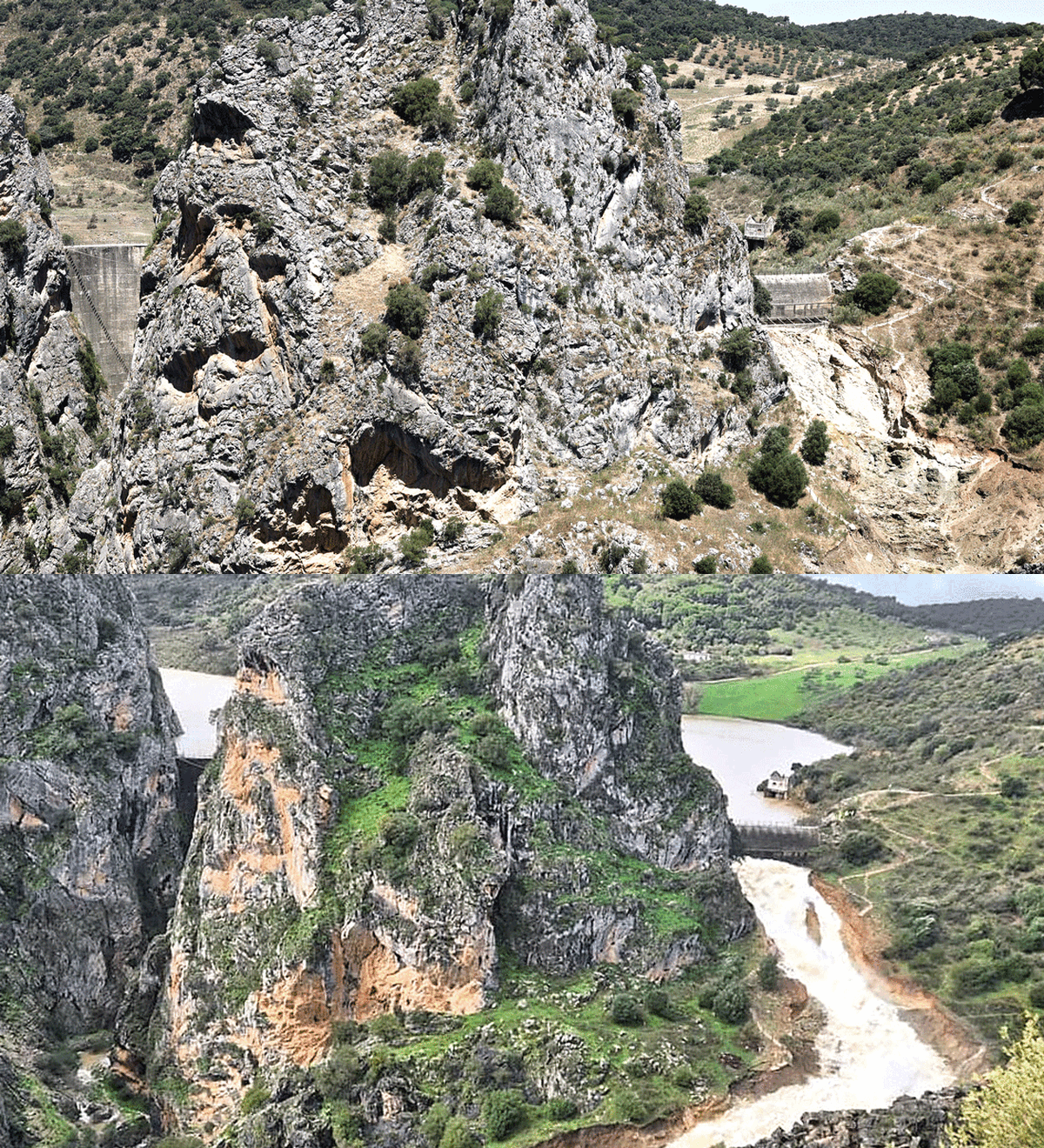
The reservoir, which in February filled up for the first time in a century and almost overflowed, has drained 36 million cubic metres of water
Antonio M. Romero
The intense winter rains in Malaga province this past winter reached their peak in early February. The heavy downpours caused damage to infrastructure (roads, railways, homes and rural roads), drowned crops and forced the evacuation of hundreds of residents in various parts of the province.
This brought the Los Caballeros dam in Montejaque into sharp focus for several days, due to the risk of it overflowing. The dam had never actually stored water or fulfilled its original purpose, for which it was built 103 years ago: the production of electricity.
Throughout its long history, the porous nature of this limestone terrain allowed water to seep into the subsoil and disappear into the underground cavities of the Hundidero-Gato system: one of the most unique cave systems in Andalucía.
Never before this year had there been such a sharp rise in the reservoir's level. The water came within 22 centimetres of the top. This triggered alarms and led to the activation of the spillway, which had never been used before, so its performance was unknown.
Ultimately, eight of the ten siphons functioned and the reservoir managed to safely release water.
Almost 140 days later, the dam stores not a single drop of water. The only remaining evidence of when it was full are some areas of the land where a certain humidity is perceptible.
For approximately two months, the dam was releasing the 36 million cubic metres of water (nine months' water demand in Malaga city) that it had accumulated, according to Mayor of Montejaque Diego Sánchez.
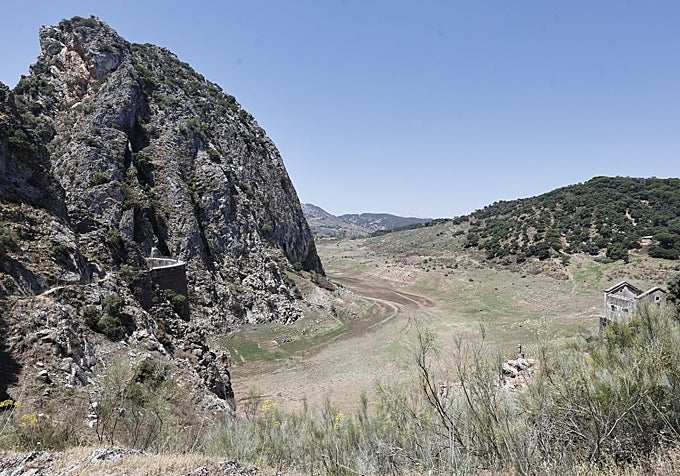
The consequences of the release of water are still visible. In the area near the siphons, the earth is riddled with holes and swept away by the force with which the water came out once the reservoir started releasing water.
In addition, the path that facilitated access to the entrance of the Hundidero cave, which measures 64 by ten metres and through which the Gaduares river disappears underground, sustained significant damage.
Furthermore, for safety reasons, access to the reservoir area is banned. This had become a popular tourist attraction in Montejaque in recent years thanks to its regeneration, which included the restoration of the Taviznilla path and the walkway over the dam, the completion of three via ferratas and the installation of a zip line and a suspension bridge.
Among the projects of the town hall to revitalise this area are initiatives such as the tree museum in the Los Cucaderos, the installation of birdwatching spots (the area is home to species such as the griffon vulture, peregrine falcon, eagle owl, kestrel and Egyptian vulture) and cycling routes.
Sánchez has stated that, for now, there are no deadlines concerning a return to normality. The restoration of the area relies entirely on the owner of the land: energy company Endesa. There is, however, a procedure for the land to be transferred to municipal ownership and the regional government of Andalucía.
Access environmental monitoring and nature news
![[]](http://static.vocstatic.com/voc26/latest/assets/images/favicon/surinenglish/apple-touch-icon-57x57.png)