
Weather
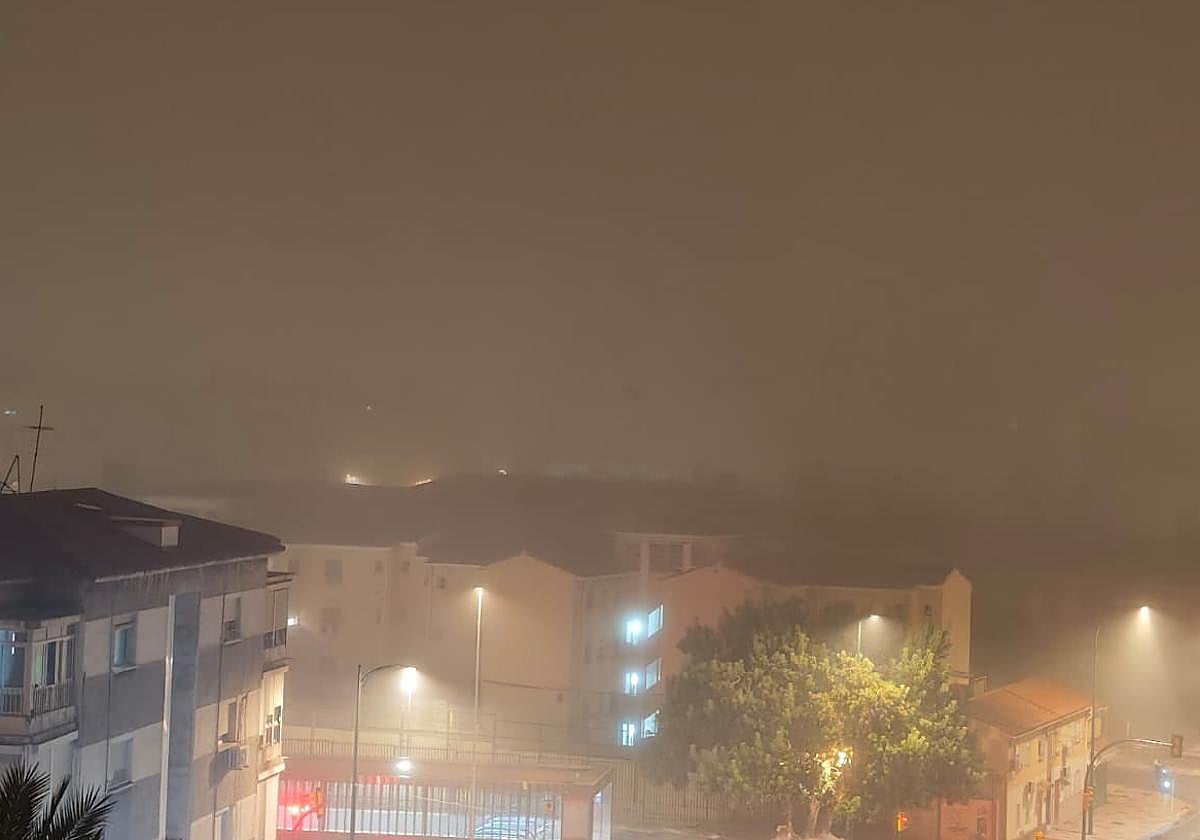
Malaga province wakes up covered in blanket of sea fog
The 'taró' phenomenon explains why the wild coastal vegetation remains green, despite the complete absence of rain, during the summer months

Málaga
Story at a glance
-
Coastal phenomenon: Dense 'taró' sea fog covered Malaga province on Friday, reducing visibility and dropping coastal temperatures by up to 5°C.
-
Ancient origin: The term stems from Malaga's original Phoenician founders, evolving from maritime jargon into popular local terminology across the Andalusian coast.
-
Ecological lifesaver: The damp fog provides crucial 'cryptoprecipitation', watering coastal pine forests, cooling soils and preventing forest fires during dry summer months.
-
Transport impact: Severe episodes temporarily trigger low-visibility flight protocols at Malaga Airport and slow road traffic along coastal arteries.
Most of Malaga province woke up on Friday shrouded in thick 'taró' fog. This phenomenon goes by various names: 'boria' and, in more technical terms, ' ... maritime advection fog'.
The term taró has its roots in the language of the people who founded the city: the Phoenicians.
In reality, its origin has not been thoroughly studied from a linguistic perspective. It does not figure in the RAE's (Real Academia Española) dictionary, although it does appear in the treasury of historical dictionaries of the Spanish language (TDHLE).
Related story
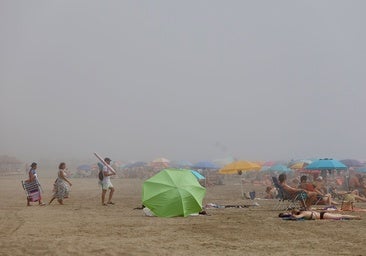
Until a few years ago, the word was scarcely used by those working in the fishing and shipping industries. The ongoing efforts of SUR and local weather experts, such as José Luis Escudero, have helped it become increasingly popular and widely used.
It is now used throughout almost the entire Andalusian Mediterranean coast, from the Campo de Gibraltar and the Costa del Sol to Almeria and even Ceuta.
This summer, 8 August saw the densest taró. It was one of the longest-lasting and geographically most extensive occurrences (spanning the entire Malaga coastline) of recent months.
It reappeared at the start of the Feria de Málaga, albeit with a lower density. Some readers even contacted SUR to enquire about the weather phenomenon.
Why does it happen? As Escudero explains, taró forms when there is a significant temperature difference between the sea surface and the easterly breezes. "This breeze sweeps across the surface and condenses, forming advection fog,"
These same air currents then carry the fog into the city and it is common for it to reach Gibralfaro and Santuario de la Victoria and Fuente Olletas. During the heaviest episodes, it even extends into Los Montes de Málaga.
It generally clears as the sun gets stronger, from midday or the early afternoon onwards, although it may reappear at night.
The taró helps understand the characteristics of Malaga's climate.
Ecologically, the taró fog plays an essential role in understanding how vegetation behaves. Enrique Salvo, director of Malaga University's chair of climate change, explains:
"Taró encounters the Malaga mountains, which form an extraordinary range running parallel to the sea, apart from the Guadalhorce Valley, through which the terral enters."
Salvo continues: "The cool, damp fog reaches these mountains, watering and cooling the vegetation. This helps maintain the exceptional characteristics of the plant life from the Strait of Gibraltar to the Tejeda and Almijara ranges, keeping it green thanks to the sea air during the harshest periods of summer. It also cools the soil, helping to prevent fires and trees from dying."
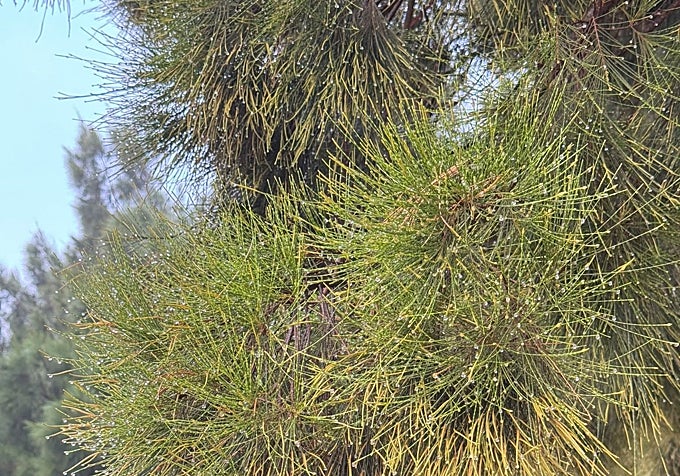
"In recent images taken during a taró episode in La Línea, you can clearly see water condensing on the needles of a Canary Island pine," Salvo says.
"This was one of the successes of the old reforestation programme in the Montes de Málaga. They created a lower belt of Canary Island pines, achieving a double effect: first, a screen against the taró; and second, protection against the pine processionary moth, which avoids this species."
The dense fog also creates conditions that affect the plant's metabolism and prevent certain insects from invading it.
At the same time, moisture condenses on leaves and produces what is known as cryptoprecipitation. This form of rainfall is difficult to record, but the water accumulates on the ground and can remain there for around a day.
"It is not a large amount, but it is very welcome. It does not erode or damage the soil and provides a high level of moisture in the upper layers," Salvo says.
Less heat, more humidity
Escudero points to other effects, including a drop in temperatures along the coast of up to 5C. The difference is easy to demonstrate: "At those moments, you can clearly see the difference between weather stations where the fog has reached and those where it has not."
At the same time, relative humidity can rise above 90 per cent in areas covered by the fog.
However, taró can also have drawbacks. At its peak, it can drastically reduce both sunlight and visibility, even over short distances.
"There are times when you cannot see Malaga at all, with the city centre and coastline completely covered, although the peak usually lasts no more than ten to 15 minutes," Escudero says.
It is therefore no surprise that particularly intense taró episodes can cause delays and force Malaga Airport, which lies close to the sea, to introduce special procedures because of poor visibility during flight operations.
The fog can also cause traffic problems, particularly when it settles over areas such as Plaza de la Marina and especially when it occurs at night.
Beyond these practical effects, Escudero highlights another side of taró: its beauty and its ability to transform the landscape, as well as its connection with Malaga's traditions and identity.
However familiar the phenomenon may be to local residents, people still stop to admire the fog as it moves through the city.
"It is a beautiful phenomenon, especially when it happens at night. It is amazing how it changes the cityscape... For me, it is more beautiful than an eclipse," Escudero jokes.
![[]](http://static.vocstatic.com/voc26/latest/assets/images/favicon/surinenglish/apple-touch-icon-57x57.png)