
Health
Andalusian government declares West Nile virus alert in Fuengirola and Las Lagunas de Mijas
The regional authority has detected the virus in some of the traps set up in towns. The health ministry has also confirmed a mild case of fever in a human in Coria del Río (Seville)
SUR
The regional government of Andalucía has declared Bollullos de la Mitación (Seville), Fuengirola and Las Lagunas in Mijas to be on alert after detecting the ... West Nile virus in mosquito traps.
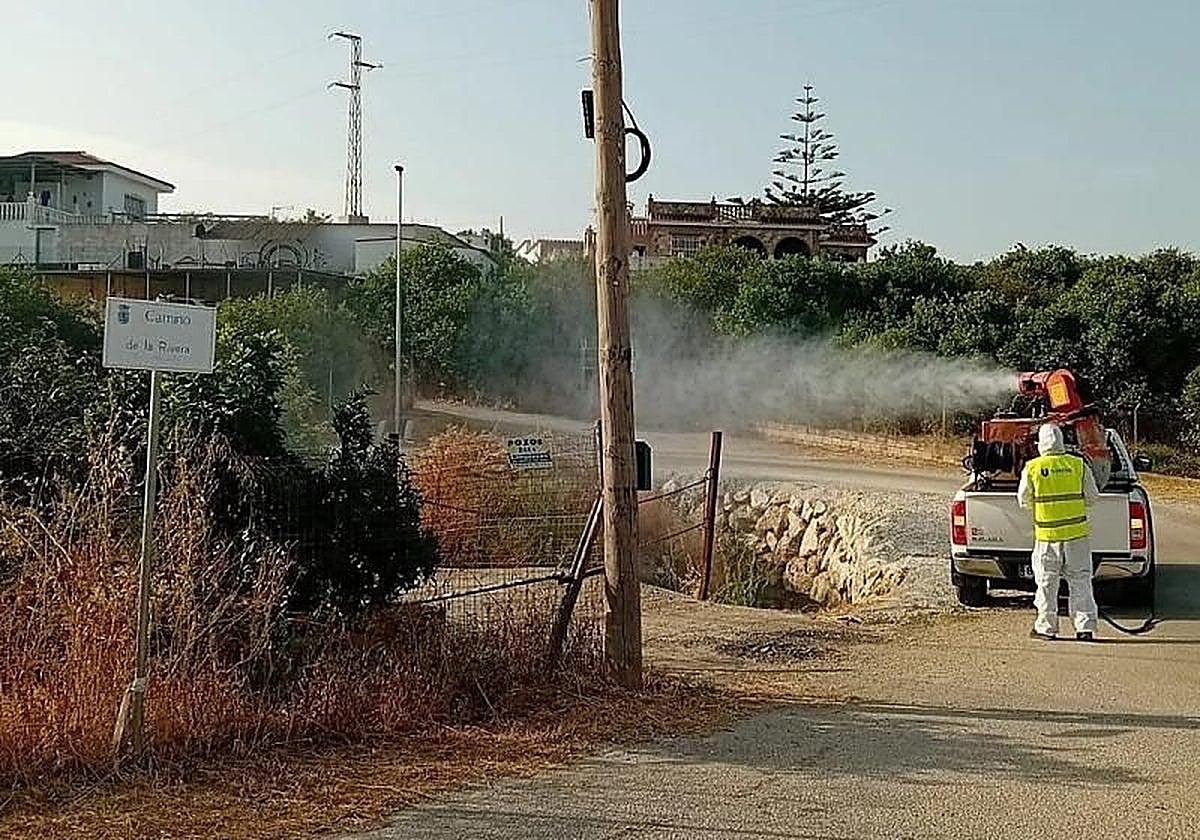
The regional authority will maintain this status in these municipalities for a minimum of four weeks or until an equivalent period has elapsed during which no cases are reported and no circulation of the virus is detected in the mosquitoes that transmit this disease, or in birds or equines within this territory.
According to the regional government, in these areas on alert, the three types of surveillance (entomological, animal and human) are stepped up, community awareness-raising initiatives are launched, and public communication efforts are reinforced through community pharmacies and health centres.
Related story
For its part, the local authority must step up measures to control mosquitoes that transmit the disease while the area remains on alert - in this case, until 21 August. This not only applied to built-up areas but also to any places or locations situated no more than 1.5 kilometres away that have been identified as larval breeding sites or adult refuges.
The regional health offices in Seville and Malaga have informed the town councils of Coria, Bollullos de la Mitación, Fuengirola and Mijas, as well as the provincial councils of Seville and Malaga, of this situation.
New mild case
The authority has also confirmed a new mild case of West Nile virus (WNV) in humans in the region, bringing the total number of cases diagnosed this season to five. The patient is a man living in Coria del Río (Seville) who first developed symptoms on 17 July; the case was confirmed on Friday 24 July via PCR testing carried out by the Virgen del Rocío University Hospital.
This is a mild case identified thanks to the surveillance measures put in place by the Andalusian programme for the comprehensive surveillance and control of West Nile fever vectors for residents and visitors to municipalities under special monitoring or designated as alert areas who are showing symptoms. Consequently, the regional ministry has decided to extend the alert status for this Seville municipality until 14 August.
Including Bollullos de la Mitación (Seville), Fuengirola and Las Lagunas (Malaga), there are now fifteen Andalusian municipalities designated as areas on alert: Pulpí in Almeria; Torredonjimeno in Jaén; Salobreña in Granada; and Almensilla, Aznalcázar, Coria del Río, Constantina, Gelves, La Puebla del Río, Mairena del Aljarafe, Palomares del Río and Villamanrique de la Condesa in the province of Seville.
Viral circulation was also detected in Benacazón (Seville) and Bujalance (Cordoba), although the point of detection was located more than 1.5 kilometres from the town centre, so it was not necessary to declare these areas on alert.
Weekly report
To date, five mild cases of West Nile fever have been diagnosed this year in Andalucía, specifically in the towns of Palomares del Río, Villamanrique de la Condesa, La Puebla del Río and Coria del Río, following laboratory tests on 262 individuals and screening for arboviral infections in 101 patients with viral meningitis, as well as 688 tests for West Nile virus in blood donor screening, all of which returned negative results. Nor has any circulation of WNV been detected in equines or wild birds in Andalucía, with 208 birds analysed.
Since the start of the period of high mosquito densities, a total of 3,310 tests have been carried out on 213 traps, all of which have so far proved positive: in Pulpí (Almería), Torredonjimeno (Jaén), Salobreña (Granada); Bujalance (Córdoba); Benacazón, Constantina, Coria del Río, La Puebla del Río, including the Dehesa de Abajo area and the town centre; Almensilla, Aznalcázar, Gelves, Mairena del Aljarafe, Palomares del Río, Bollullos de la Mitación (Seville); and Mijas (Malaga).
Furthermore, a gradual increase in mosquito densities is being observed; over the past week, high densities of female disease-carrying mosquitoes have been recorded in Los Palacios y Villafranca, La Puebla del Río, Coria, Isla Mayor, Villamanrique de la Condesa and Palomares del Río, and high densities in the Seville municipalities of Mairena del Aljarafe and Almensilla, in Bailén, Baeza and Navas de San Juan (Jaén), Sanlúcar de Barrameda (Cádiz), and La Carlota (Córdoba).
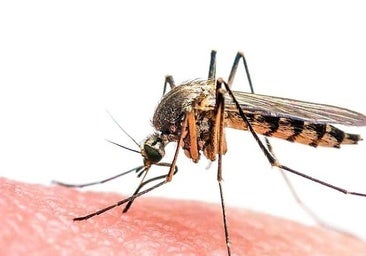
The regional government has 120 of its own traps distributed across all the provinces to monitor and control the circulation of the virus in mosquitoes of the genus Culex, mainly Culex pipiens and Culex perexiguus. It also centralises data from traps operated by other authorities, such as the provincial councils of Huelva, Seville and Cordoba, the Doñana Biological Station of the CSIC (EBD-CSIC) and the University of Córdoba (Enzoem-UCO), thereby receiving information from around 215 traps. This allows it to take decisions on risk levels in each municipality or the declaration of an area as being under municipal alert or a ‘singular area’, should the circulation of the virus be detected in a settlement remote from the municipality’s main centre.
Recommendations
The regional authority is calling on both the relevant authorities and the public to take protective and preventative measures, with particular regard for vulnerable people, focusing primarily on avoiding mosquito bites.
The authority emphasises the need to use registered, topical mosquito repellents, to cover as much of the body as possible with light-coloured clothing, and to avoid strong smells (perfumes, scented soaps, etc.) as these attract mosquitoes.
It also encourages people to step up measures at home, such as fitting mosquito nets, using household insecticides or room sprays, or switching off lights when they are not needed, as light attracts mosquitoes.
Another key measure is to prevent the build-up of stagnant water, where mosquitoes breed their larvae. It is therefore recommended that people maintain pools and washing areas properly, and empty any water that may accumulate and go unnoticed in gardens, plant pots, toys or buckets.
In the case of livestock farms, it is also advisable to change the animals’ drinking water frequently; avoid water from puddles in vehicle tracks or on roads, water leaks from taps or broken pipes, and drinking troughs that are leaking or where the water is not changed often enough.
![[]](http://static.vocstatic.com/voc26/latest/assets/images/favicon/surinenglish/apple-touch-icon-57x57.png)