
Sun&Tech Málaga
Malaga province seeks to make the leap from attracting technology to creating intellectual property as global innovation hub
The construction of the IMEC microelectronics centre, retaining talent, funding projects and expanding into smaller towns form the roadmap

Málaga
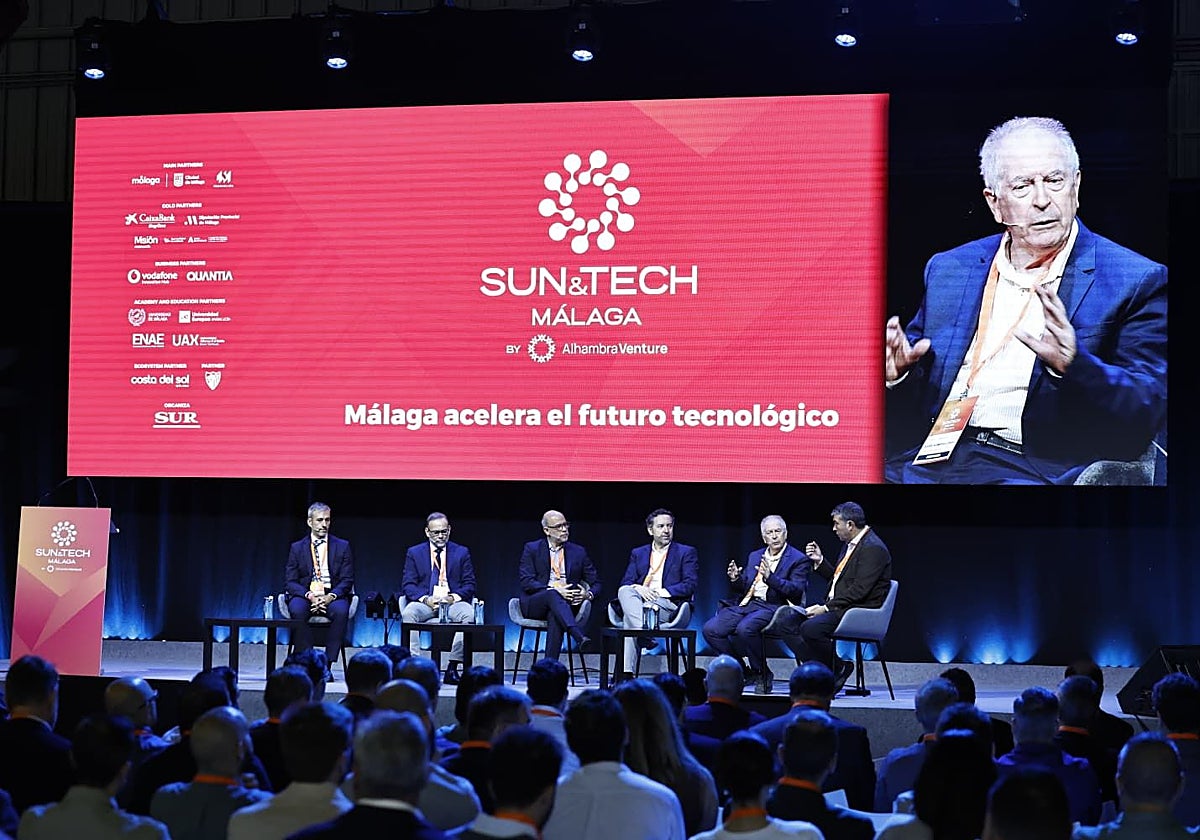
Malaga's technology ecosystem faces the challenge of moving from attracting multinational companies to creating its own technology and intellectual property. This was the central ... theme of the round-table discussion at the sixth Sun&Tech Málaga by Alhambra Venture on Wednesday.
The event was moderated by Sur Editor-in-Chief Javier Recio. During the debate, head of TechPark Felipe Romera referred to the 'Malaga effect', noting that Malaga is the only medium-sized city "in the world" that has the opportunity to establish itself as a global hub for innovation in four technologies: artificial intelligence, cybersecurity, microelectronics and quantum computing.
"Malaga is experiencing a special moment, one of great opportunities. It is highly regarded worldwide and enjoys significant global visibility," Romero said.
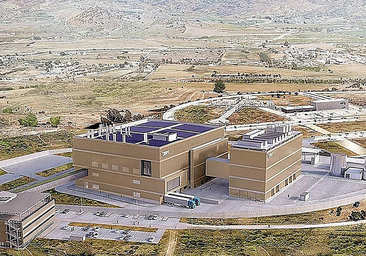
He highlighted the collaboration with world-class centres such as the Barcelona Supercomputing Centre (BSC) and one of the six global centres under the agreement between Accenture and Nvidia. He also mentioned the driving force in cybersecurity thanks to companies such as Google and Capgemini, the forthcoming establishment of the IMEC microelectronics R&D centre and the arrival of a quantum computer ranked among the top ten in the world.
Promálaga manager Francis Salas stressed the need to retain both in-house talent and talent attracted through top-tier projects. He also highlighted the importance of a greater presence of investors willing to take financial risks.
Salas said that Malaga city council is undertaking an internal transformation of its digital systems to prepare for the impact of AI on productivity and administrative procedures.
Avoiding the 'cathedral in the desert' effect
As for the IMEC, general director of Fundación Ricardo Valle de Innovación (Innova IRV) Eduardo Valencia warned that the facility must act as a catalyst rather than a final destination, in order to avoid the so-called 'cathedral in the desert' effect, where a single centre operates in isolation from the productive and industrial fabric.
Valencia advocates building a local industrial ecosystem capable of generating demand and collaborating with the centre, by integrating microelectronics into sectors such as agriculture, water, defence and cybersecurity.
Furthermore, particular mention should be made of the training programmes of the ICT chairs in Malaga, Granada and Seville, the semiconductor centre at the Escuela de Organización Industrial (EOI) and Promálaga, as well as the microelectronics start-up established by Instituto Ricardo Valle and selected by the European Commission for the IPCEI projects.
From an academic perspective, Malaga University's Juan Carlos Rubio pointed out that Spain ranks ninth in research but 24th globally in innovation (14th in Europe), which is why the UMA is working to accelerate the transfer of knowledge to the business sector. Rubio explained that the institution, which is celebrating the 30th anniversary of the Spin-Off Awards with some 200 start-ups having emerged from its classrooms, has 17 approved knowledge-based companies, including examples such as Alga Photonics and Bioherent.
Rubio said that the university leads the way in international patents in Andalucía (it is the fifth-ranked institution nationally) and has multiplied its turnover from innovation and technology transfer projects between 2021 and 2026, supported by initiatives such as the IMEC chair and the chip chair. However, he identified the lack of public and private funding during the intermediate stages of technological maturity as the main obstacle and stated that technology transfer must be two-way and guided by the challenges businesses are facing.
Finally, head of the provincial authority's modernisation and public administration Eduardo Peláez emphasised the need for the 'Malaga effect' to extend beyond the city and reach the 103 municipalities in the province, particularly the smallest ones. He said that the provincial authority acts as a two-way conduit to channel the development, investment and employment generated in the city to the whole of the province, while also promoting the potential of Malaga's towns and villages in areas such as entrepreneurship and technology.
The five-year challenge
Javier Recio asked the experts what Malaga's technology ecosystem should look like in five years' time. The speakers agreed that, within this short timeframe, the province must demonstrate that it is no longer merely a tourist destination and must establish itself as a global hub for innovation where it creates its own technology and intellectual property.
Felipe Romera summed up the medium-term objective with a straightforward headline: "In five years' time, every newspaper in the world must be reporting that Malaga is a global hub for innovation." To achieve this, he stressed the importance of combining the arrival of start-ups and leading companies with institutional cooperation and professional management teams, such as Innova IRV.
Romera highlighted what he calls "the intangibles": global relationships that enable events whose initial probability was "zero" to emerge, citing as an example the establishment of the IMEC microelectronics centre in the city. "It is these intangibles that ultimately enable Malaga to develop exponentially," he said.
Francis Salas focused on the financial capacity of the ecosystem as the main barometer for measuring success. His aim for the next five years is to exceed "one billion euros in investment for the ecosystem's start-ups". To achieve this, he has set as priority tasks the removal of obstacles that slow down business creation and the attraction of capital, as well as the promotion of face-to-face "hyper-connectivity" between local players and the main international technology hubs.
In-house design and transfer
The development of in-house products is the key metric Eduardo Valencia highlighted. He attributed success to having microelectronics and technology developed entirely in-house and highlighted Innova's role as a "bridge" connecting the local business community with IMEC. Valencia announced that a new microelectronics laboratory will be made available to start-ups to feed new talent and businesses back into the ecosystem.
From an academic perspective, Juan Carlos Rubio highlighted the role of the UMA as a driving force for change. Deputy chancellor Teo López has created a separate office dedicated to innovation, with the aim of forging closer links with the business sector. Among the measures already under way, he mentioned the creation of a trends observatory, laboratories and meetings with clusters to "overcome that barrier" and reach the market. He also proposed an indicator to measure how many local companies emerge from university research, whether they manage to scale up and whether they achieve international impact.
The extension of the model beyond Malaga city is also a key topic of discussion. Eduardo Peral pointed out that the provincial authority's "DNA" lies in providing resources, support and information to local councils, particularly the smallest ones, so that they can play their part in this development.
Felipe Romera raised the stakes for Malaga as a technological hub, not just in Spain, but on a "global" scale. To achieve this, the vision must be aligned with opportunities as they arise, such as the arrival of companies and new European funding, and the transformative role of the UMA. "Have no doubt that we are going to be a global innovation hub," Romera stated.
