
Infrastructure
Malaga province starts the school year without solutions to motorway gridlock
It has been two years since the study into possible connections with Rincón began, while the extension of the western ring road, the northern access road and the distributor road are still pending
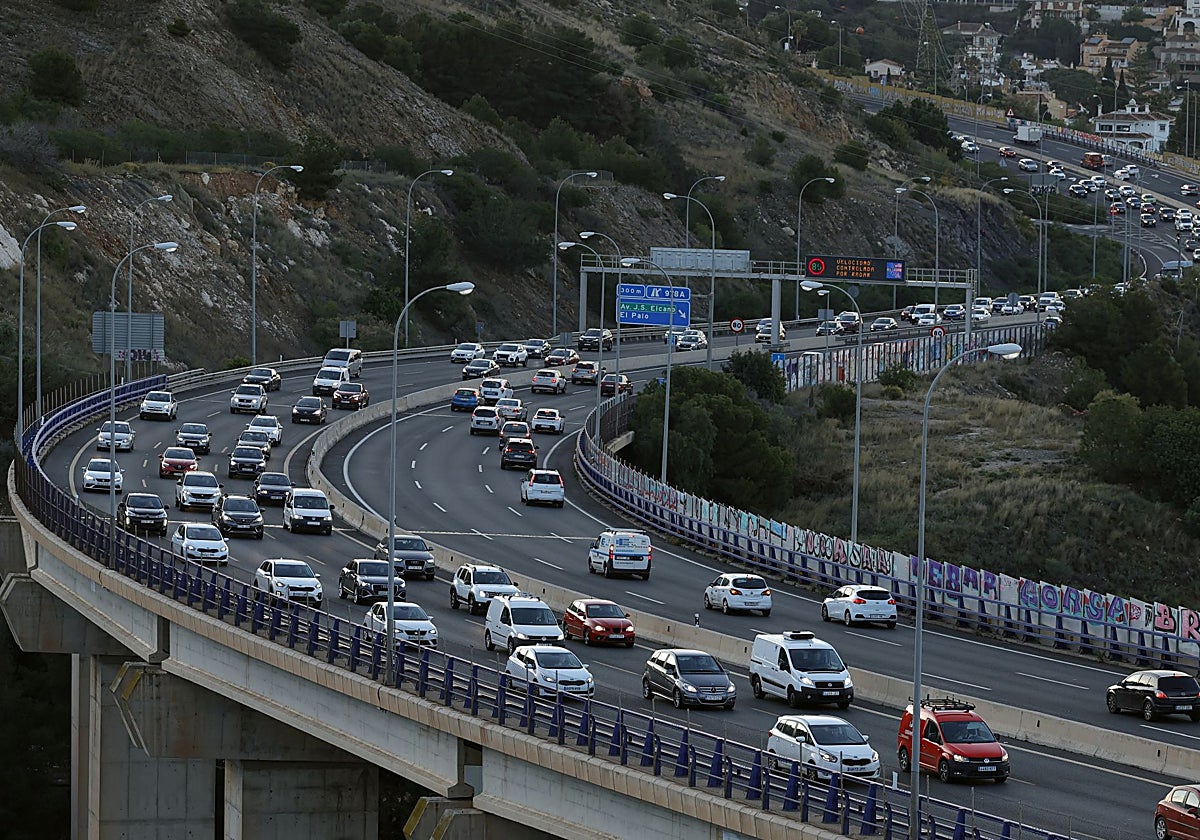

The lack of planning and substantial investment has led to a serious capacity problem in the province of Malaga. Vital sectors such as housing, energy, ... water and transport are suffering.
Malaga city and its wider area are beginning to outgrow their boundaries. The necessary infrastructure has not matched demographic and economic growth. Now that the new school year has begun, the problem has become more acute on motorways and access roads.
The first to return to school at the start of the month were nursery pupils, followed by primary schools last week and secondary school and vocational training students this Tuesday. University students are returning in stages until 21 September. Added to all this is the return to normality and work following the holidays. Gridlock is guaranteed.
All this traffic means that the people of Malaga are spending more and more time arming themselves with patience anticipating traffic jams. If, on top of that, there is an extraordinary circumstance such as an accident, things get even more complicated.
On Tuesday, a multiple-vehicle collision on the A-7 caused 13 kilometres of traffic jams between Fuengirola and Torremolinos. "An hour-long traffic jam on a stretch that normally takes ten minutes. The authorities aren't doing anything," a Diario SUR reader wrote in an email.
Solving Malaga's transport problems is not a matter for a single authority, nor is it limited to external traffic alone. It also concerns internal traffic.
However, the lack of investment by the central government and the Ministry of Transport in major outstanding transport links is glaringly obvious. We are talking about improving the Malaga-Rincón, Malaga-Torremolinos and Torremolinos-Guadiaro links, as well as the northern access road to the airport.
The regional government has also been failing for decades to deliver the Vial Distribuidor, which would connect the CTM and the PTA with Alhaurín and Churriana.
Nothing is going to change in the short term, given the current state of planning processes and the lack of central government funding.
1. The ordeal for drivers travelling between Malaga and Rincón
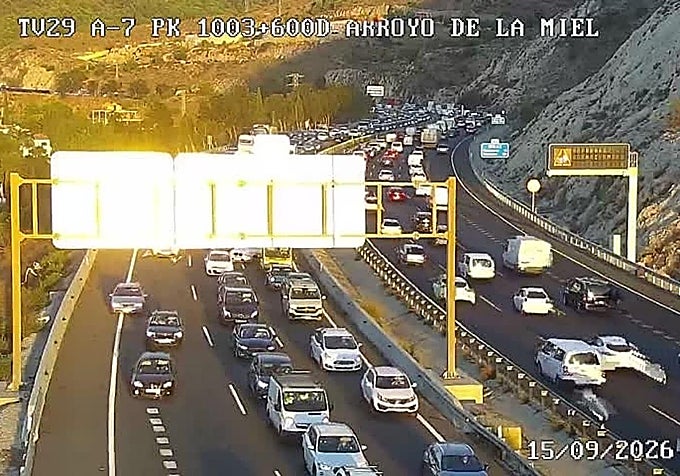
Drivers travelling between the Axarquía area and Malaga city face particular difficulties. It is not only vital to increase capacity on the motorway, but also to ensure that its exits and junctions can "relieve congestion".
Over a year ago, the provincial authority and the councils of Malaga and Rincón submitted a project to the Ministry of Transport to redevelop seven access points between the municipality of Rincón and the eastern part of Malaga city. They estimated the necessary investment at just over 15 million, but allegedly received no response.
There have been no improvements of the motorway since the widening of a lane between the San José tunnel and Cerrado de Calderón in 2011. The Ronda Este-Rincón, a bypass around the old Araña link, is now 23 years old. Daily traffic has soared by 20 per cent during this time.
As if that were not enough, the failure to update the route maps for the intercity bus service does not help matters.
It has been two years since the government awarded the contract for the major study into options for improving the eastern section of the A-7 motorway (between kilometres 962 and 989). This study analyses the feasibility of building a new outer ring road (a completely new route through the interior) or expanding the capacity of the existing A-7.
Furthermore, the eastern part of Malaga city and Rincón remain in limbo as to whether they will "favour" in the long term from the expansion of the Malaga metro network. The ongoing study, however, could conclude that opting for the PTA or Ciudad Jardín is a better option.
Meanwhile, the exit sections and junctions on the A-7 motorway as it passes through El Palo and Rincón de la Victoria are experiencing very high traffic volumes, exceeding 95,000 vehicles a day.
2. The never-ending delays between Malaga and Torremolinos
A government project to build a lane for buses and high-occupancy vehicles between Torremolinos and Malaga appeared in the budget 17 years ago, but the idea was shelved. Instead, the decision was to increase the capacity of the motorway.
It is nine kilometres long and the plans have already been drawn up, but the road has been caught up in the environmental assessment process for over a year. The estimated budget is 190 million. It includes a revised route for the viaduct over the Guadalhorce, this time further north.
The average daily traffic volume on this key route is over 125,000 cars. That is 10,000 more than 20 years ago, according to DGT (Spanish traffic authority) records.
3. The overwhelmed Costa del Sol
While in the Costa del Sol it is becoming increasingly difficult to hold out hope for the coastal railway or improvements to the local commuter rail service, a new study into alternatives is under way.
Experts have taken up the task of resolving the road traffic problems between Torremolinos and Torreguadiaro (Cadiz). The contract is worth 689,000 euros plus IVA. The deadline for completion was one year.
The A-7 carries a high volume of traffic every day. In 2019, the section between Fuengirola and San Pedro Alcántara exceeded 65,000 vehicles on average per day, even reaching 93,945 at the traffic counting station near San Pedro. "The level of service on the A-7 does not reflect the reality," experts admitted at the time.
Global analysis
The authorities are considering increasing the capacity of the A-7 motorway, including the reorganisation of access points through the construction of feeder roads, side roads or service roads and the refurbishment of junctions.
The construction of bypasses in densely populated areas is also under consideration, as well as new connections between the A-7 and the AP-7 and improvements to existing ones.
In contrast, urban development pressure on the A-7 means that actions to expand capacity, create service roads and collector roads to reorganise access may, in many sections, be unfeasible "due to the economic and social cost of the expropriations that would be necessary".
4. Two decades of procedures at the northern access road
On 7 December 2005, the regional ministry of public works issued the first commission for a feasibility study into a northern access road to the airport. In 2018, the project had to be sent back, even though the contract had already been awarded, due to the need to accommodate another outstanding project: the Vial Distribuidor.
It has received environmental approval, but no construction work is currently under way.
According to the new design, which centres on a large roundabout at the exit of the Alhaurín de la Torre ring road, this area will handle half of the road traffic heading to an airport that is set to welcome 30 million visitors a year and which requires reliable alternatives.
The proposed new solution centres on a large eliptical roundabout at the aforementioned junction (kilometre 230 of the A-7). Its dimensions are designed to ensure that the connections from this roundabout to the new northern access road and the aforementioned western distributor road are adequately separated.
5. The Vial Distributor: yet another glaring omission
The Vial Distributor is designed to handle heavy traffic between the CTM and Churriana, passing through the industrial areas. The regional government awarded the contract in 2009, but the economic crisis brought it to a halt.
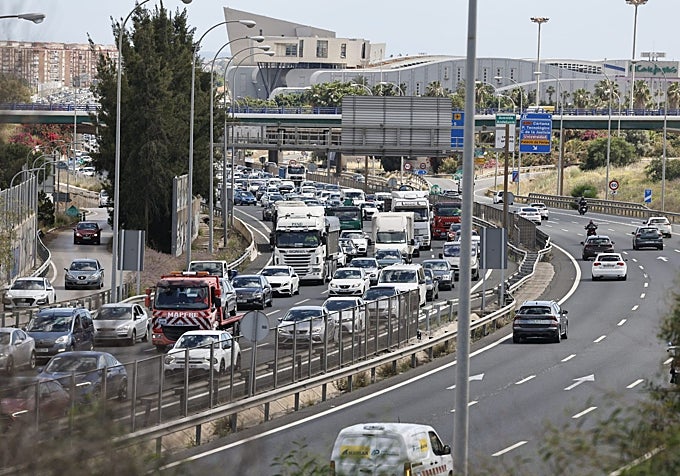
It would link the towns of Alhaurín de la Torre, Churriana and Campanillas and provide direct access to the airport, the Andalusian TechPark, Mercamálaga, the Centro de Transportes de Málaga and the university.
Its construction would alleviate chronic gridlock impacting business parks and major transport routes such as the access motorway. In fact, this has long been a key demand of Apoma, the employers' organisation representing industrial areas.
6. Bus and HOV lanes and park-and-ride facilities
Tackling transport issues without taking into account that they form part of a wider system is a mistake.
In Malaga city, problems are multiplying, as are unfavourable traffic reports for new projects and extensions. A clear example is Plaza Mayor or the pending project to take traffic underground along a key route such as Valle Inclán, which now faces the challenge of absorbing traffic from the future shopping centre on the site of the former Salyt.
The city council has not undertaken any of the park-and-ride projects to enable drivers to leave their cars in areas such as the Carpena area or the Totalán stream and get around the city using a public transport system that is constantly expanding.
The metro and EMT buses carry over 70 million passengers a year. The figures are rising steadily. The same is true of the Cercanías commuter rail service and the intercity bus service.
The most recent developments include the HOV/ bus route entering via the police station, which the regional government opened last year. There is also some progress on the Alhaurín route, where a major expansion of the A-404's capacity is currently under way.
Similarly, work has just begun on extending the Guadalhorce motorway from Casapalma to Cerralba. The next section, up to Zalea, is currently at the planning stage.
![[]](http://static.vocstatic.com/voc26/latest/assets/images/favicon/surinenglish/apple-touch-icon-57x57.png)