
General strike 2026
Malaga province faces critical 11 November as strike coincides with amber weather warning for rainfall of up to 100mm
The province is under an amber alert due to heavy rainfall and strong gusts of wind on a day of protests
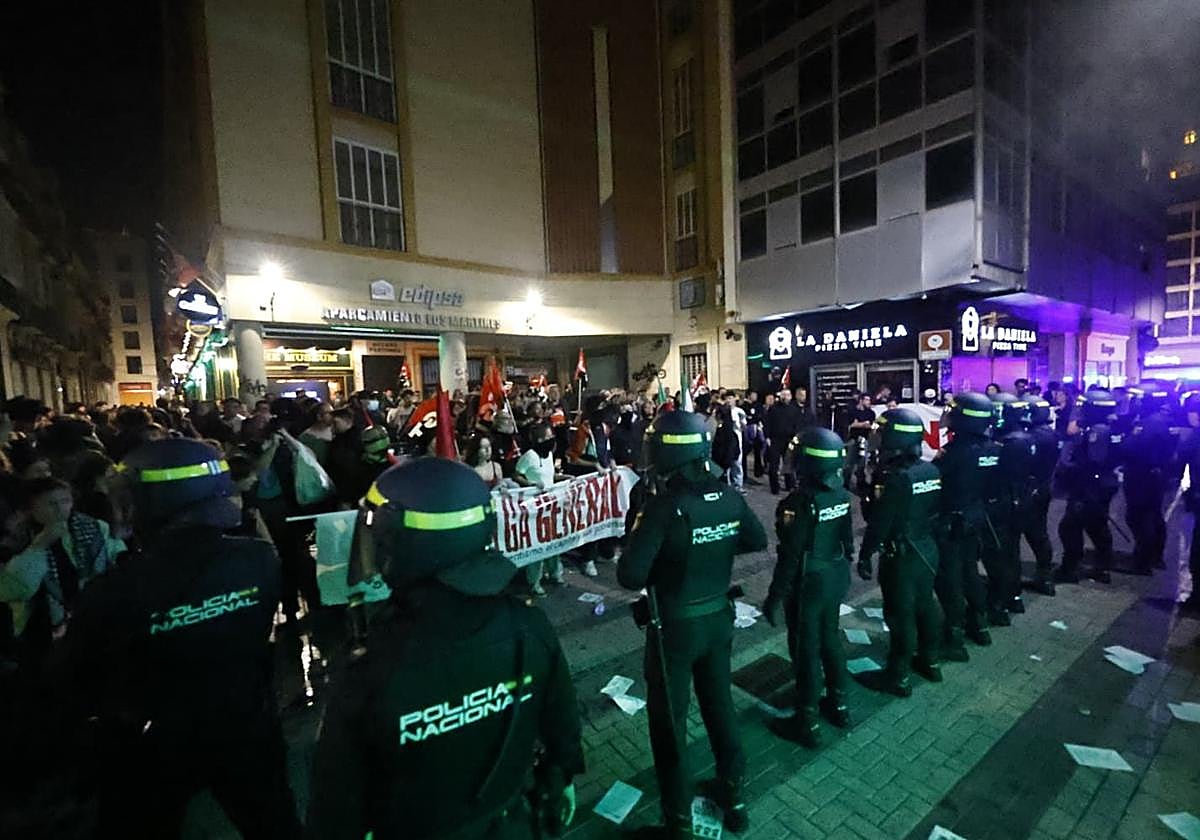

Malaga province is facing the perfect storm this Wednesday, 11 November: the day of the general strike Spain has been preparing for and of an ... amber alert for heavy rainfall and strong winds.
Storm Charles has arrived in the province precisely when nationwide protests over wages, the cost of living and the access to housing are taking place, with a foreseeable disruption to transport.
As the storm is a system moving southwards, it carries much higher levels of moisture than conventional Atlantic fronts. It will leave rainfall totals of up to 100mm in just 24 hours.
Related story

Aemet (state weather agency) has raised the alert level to amber for the Ronda, Guadalhorce Valley, Vega de Antequera and Costa del Sol areas, the latter including the city of Malaga.
In the Serranía de Ronda, rainfall is expected to exceed 80mm over 12 hours, accompanied by southwesterly wind gusts of up to 90km/h. Meanwhile, in Malaga city and along the coast, the risk of localised flooding has increased substantially, with forecasts of up to 80mm over 12 hours and wind gusts of up to 70km/h.
Only the Axarquía area will remain under a yellow warning, although even there rainfall could reach 60mm and the wind could get to gusts of 70km/h. The impact will last throughout the day.
An unprecedented call to action: social movements and mainstream trade unions
The main event of the day in the city of Malaga is the protest, which will set off at 6pm from Hospital Noble and end at Puente de las Américas. In the early hours of the morning on Wednesday, the picket lines organised by the groups that had initially called for the demonstration organised their members and deployed them across the area.
The 11 November call for action stands out for its unprecedented nature. Originally driven by social movements linked to the right to housing, the strike was subsequently taken up by the mainstream trade union movement, which added demands regarding pay conditions and the defence of public services.
Trade unions join in: unity of action
The coming together of these organisations has highlighted the tension between two divergent social cultures: the assembly-based, horizontal and youth-led approach of residential and housing platforms, as opposed to the statutory and hierarchical structure of traditional trade unions.
To overcome the barriers of precariousness and fragmentation resulting from remote working, which make it difficult to ensure strict compliance with working conditions among the younger population, the call to action has broadened to encompass the concept of a "social strike", calling for a boycott of consumption, energy and care services, backed by the organisation of residential pickets in commercial and hospitality districts.
Despite these organisational and generational differences, the organising bodies have come together in a united action. The mobilisation is backed by a common front comprising eight organising organisations: the tenants' union, the students' union, CCOO (Comisiones Obreras), UGT (the general union of workers), CGT (the general confederation of labour), CNT (the national confederation of labour), the SAT (Andalusian workers' union) and teachers' union Ustea.
The railway strike
The railway sector is also holding two extra days of strike action, before and after 11 November, called by the train drivers' union (Semaf) to demand better safety conditions following the tragedies in Adamuz and Urda.
Impact by sector: hospitality and retail
As for the labour sectors, particularly high participation is expected in education, transport and hospitality, while the impact will be more moderate in the banking sector, industry and small businesses.
Malaga's retail and hospitality sectors are confident they will be able to open their doors as normal and carry on with business without any incidents. Initially, virtually all shops, shopping centres, bars and restaurants will open and they will only consider closing if there is any kind of disturbance involving violent pickets. The main uncertainty lies in what will happen in the afternoon, as the CEM has advised businesses in the city centre to temporarily close their shutters while the demonstration passes by.
President of the historic centre traders' association Rodrigo Bocanegra has called on the police to step up surveillance throughout the area, particularly in Plaza Félix Sáenz, amid fears that picket lines may attempt to prevent shops from opening: "We stress the importance of reconciling the legitimate right to strike and to demonstrate with the right to work and to carry on business, while ensuring at all times the safety of people and respect for business premises."
Leaders of this business group said they had been in contact with both the police and the CEM to assess how the day will unfold and prevent any potential incidents. They pointed out that logistics and goods distribution areas, the Andalucía TechPark and Malaga Airport are among the locations where the highest number of incidents could occur during the day.
Furthermore, following discussions with trade unions, the CEM has advised that retail premises along the route of the demonstration should consider temporarily closing their premises while the demonstrators are passing through, as a precautionary measure to ensure the safety of staff, customers and shopkeepers.
A quick tour of the city reveals that shopping centres are also planning to open as normal. Plaza Mayor, for example, has announced that it will keep its premises open during the usual opening hours.
The hospitality sector has conveyed a similar message, as virtually all establishments in the city are set to open. President of the Malaga hoteliers' association Javier Frutos hopes that both the right to strike and the right to work will be respected. "Most businesses will be open. Let's hope they can exercise that right, that everything proceeds as normal and that any picket lines that do appear are purely for information purposes," he stated. Should this not be the case, he said they would approach the trade unions and organisers, urging them to act responsibly.
Healthcare, transport and education
To ensure essential travel, the authorities have ordered mandatory minimum services.
The Ministry of Transport has established minimum services to guarantee Renfe's operations over the three days. Commuter rail services will operate at 75 per cent capacity during peak hours (6am to 9am, 1.30pm to 3.30pm and 6.30pm to 8.30pm) and at 50 per cent capacity during the rest of the day.
High-speed and long-distance trains will operate at 72 per cent of their regular schedule. In this case, Malaga is not affected, as the line closure following the Urda accident leaves the Costa del Sol capital without high-speed rail service.
Medium-distance routes will operate at an average capacity of 65 per cent. In this case, connections between Malaga and Seville, Cordoba and Granada will feel the reduction.
As for buses (EMT) and the Malaga metro, the city council has guaranteed that the urban transport system will be operational from the early hours of the morning, with 60 per cent of minimum services running.
In the healthcare sector, the regional government has established minimum services equivalent to those it provides on a public holiday or a Sunday, fully ensuring care in A&E, intensive care, resuscitation, delivery theatres, emergency operating theatres and diagnostic tests that cannot be postponed.
At the same time, care for critical conditions and treatments that cannot be delayed (such as chemotherapy, radiotherapy, cancer surgery, dialysis, oxygen therapy or ovarian punctures that have already begun) is fully guaranteed.
In primary care, health centres without their own A&E department will have at least one doctor on call during their usual opening hours, while satellite clinics will not offer routine consultations and will refer their patients to the relevant referral centre. The 061 emergency service will operate with its full staff, while Salud Responde will keep three-quarters of its call centre operators on duty.
Schools will remain open. All primary and secondary schools must have at least one member of their management team present at all times. The number of additional teaching staff assigned varies depending on the number of pupils enrolled at the school.
