
Infrastructure
Malaga steps up work to overhaul key sewage mains at Sacaba and Guadalmar
Emasa's drainage and pipe replacement programme around Sacaba beach and Guadalmar totals more than €11 million
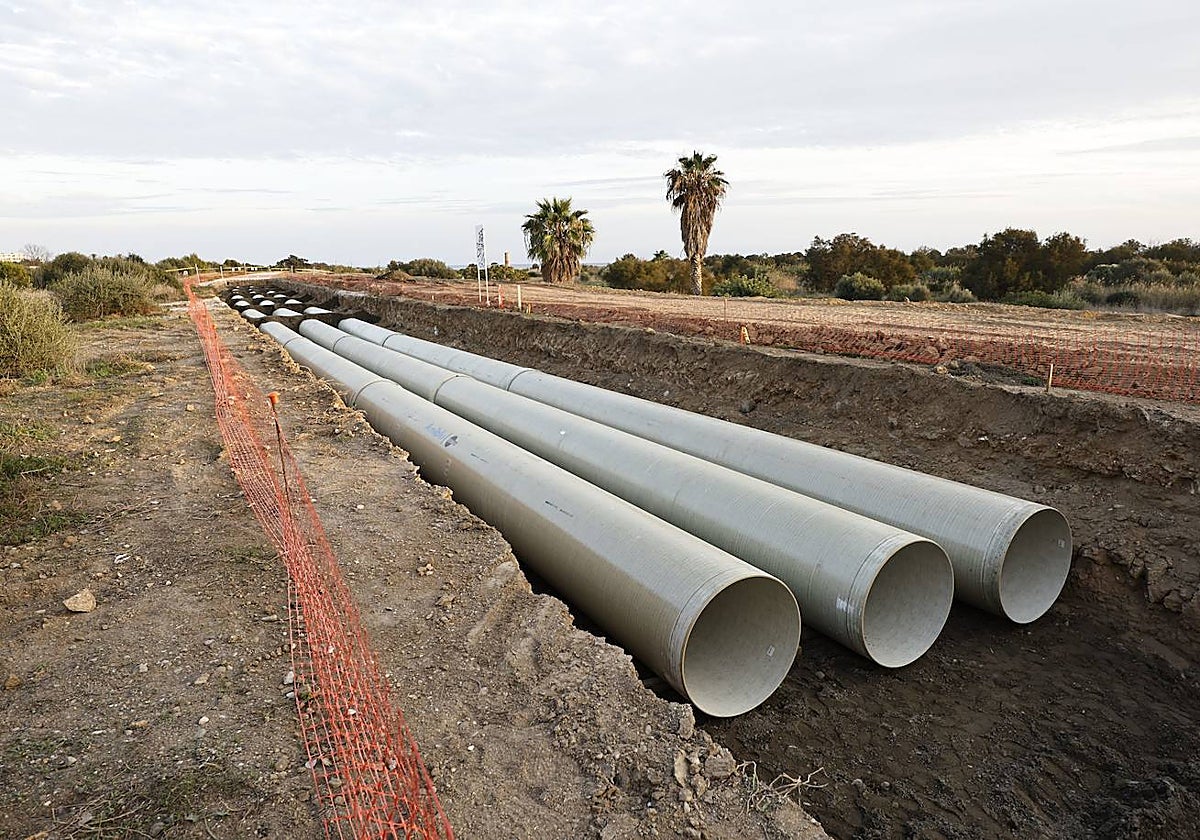

Anyone walking near the mouth of the Guadalhorce river in Malaga can see visible progress on one of the city's largest water infrastructure schemes. ... Stockpiling and laying wide-diameter pipes on the river's left bank show that work to replace the wastewater mains running from Sacaba to the Guadalhorce wastewater treatment plant (WWTP) is moving at full pace.
The scheme matters because of faecal discharges that happen during heavy rain. The issue has been at the centre of the political debate in recent months.
Municipal water company Emasa's project aims to remove a major network bottleneck by overhauling three main pressure pipes. Those mains carry large volumes of wastewater from the Sacaba pumping station - which gathers flows from much of western Malaga and the coast - to the treatment plant, where water is either discharged into the environment or reused.
Because the network is ageing and faces heavy hydraulic loads, replacing the mains was a priority to prevent bursts, leaks and overflows that often spill into the sea where stormwater and sewerage networks are not separated.
Planning and phased implementation
Current works form the second phase of the scheme, covering the stretch just past the MA-22 motorway junction (the port access road), next to the Sacaba pumping station, running parallel to the left bank of the river to the treatment plant.
That stage finishes a route started in 2022 under phase one, which focused inside the WWTP and upstream of the MA-21 road.
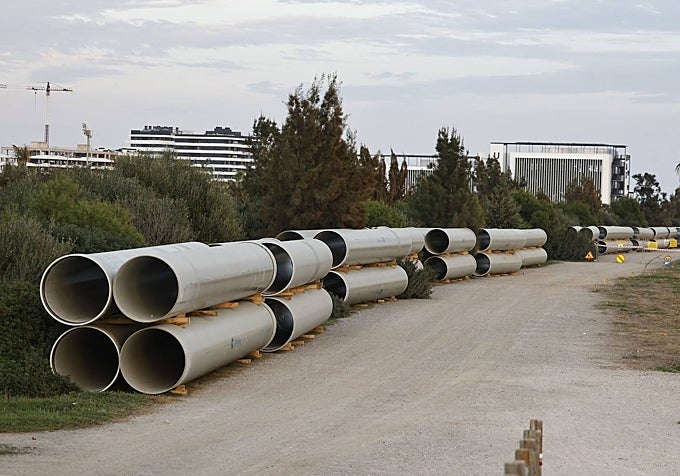
Emasa awarded the second-phase contract to Malaga builder Guamar, S.A. for €3.8 million including VAT. Formalised in summer 2026, the contract carries a 12-month completion schedule, putting the upgraded link into service in July 2027.
The contract sits inside Emasa's strategic package of €11.5 million in drainage and sewerage works under way in 2026 to modernise urban drainage and cut flood and spill risks across the city.
Complexity of the work
The full project involves the refurbishment of three GRP pressure pipes (two with a diameter of 1.1 metre and one of 90 centimetres) with a total length of 2,296 metres per pipe, of which some 231 run through the treatment works.
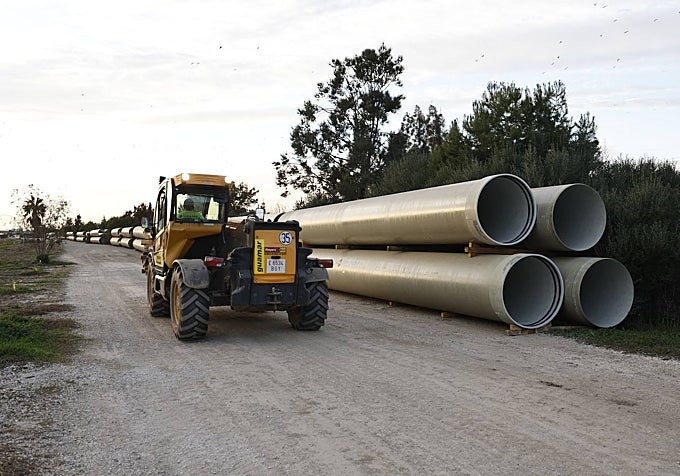
GRP combines a resin matrix with glass fibres, offering high mechanical strength with low weight and beating steel or concrete on strength-to-weight ratio. It also resists corrosion, moisture and chemicals, acts as a thermal and electrical insulator and allows custom-moulded fittings and pipe sections.
A key technical hurdle is keeping at least two of the three pumping stations running during replacement so city sewerage services are not interrupted. Works are also proceeding in sections alongside the Guadalhorce flood-defence scheme and around the MA-21 bridge.
Sacaba is closely tied to other works, including Guadalmar. A few months ago, Emasa repaired two sewage pipes linking the Guadalmar pumping station to the Guadalhorce treatment plant after a storm in late 2025. Heavy rain pushed the Guadalhorce river to historic flood levels, collapsing the pipe-support structure.
That collapse disrupted sewerage in Torremolinos and parts of Malaga city - Churriana, Guadalmar and Finca Monsálvez - and forced sewage discharges into the sea that closed Arraijanal beach to bathers due to faecal contamination.
As an interim fix while main repairs went ahead, Emasa built a temporary bypass using a reclaimed water main (part of a separate €6.5 million project). Permanent repair works carried a €1.5 million budget.
Ageing assets, river floods and coastal erosion - which already required breakwaters to protect the pumping station - continue to strain the area, meaning roughly €5 million more is needed to replace the Guadalmar pumping station and redesign its sewerage network.
Closures of six city beaches from faecal contamination underlined the need to separate stormwater from foul sewage before water enters main sewers, curbing overloads and flooding - a challenge shared across most Costa del Sol municipalities.
Alongside heavy investment in new pipes and stormwater tanks, wet wipes flushed down toilets cause serious mechanical and environmental harm. Malaga aims to separate 70 per cent of its networks, up from roughly 55 per cent now.
Local opposition group Con Málaga recently filed a complaint with the provincial prosecutor and asked the Guardia Civil's nature protection service, Seprona, to investigate coastal sewage discharges in the city.
