
Infrastructure
Malaga fast-tracks emergency pipeline repairs to reopen Arraijanal beach
Work begins on €1.5m replacement after winter floods caused catastrophic sewage pipe collapse into the Guadalhorce river
-R37q3eCQFRxV4ajWxfTmm9I-1200x840Diario%20Sur-RfeADjuk0Xz64N49JfKnNQP-1200x840@Diario%20Sur.jpg)
Chus Heredia
The new pipeline between the Guadalhorce wastewater treatment plant and the Guadalmar wastewater pumping station will be ready in August.
The collapse of the old pipe, which broke and fell into the river during the storms this winter, has brought significant health, environmental and economic implications. The Arraijanal beach, for example, remains closed to swimmers due to the presence of faecal bacteria.
The storm in December
"Wastewater from the Churriana, Finca Monsálvez and Guadalmar districts in Malaga, as well as the wastewater from the municipality of Torremolinos, flows to the Guadalhorce wastewater treatment plant (WWTP) via two 1,000-millimetre-diameter pressure pipes. These pipes cross the Guadalhorce river supported by a 68-metre-long reinforced concrete structure. The heavy rains of 27 and 28 December 2025, caused a significant rise in the Guadalhorce river, reaching record levels. As a result of this flooding, one of the piers of the structure was damaged and gave way, causing the two pipes to collapse," the tender specifications that served as the basis for the bidding process state.
Currently, wastewater flows into the sea through the drainage pipes of the Guadalmar pumping stations. "Emasa is making every effort to restore sanitation services temporarily by using a 500-millimetre-diameter pipeline for reclaimed water from the wastewater treatment plant to the entire western area, which is currently installed," the statement highlights.
Municipal sources indicate that this temporary solution is nearly complete and that normalcy should return to the beach shortly.
The work
Restoring normal service requires reinstalling the two pipes that crossed the Guadalhorce river. This will be done by installing two polyethylene pipes, each 1,000 millimetres in diameter and 120 metres long, crossing the low-water section of the Guadalhorce river.
The pipes will then run along the foot of the embankment of the flood control mound, before finally rising to the crest of the mound and connecting to the existing pipes at the inlet connection chamber to the WWTP. This second section will be constructed using two glass-fibre-reinforced polyester pipes, each 1,000 millimetres in diameter and 160 metres long.
Related story
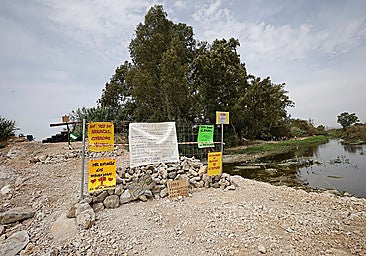
The works will also include the dismantling of the remains of the overhead crossing of the original pipes and the management of the resulting waste.
Deadlines
Proyectos Técnicos y Obras Civiles is responsible for the works, which will cost 1.5 million euros. The installation started on 21 April and will last four months.
Sanitation in Guadalmar
The sanitation system in this area is a victim of the aforementioned 'perfect storm'. In addition to the obsolete facilities, there are environmental constraints. Emasa has a multi-million-euro project under way to create a new network, including new pumping stations.
Authorities have carried out temporary works to deal with collapsed pipes as part of a wider project to supply reclaimed water for irrigating gardens and green spaces in Churriana and Torremolinos. This overall project, which includes the emergency work, has a budget of more than 6.5 million euros and a consortium formed by PTOC and UC10 is carrying it out. It is expected to take one year.
A second, longer-term effort focuses on the pumping station mentioned earlier. The sea has effectively swallowed it and engineers previously had to protect it with rock barriers. Alongside plans to replace it, authorities are preparing a major budget package to redesign the entire sanitation network in Guadalmar, with a total cost of around five million euros.
![[]](http://static.vocstatic.com/voc26/latest/assets/images/favicon/surinenglish/apple-touch-icon-57x57.png)