
Infrastructure
Malaga determined to contract 'plaza-bridges' and lowering of Guadalmedina riverbed works in 2027
Environment councillor Penélope Gómez has stated that the construction project will be ready in the autumn and that they already have all the necessary favourable sectoral reports
Pilar R. Quirós
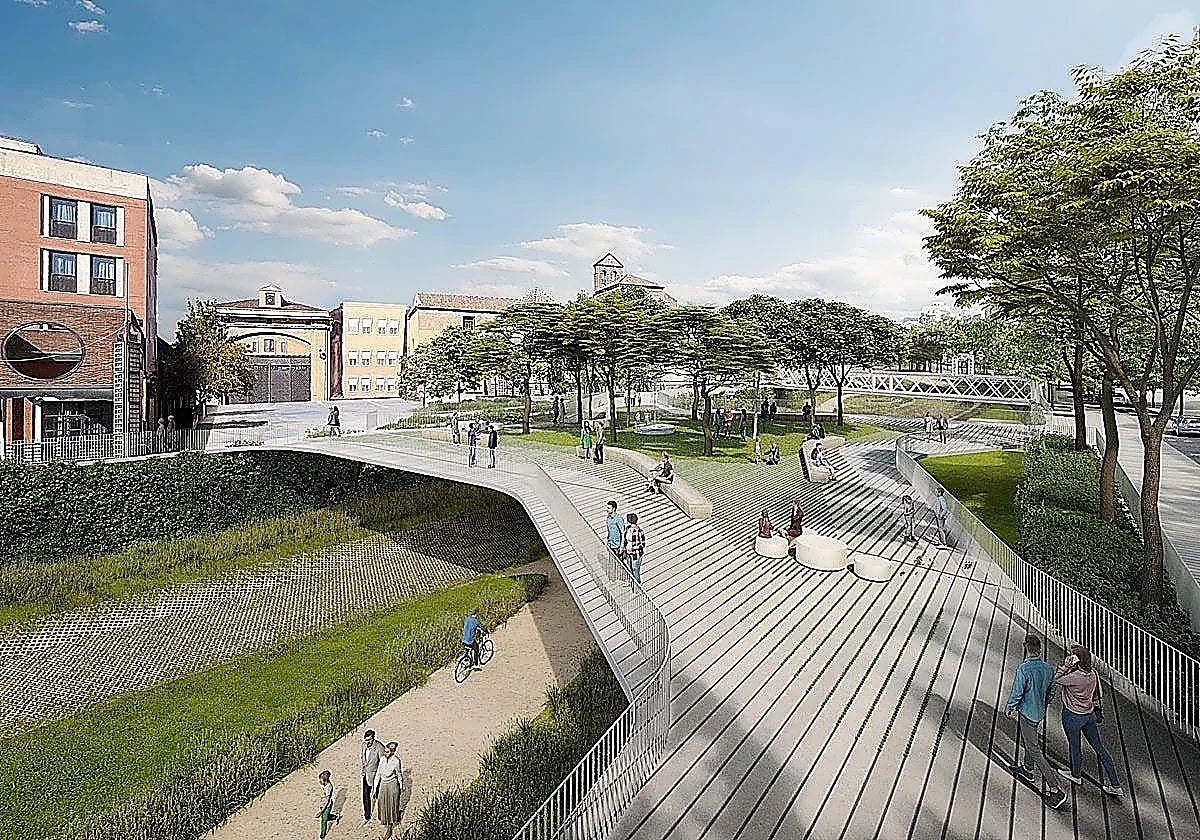
Despite the rather slow progress in Malaga city hall, environment councillor Penélope Gómez wants to accelerate the Guadalmedina river improvement works and put out to tender the first plaza-bridge (or even the second) and the lowering of the riverbed in 2027.
She hasn't specified a date, but believes "the works can begin in 2027", demonstrating Malaga city council's commitment to making it happen.
The municipal elections are also in May 2027 and there's a major project for the current term (2023-2027) that still needs to take shape, after the expansion works at La Rosaleda stadium fell through.
Related story

The local ruling team approved an agreement on Tuesday to equally finance the drafting of the construction project for the urban integration of the Guadalmedina river, which is currently out to tender for two million euros. The Andalusian regional government (Junta) will be contributing one million euros.
The Junta has declared these actions to be of general interest to the region. Gómez said that, in addition to connecting the two banks of the river for public enjoyment, the project "will contribute to minimising potential flooding".
The connection of the two riverbanks via five plaza-bridges will be possible because the operating levels of the Limonero dam have been significantly reduced to accommodate the 500-year return period (this is how engineers refer to the heaviest rainfall events that can occur at the dam's headwaters and, in turn, in the riverbed and the streams that flow into it).
Gómez said that she expects the construction project to be ready by the autumn, making it feasible for work to begin in 2027. "Once we have the construction plans, we can put the first phase of the project out to tender," the councillor said.
She highlighted that lowering the riverbed is essential to create a one-metre buffer zone at all the bridges. The first phase will include this lowering, as well as work on one or two of the smaller bridges.
One of the first important steps to achieve authorisation was the comprehensive hydraulic study from the dam to the mouth, with 69 simulations, to "achieve the optimal solution and hydraulic safety".
The Junta, with the help of European funds, could fund the tender for the first phase. "We already have the necessary sectoral and river basin authority reports," Gómez said.
Where is the process at now?
The contract that has just been put out to tender includes actions in the riverbed, including the lowering of the longitudinal profile and its treatment to form a river park; the five plaza-bridges; an irrigation system; the strengthening and expansion of existing structures in the riverbed; and urban actions to connect the planned works with the road network.
It does not include burying urban traffic or the general development of the streets along the river. Nevertheless, the design will undergo analyses jointly with those of the future boulevards, including everything related to paving, vegetation, lighting and street furniture, to ensure that the works are integrated with the urban model.
The winning company will also have to conduct a study on the impact construction will have on traffic.
![[]](http://static.vocstatic.com/voc26/latest/assets/images/favicon/surinenglish/apple-touch-icon-57x57.png)