
Infrastructure
Malaga's lack of infrastructure and accumulation of wet wipes crux of contamination that closed six beaches
The city council has banned swimming due to high levels of faecal bacteria following the storm at the start of the fair
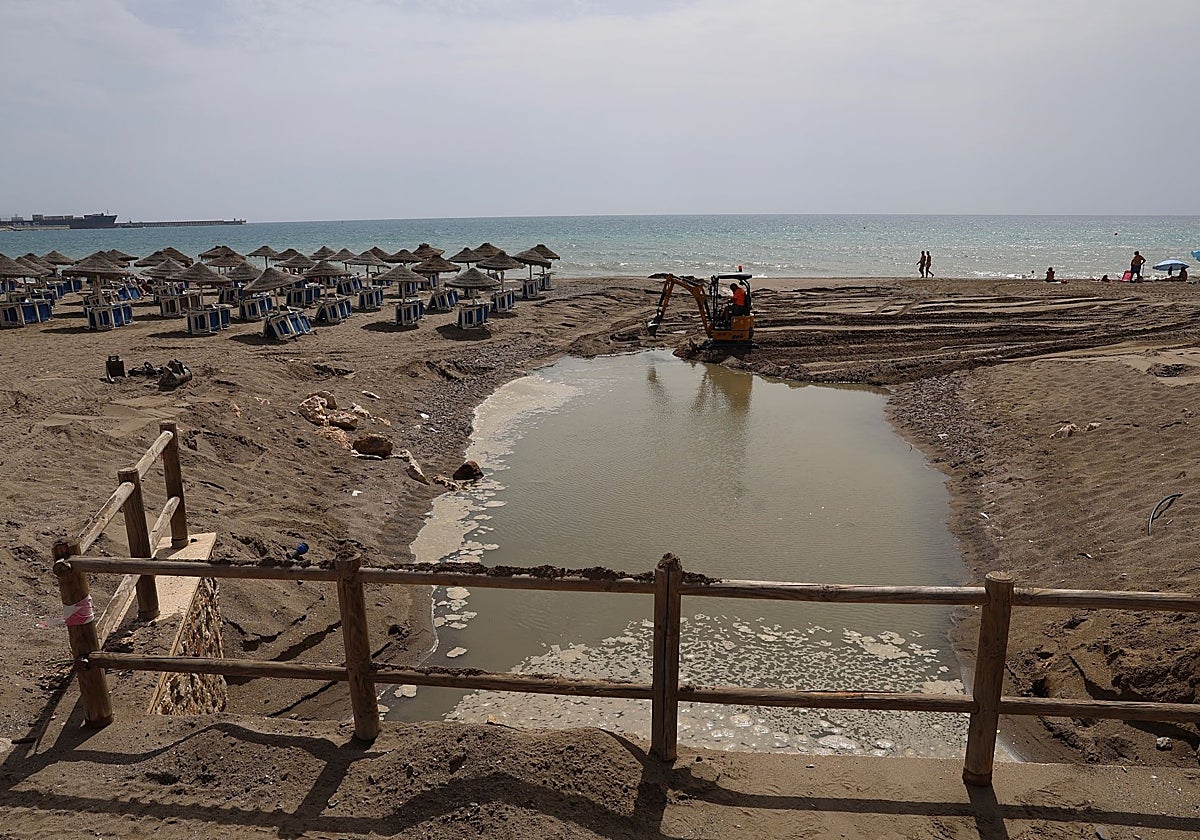

Malaga city council has addressed the reasons behind the closure of six beaches due to faecal bacteria in the peak of summer.
According to councillor ... of sustainability Penelope Gómez, there are two main issues: the overwhelming burden on the sewerage system in the event of rain and the accumulation of wet wipes flushed down the toilet.
In recent months, beachgoers in the city have started to question the increasing warnings, scares and red flags flying at beaches.
Related story
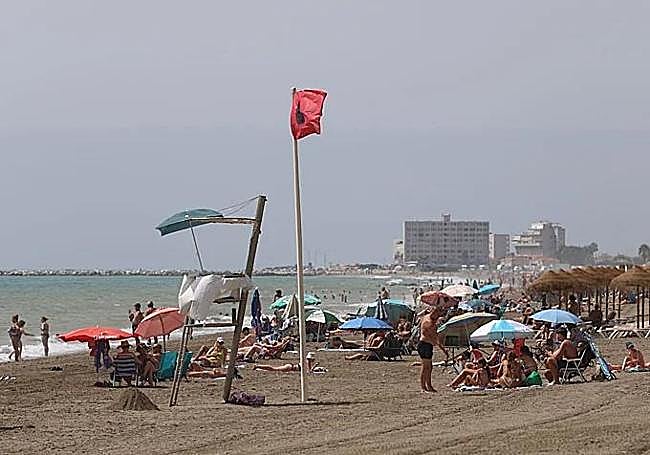
On Monday, the city council closed the beaches at Campo de Golf-San Julián, Guadalmar, La Misericordia, Sacaba, San Andrés and El Palo to bathers due to faecal bacteria.
Samples have confirmed a one-off concentration of the parameter that exceeds the optimal levels regulated by law. Further analyses over the coming days will monitor the situation.
Storm
Following the storm which struck in the early hours of Saturday, 15 August, various parts of the city suffered flooding, with water spilling into the sea. The beaches department has been carrying out clean-up operations and removing the debris ever since.
Gómez explained that, in the early hours of the day the Feria began, the airport station recorded 18.5mm of rainfall, 14 of which fell in less than an hour.
"The main sewerage system, which runs parallel to the coast, is fed by combined sewers (where rainwater and sewage flow through the same pipe). When it rains, it is normal for there to be discharges into the sea. If we didn't let it out, the whole city would be flooded with sewage," she stated.
Gómez gave Catalonia as an example. "There, they're used to closing beaches after rain because it rains more often in summer. They have storm water tanks in just a few places to store some of the runoff. In Malaga, it's very rare for it to rain in summer, but if it does, it ends up relieving the pressure on the beach. With time and investment, we'll eventually sort out the problem, but as I said, it's very rare for it to rain in summer."
The councillor warned against flushing wet wipes down the toilet. "This causes blockages at certain points and exacerbates the problem."
Every year, Malaga city council removes more than 2,300 tonnes of wet wipes from the sewerage system, which costs it nearly two million euros a year in clean-up costs.
Although, in theory, some brands claim to be biodegradable, the reality is that this waste ends up clumping together and compacting.
These wipes often end up at the bottom of drains and are dislodged when carried along by rainwater. They pose a major environmental problem, as well as causing blockages and damage to sewage treatment plants and drainage systems.
They do not biodegrade once they reach the sea, whereas bacteria are quickly reduced in number by the sanitising effects of the sun and salt.
Discharges are a necessary evil to prevent a breakdown in the sewerage system or even an overload at treatment works, which could ultimately damage plants, pumps and other facilities.
In short, when there is heavy rainfall in a short space of time, there is a risk that the sewers will exceed their maximum capacity and, without overflow outlets, mixed water (rainwater and sewage) could end up gushing out of street drains or even back up into toilets and drains in homes.
The regional government and local councils monitor the chemical parameters of seawater on an ongoing basis. This enables them to open and reopen beaches with a high degree of responsiveness. Therefore, Gómez says, "the sewage system isn't malfunctioning, it's working perfectly".
Other parts of the coastline
This weekend, several beaches between Las Gaviotas and Bil-Bil in Benalmádena gradually closed to swimmers due to adverse skin reactions, although the lifeguards, who were getting people out of the water, spoke of a burst sewer pipe.
Earlier this year, a breakdown in the sewerage system caused by the heavy rains led to the closure of the beach at Campo de Golf in Guadalmar until after Easter. It also occasionally affected Los Álamos beach in Torremolinos.
On 23 July, Malaga city council closed the beaches at Pedregalejo (Las Acacias area) and El Palo (Casa Pedro area) due to the presence of coliform bacteria.
There have also been closures in Marbella. At the end of July, the Los Monteros and El Cable-Río Real beaches closed, also due to faecal matter.
![[]](http://static.vocstatic.com/voc26/latest/assets/images/favicon/surinenglish/apple-touch-icon-57x57.png)