
Ibis hotel fire 2026
Malaga forensic police find no evidence to suggest that Ibis hotel fire was started deliberately
Now that the investigation is over, the building can be demolished and traffic on Guimbarda will only lose one lane
-U2017370400279bF-U64571818556pFg-1200x840@Diario%20Sur.jpg)

Málaga
The fire at the Ibis hotel has aroused a lot of questions in Malaga in recent months.
The origin of the fire, which repeatedly reignited ... , is still shrounded in mystery. It sparked reactions from local residents and councillors, who feared for the safety of pedestrians and possible air pollution, which the latest measurements dismissed.
Another factor that raised suspicions pointed to the hotel owners' previous intention to add two or three more storeys above the existing building.
Related story
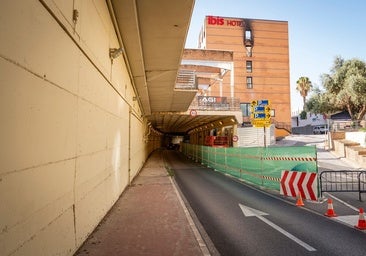
The investigation of the forensic police was key to answering these questions. The team first gained access to the building on 11 June. The conclusion of their investigation is crucial for the demolition of the hotel, which is imminent.
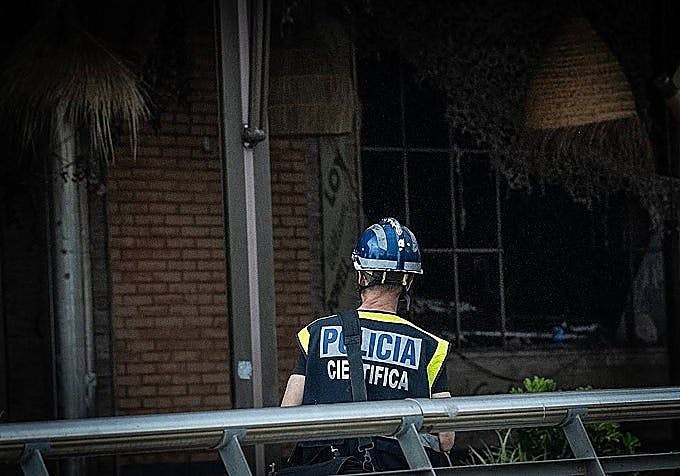
According to sources close to the case, investigators have found no evidence to suggest that the fire, which broke out on 25 May, was started deliberately. Neither CCTV footage nor on-site analyses have been able to prove any involvement by third parties.
The police have not found any accelerants or similar substances that might have contributed to an even more devastating spread of the flames. There were no anomalies in the materials.
This would confirm the position the city council and the urban planning department have maintained from the outset: that the building complied with all regulations in force at the time the planning permission was granted.
Sources have highlighted the difficulty of the fieldwork, given that, for safety reasons, it was not possible to access ground zero. The firefighters were well aware of the structural condition and the state of the floor slabs.
Not surprisingly, just a few hours after they first tackled the fire, a firefighter nearly fell from the fourth floor when the floor gave way beneath his feet. It was then that the brigade took the firm decision to tackle the fire from the outside.
The National Police investigation concluded that the fire had started in the kitchen of the Grand Café restaurant. As it has not been possible to gain access to the exact point of origin, the cause has not been determined and two possibilities are under consideration: an electrical fault (the most plausible) or a reaction between materials.
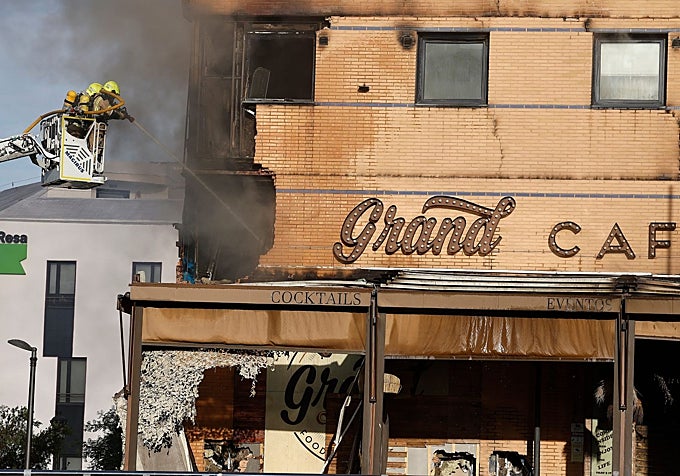
Weeks after the fire broke out, Chief Fire Officer Salvador Castillo explained in an interview: "From a technical point of view, the safest course of action at present is to continue with preventative and cooling measures. The entire floor structure is made of timber, which is a slow-burning material, and any change in the air supply could cause the fire to reignite. For safety reasons, we cannot access the interior, so we are staying on site to control these flare-ups through cooling and preventative measures."
"Although a thorough assessment and exhaustive testing are required, initial inspections show that the main structure, comprising rolled steel columns and beams, has held up well. There are no signs of the major structural deformations typical of other fires, such as those in industrial buildings, which often collapse," he added.
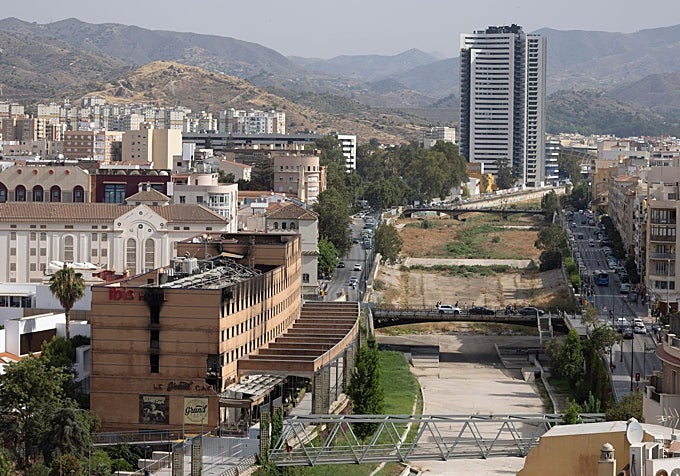
All these factors, combined with the strategy of attacking the fire from the outside, have significantly prolonged the operation. The building had many square metres of suspended ceilings, which create confined spaces.
When the building is accessible, the standard procedure is for firefighters to inspect it using thermal imaging cameras and detect rises in temperature within these spaces. They then break through and extinguish the flames or pre-empt them.
Of course, on this occasion, the firefighting had to take place from the outside and the use of thermal imaging was limited to the exterior. The flow rates from the hoses were substantial, reaching peaks of 5,000 litres per minute.
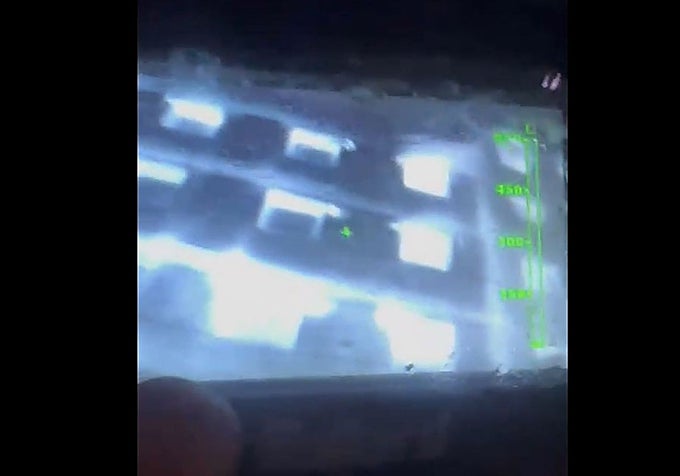
The most positive aspect of this whole incident is that there were no casualties.
The councillors responsible for security (Avelino Barrionuevo) and urban planning (Carmen Casero) called the first press conference on 2 June.
Barrionuevo reassured the public, who were wondering why the fire was taking so long to be brought under control.
"The fire has been under control since last Monday, but for technical and safety reasons it has not been extinguished. This Tuesday, with the terral wind in full force, the smoke has once again become intense. The wood has to burn through completely and it takes time to cool down. Added to this is the already well-known factor of tackling the fire from the outside for safety reasons, given the risk of partial collapse of the floor structure. Currently, there is a permanent crew in place to keep the fire under control until it is fully extinguished. The fire chief cannot speculate on a timeframe, but he is certain that it is now only a matter of time," Barrionuevo explained.
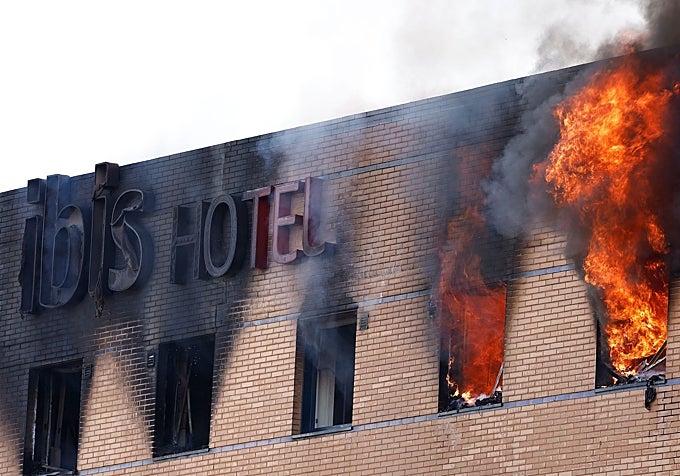
The security cameras in Pasillo de Santa Isabel, the recordings of which the city council made available at the press conference, confirmed that the incident had begun at 1.20am.
At 1.24am, there was a spectacular explosion. A striking tongue of flame shot out from inside Le Grand Café. Evacuations began within two minutes.
At 1.34am, the first firefighting units arrived at the scene and the firefighters realised the scale and complexity of a fire characterised by an extremely high heat load. They called for reinforcements.
Two further crews, accompanied by a tanker, arrived on the banks of the Guadalmedina. The problem was that they were faced with rapidly spreading flames with a high heat load, which were able to breach the building's fire compartments and rise through the gaps left by the collapsed floor slabs. It was effectively a chimney.
At times, there were as many as six teams at the scene. "At no point has there been a shortage of resources and the safety of the emergency services personnel has been the top priority," Barrionuevo stated.
"The regulations require materials to be fire-resistant for a certain period of time. Timber complies with the regulations. It must not collapse within 60 minutes. After that, it may collapse," Barrionuevo said, defending the strategy, the deployment of personnel and the general course of action.
Interim measures
At each stage, the property owners implemented precautionary measures to secure the perimeter and ensure the safety of the surrounding area.
They launched rubble clearance work, the dismantling of the heavy air-conditioning system on the roof and the cordoning off of the area.
The demolition work, for which the city council has hired an Almeria-based company, is likely to last two months. Work begins next week.
The tunnel will remain open to traffic. Signage will ensure the safety of vehicles using this route.
The bus lane will remain closed along the first section. Normal traffic flow through the tunnel, including the bus lane, will be restored within two or three weeks.
In addition, Calle Padre Jorge Lamothe and a section of Calle Cerrojo will remain closed to traffic until the works are completed.
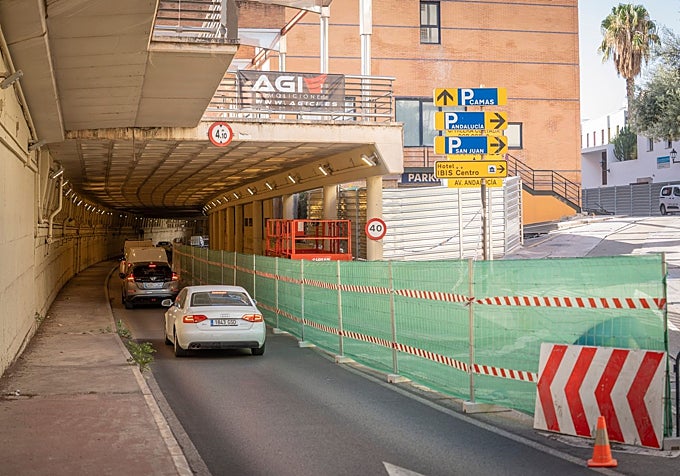
The demolition of the Ibis hotel will see the removal of a building that could make way for a new and taller development. The hotel's owner has been processing a planning application for the past two years to allow for an increase in the floor area of both this hotel and the other two it owns in the Guadalmedina area: Ibis Budget and Suite Novotel.
The project has the authorisation of the Andalusian regional government thanks to a 2021 decree that allows the floor area of existing hotels to increase by up to 20 per cent if this results in a higher hotel category.
![[]](http://static.vocstatic.com/voc26/latest/assets/images/favicon/surinenglish/apple-touch-icon-57x57.png)