
Ibis hotel fire
Malaga's Ibis hotel ready for two-month-long demolition
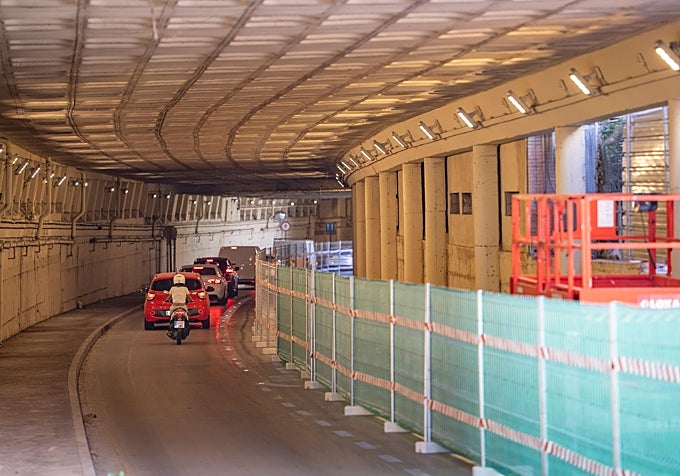
A demolition company from Almeria has deployed workers in the area and fenced off one of the two lanes of the Guimbarda passage tunnel
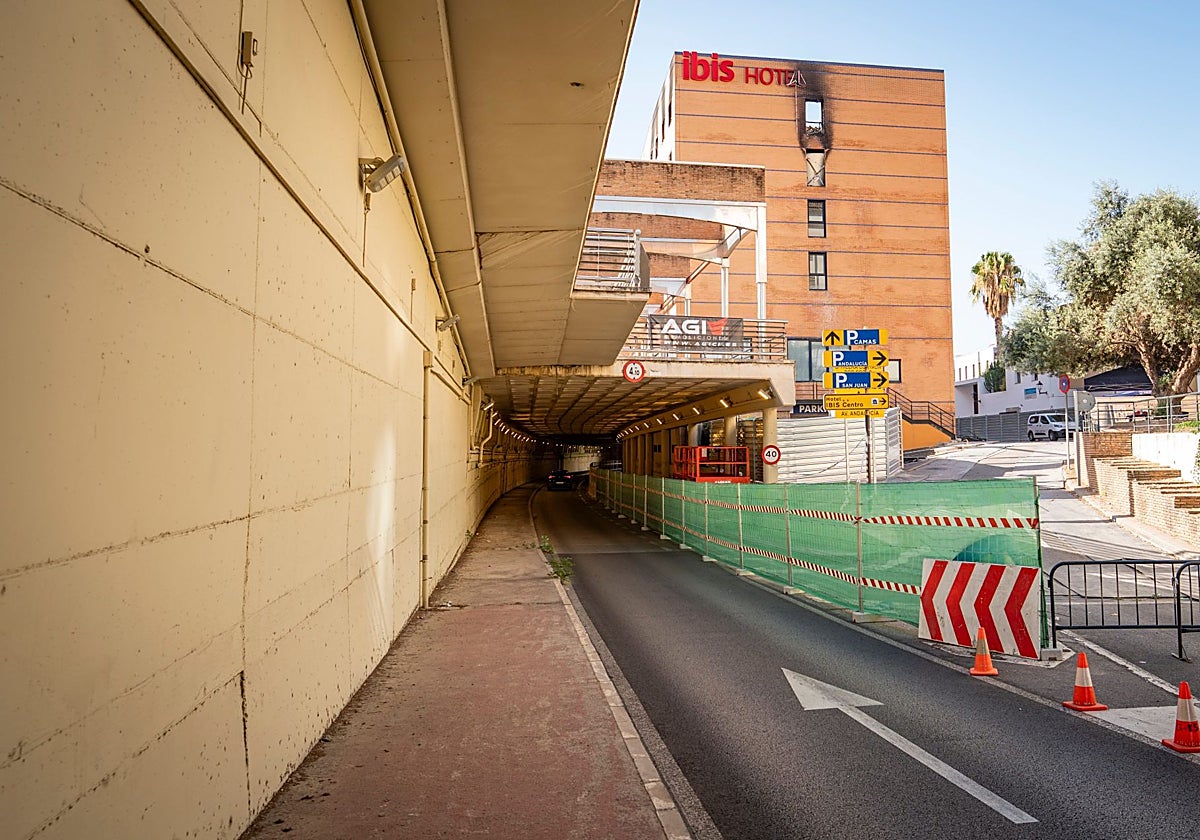

Everything is ready for the demolition of the Ibis Centro hotel in Malaga to begin. The process should take two months.
Following the fire that broke out at Le Grand Café ... in the early hours of 25 May, the countdown has officially started. The complex fire kept reigniting for weeks, making the work of the authorities and the emergency services highly dependent on the condition of the building.
Almeria-based demolition company AGI has deployed workers to the site, where they are already carrying out preparations for the demolition which, according to sources, will begin in the coming days.
Related story
-
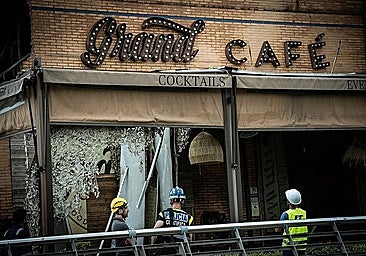
Malaga Ibis hotel fire
Jesús Hinojosa and Chus Heredia
The two-month timeframe may be shorter or longer depending on how the demolition work progresses and any difficulties that may arise during the process.
Furthermore, the recycling of the materials as they are removed is also an issue to be taken into account in this type of operation. It is a delicate operation given the characteristics of the bearing soil, which, at the time, necessitated a lighter foundation.
Sensitive work
The burnt hotel is situated along one of the busiest roads in the city centre: the tunnel beneath the Guimbarda corridor, which extends the route of Avenida de Fátima towards Avenida de la Aurora.
In recent days, a new barrier has completely cordoned off the right-hand lane of this tunnel, in order to ensure the safety of vehicles.
The demolition of the Ibis hotel will see the removal of a building that could make way for a new and taller development.
Prior to the fire, the hotel's owners had been processing a town planning application for two years to allow for an increase in the floors of the Ibis and the other two hotels the company owns in the Guadalmedina area: Ibis Budget and Suite Novotel.
A decree the regional government approved in 2021 protects the project. It allows the floor area of existing hotels to increase by up to 20 per cent if this results in an upgrade in category.
The Ibis Centro hotel could have added a further 19 rooms and increased its height by a further three floors.
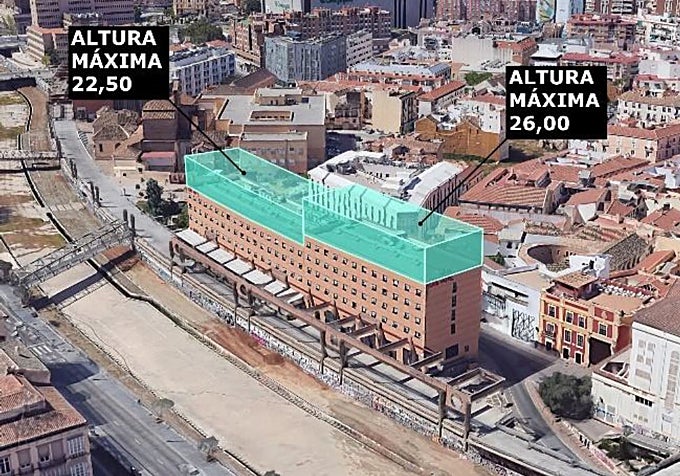
Consequently, the plan was to increase the number of storeys from ground floor plus three and ground floor plus four to ground floor plus six and ground floor plus seven.
The building replacing the Ibis in the future will be able to have the newly approved height. This is because, as expert sources have pointed out, planning parameters relating to height or volume apply to a plot of land, not to a building.
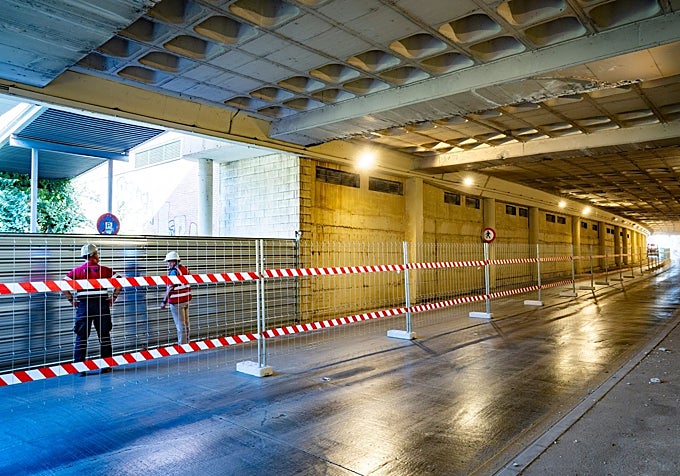
While the works are likely to last for two months, the traffic lane is initially expected to be closed for just 14 days. In any case, these are details that the transport and urban planning departments are currently finalising.
Investigation and causes
As for the causes of the fire, the public has not received any conclusions from the National Police, although they have now completed their on-site work, thereby clearing the way for demolition.
Timeline
The fire started at 1.20am on 25 May. A sudden explosion sent a tongue of flame shooting up, triggering the emergency protocol.
The blaze was spectacular, as the recordings of the transport department's CCTV cameras in Pasillo de Santa Isabel show.
The hotel's more than 100 guests, occupying its 189 rooms, had to evacuate within just a few minutes. Fortunately, there were no injuries, although firefighters had to rescue an inebriated guest that had slept through the alarms.
One firefighters also nearly fell due to the partial collapse of a floor slab on the top floor.
It then became clear that it was necessary to tackle the flames from the outside to ensure the safety of the emergency services. This, combined with the large number of confined spaces (suspended ceilings) and timber structures, led to the flames reigniting repeatedly.
The building continued burning from within for weeks and it was necessary to carry out some partial demolition work, such as dismantling all the air-conditioning units installed on the roof. Surprisingly, the main steel structure withstood the extraordinary thermal load very well.
Another issue of concern to local residents and shopkeepers was the potential impact on air quality. The council's environmental measurements, in this regard, ruled out any problems in this respect. Similarly, gas measurements carried out by the fire service during the ongoing cooling operations, which at times involved the use of significant volumes of water (up to 1,500 litres per minute), showed no cause for concern.
![[]](http://static.vocstatic.com/voc26/latest/assets/images/favicon/surinenglish/apple-touch-icon-57x57.png)