
Drought crisis
How did it come to this? The Costa del Sol and Malaga's troubled history with droughts in the province
Since the 1995 drought crisis, authorities have studied and approved many projects which would be a lifesaver in this current situation, but they were never carried out. Why?
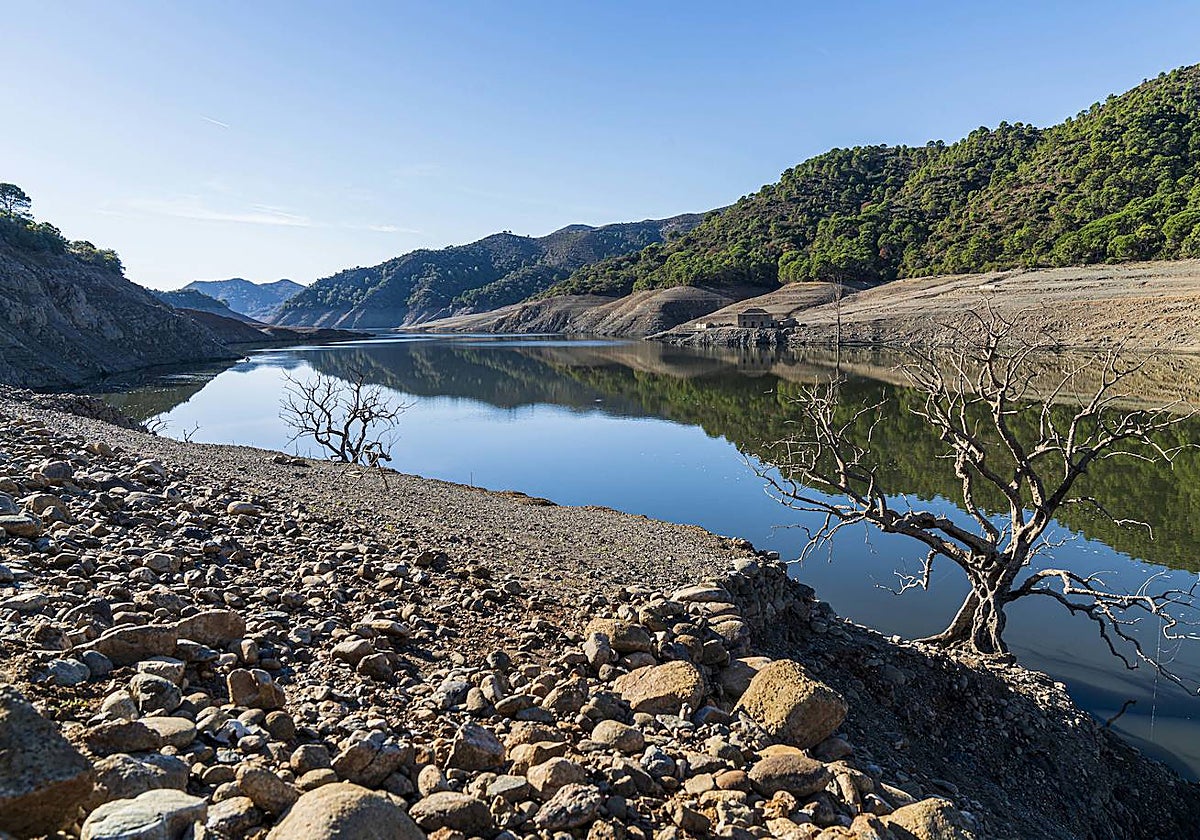

Malaga
The phenomenon of severe droughts in the province is by no means new, rather it is recurrent, and the two most recent cases, both in terms of time and impact, were in 1995 and 2005. In the almost three decades that have passed, there has been a series of projects that have gone through the study phase and in some cases have been contracted, although in the end they were not carried out and are now sorely missed, because they would have been a lifesaver. These are the most important ones...
-
La Concepción1
Failed reservoir expansion
The basin of the river Verde and its tributaries, in the western Costa del Sol, is one of the wettest in the province. The problem is that it is regulated by a reservoir, La Concepción, which is much smaller than the amount of water it can potentially capture during heavy periods of rain. As a result, resources that would be liquid gold for the Axarquía often have to be released into the sea. The project was intended to at least double its capacity, which is officially 57.54 cubic hectometres. Although the use of these resources has been improved, thanks to the interconnection of the basins with Malaga city and the eastern coast, this measure is insufficient to take advantage of all the flow that can come in times of torrential rains.
-
Cerro Blanco2
A controversial dam that the Junta has revived
The critical situation has led the Junta de Andalucía to resurrect the Cerro Blanco dam project, through a feasibility study to update the projects and try to undertake it in the long term. It is a controversial idea, which was once met with radical opposition from the mayors of the upper Guadalhorce as it came close to being built. The aim is to regulate the Grande river, in the area around the Sierra de las Nieves, which could be used to produce up to 50 cubic hectometres a year of water. As a reference, the capacity would be similar to that of La Concepción.
Desalination plants are now being looked at again, when 15 years ago one on the coast was rejected even after it had been contracted
-
Mijas-Fuengirola3
The desalination plant that was once approved and awarded a contract
In 2008 the construction of a seawater desalination plant halfway between Mijas and Fuengirola was approved. A joint venture led by Sacyr won the rights to build the facility, which was to be ready to produce some 20 cubic hectometres of drinking water per year from 2010 onwards. After several years without progress, the government negotiated with the construction company to terminate the contract by mutual agreement, with the payment of a series of expenses made. At the time, arguments were put forward against its construction, such as the shortage of electricity and its location in an area of urban growth, as well as the high price of the water produced from the plant. If it had gone ahead, it would certainly be a lifesaver for the entire coastline of the province today.
-
Vélez-Málaga4
Another desalination plant that is failing to get off the ground
With La Viñuela reservoir practically empty and subtropical crops in the Axarquía region on the verge of dying out, as well as severe restrictions on household water use, all the hopes of the local residents are pinned on a marine desalination plant. It would be capable of producing between 25 and 40 cubic hectometres per year. At the moment, the project is being developed with 100 million in state funding and is being processed by the Junta, although it will be privately managed (there are already two finalists) and will be located on land close to the mouth of the river Vélez. Although it is true that this is a long-term project, the bureaucracy is moving too slowly, according to the mayors, farmers and residents of the region where the drought is hitting hardest.
-
Costa del Sol5
Old pipes leaking water
For years, the Costa del Sol has had serious problems with water leaks in its out-dated pipes. More than 30% of the water which flows along the network's pipes is lost. In May, the Andalusian regional government awarded a contract for drafting construction projects for the two large pipelines that the province needs to supply water to its residents, which stretch a length of 100 kilometres from Manilva to Torremolinos. After five decades of use, the infrastructure is at its limit and suffers around 50 faults every year. This will also improve the transfer capacity for Malaga city, Axarquía and Gibraltar through the so-called "water highway".
-
Antequera6
The Iznájar water transfer project put on hold
This solution to the water supply problems in several municipalities in the Antequera region was first proposed 25 years ago. It is the Iznájar transfer, which would only involve extracting five cubic hectometres from the largest reservoir in Andalucía (with a capacity of 981.12 Hm3). The problem in this case, apart from the fact that the initiative is the Junta's and has to be approved by the central government, is that 142 kilometres of pipelines have to be built to carry the water to the surrounding villages: Cuevas Bajas, Cuevas de San Marcos, Villanueva de Algaidas, Archidona, Villanueva de Tapia, Villanueva del Trabuco, Villanueva del Rosario, Fuente de Piedra, Humilladero, Mollina and Alameda.
-
Genal river7
A small dam to take advantage of floods
Two decades ago, the possibility of building a weir or small dam to harness the floodwaters of the river Genal was also put forward, with the possibility of obtaining some eight cubic hectometres per year for the Costa del Sol. This led to strong criticism from environmentalists and the mayors of the valley, who have so far managed to put a stop to it.
![[]](http://static.vocstatic.com/voc26/latest/assets/images/favicon/surinenglish/apple-touch-icon-57x57.png)