
Society
Former Tivoli workers stand guard at closed Benalmádena amusement park gates almost six years on
Since Tivoli's closure, some of the staff have taken it upon themselves to look after it, without receiving a single euro: "If we weren't here, the whole place would be squatted in, covered in graffiti and ransacked."
Javier G. de Toro
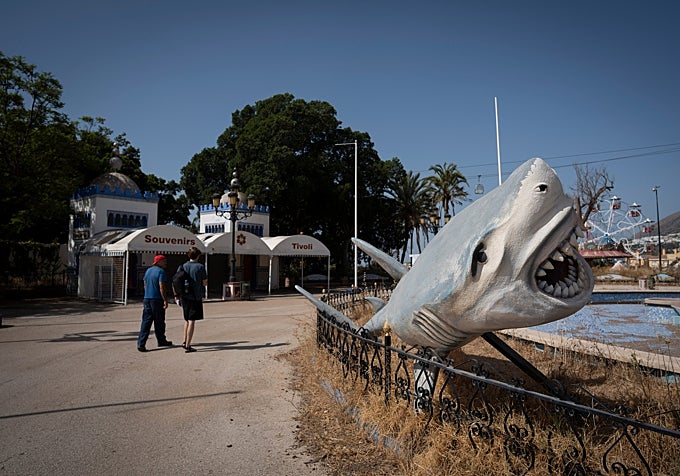
The gates of the Tivoli amusement park in the Malaga town of Benalmádena remain closed almost six years after it shut down, but it ... doesn't stand empty, as some of its former workers have been making sure nobody enters to damage it.
Quite a few people have tried to sneak into the park, thinking that, after all, "it's abandoned". What they don't realise is that the former workers never abandoned it.
Tivoli left its mark on the lives of many people in Malaga province. Even today, the staff keep an eye on and watch over the park. At first, there were 27 of them, but today their numbers are dwindling.
Related story
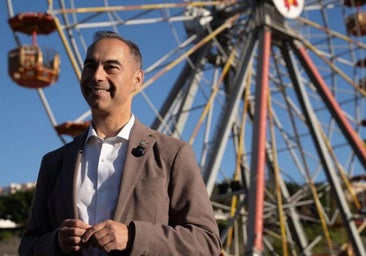
"Some colleagues have passed away, others we've lost touch with and many have retired. But there are still plenty of us," Juan tells SUR.
Almost 40 years after he first arrived at the park in 1988, the former technician and current park warden spends much of his life within the confines of Tivoli. With his colleagues, who monitor the CCTV cameras remotely and are in constant contact with him, he is responsible for looking after the park until it reopens, "whenever that may be".
When nobody yet knew that the park was under 24-hour CCTV surveillance and protection, they had to deal with almost daily break-ins, averaging three or four a week. Years later, that figure has fallen to six or seven a year.
"Sometimes it seems as though people don't think. It's plain to see that we're here, everything's clearly signposted and yet we even come across children with their parents right in front of us trying to fiddle with the sockets to see if anything turns on. If they get an electric shock, you can just imagine the disaster," Juan says.
Young people often turn up with the intention of filming themselves inside, thinking the place is completely deserted. "We make their parents come here or to the police station. I've seen scenes where… well: the parents at the gate, the children crying, the police trying to calm things down," Juan explains at the park gates.
The first year, however, was the hardest. With no resources yet in place, he would spend every night out in the open, in one of the park's squares, trying to sleep on a bench.
He has often been asked why he is there when so many others are already keeping watch via the CCTV cameras. "It's not the same," he says without hesitation.
"You might just push the door open to see how things are and that's when the alarms go off. From my house, I'd have to come all this way only to find they might have already left or might not even have got in. Besides, it's been ages since anyone's been seen round here. Otherwise, a lot of people wouldn't believe we're here."
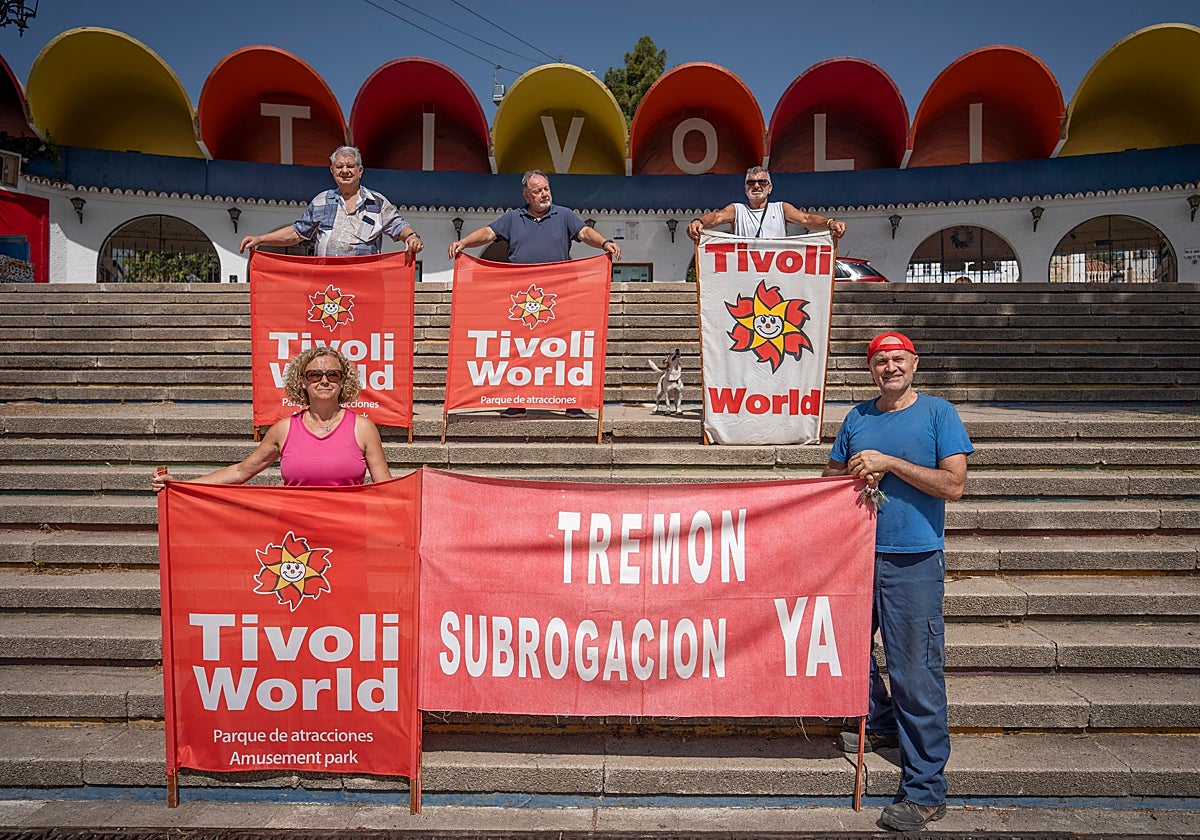
His colleagues arrive at midday to take the daily photograph at the park gates as part of a campaign calling for its reopening. Many others, such as his former colleagues Belén and Juan Manuel, come along to help him.
"It was tough at first, but it's been easier for a while now. I'm used to this daily routine. In fact, what I'll find hardest will be going back home when this finally reopens," he says.
At the weekends, he takes a breather and leaves the park to visit his family, but there's hardly a day that goes by when he doesn't spend some time among the old rides.
"I'm always looking at my tablet when I'm with my family. I mean, even when I'm with them, the alarm has gone off a few times and I've had to come back here."
Up to 32 cameras, two recorders, a motion detector and several floodlights form part of the surveillance system with which the former staff look after the premises.
"Everything we have belonged to the park. There's nothing new. What we did was relocate everything, identify the weak spots and keep them under close surveillance," Juan says.
"The animals are still here. We look after them and a large part of the surveillance is also to prevent them from being stolen. The peacocks roam all over the area," Juan explains.
For the food and water they need, they rely on the 'Nostálgicos del Tivoli World' support page on Facebook, where residents of Malaga province who miss the park coordinate to bring supplies to the workers.
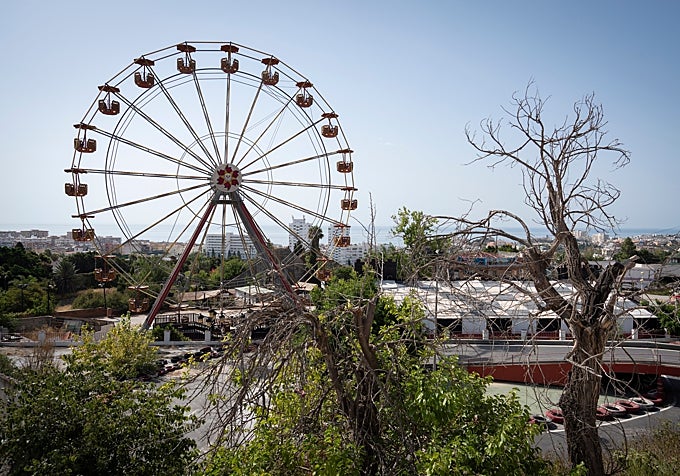
One of the main problems facing Tremón, the property company that owns the park, is that it entered insolvency proceedings years before Tivoli closed. The company has faced a potential 900-million-euro debt for 15 years, and the case remains unresolved in Madrid.
"While the company is in insolvency proceedings, it can't just move assets around. That's why it can't employ us even though we look after the park, and that's why we can't accept money. The park would technically be receiving it, the insolvency administrator would see it and it could create all sorts of problems," Juan says.
To make ends meet while devoting their time to looking after the park, many of the former workers have had to give up other jobs. Several now rely on the benefit available to people over 52, which gives them just 480 euros a month.
"It's not even about the money. It's about keeping our social security contributions going," the Tivoli former workers say.
Working in the dark
Despite spending their days on the park grounds and dedicating their lives to protecting and maintaining it, the former workers know little about plans for its reopening.
"We're rarely told anything. We find out what's happening in exactly the same way as everyone else: through the local press. When news of the reopening was leaked, they asked us whether we'd been the ones to leak it. We didn't even know ourselves," Juan says.
According to the workers, Benalmádena town hall remains in constant contact with Tremón. They are now waiting for the Junta de Andalucía to sign off on the project so work on reopening the park can begin.
"Once they sign it, everyone will start making their moves. We think they'll give it the go-ahead and then everyone will have to show their hand and say what they want to do," the workers explain.
They say several scenarios remain possible.
The park could reopen while the new project takes shape, allowing the public to return relatively soon. Alternatively, it could remain closed while the works take place, which would push the reopening back until at least 2028.
A third possibility involves Tremón selling the park, either before or after reopening, and either before or after completing the project, to another interested company. Tremón bought the park from business owner 'Sandokán' for 14 million euros in 2007.
The workers acknowledge that this seems unlikely, but add: "They could, if they wanted to." They also say Tremón has told them that the reopening would include all the former employees who have looked after the park during its closure.
"What we've wanted to do, first and foremost, is protect this place and, secondly, make sure it has as strong a voice as possible, although sometimes the media have done us more harm than good," they say.
The workers have also had to deal with journalists and content creators who, before reporting on the park, have sometimes focused on sensationalism.
"What do they want to sell here? That a closed park is deteriorating? That's not news; everyone knows that. What matters is what this park means. What it means to us. We've been here for almost six years and you're telling me the news is that there's dust?"
Clear benefits
The biggest source of frustration for those who still look after the park, however, is what they describe as the "absurdity" of its closure.
During the worst months of the pandemic, the insolvency administrator carried out an assessment to determine whether keeping the park open could still generate a profit.
Even then, the results presented in November 2020 were clear: the park's business performance remained positive. Despite the difficult circumstances, the park remained financially viable and continued to generate clear profits.
"It's such a shame because this is a great business. Everything people pay before they even enter the park is positive, and the margins on the way we operated were huge. We had 32 premises at the time. If I told you how much profit it made, you'd be shocked," one of the workers says.
One by one, the former Tivoli employees leave after the daily photograph, either heading home or going back inside the park.
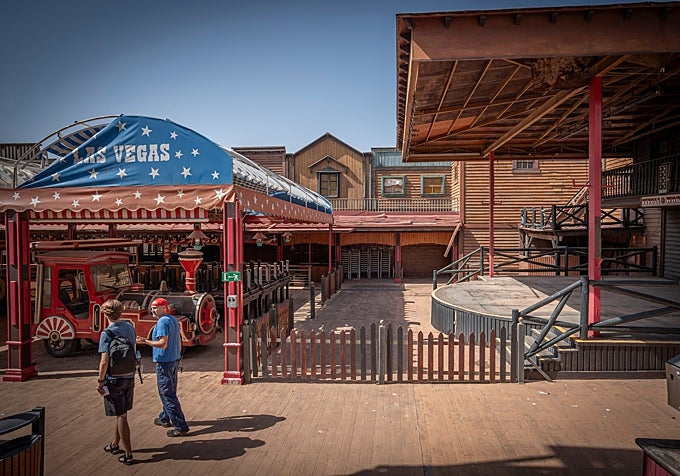
Despite the difficulties, their limited resources and the fact that the high temperatures make cleaning particularly demanding at this time of year, the park's streets remain clear.
That is how they describe the situation, weeks after the public consultation on the reopening project closed and, as usual, without receiving any direct information about the latest developments.
"If we weren't here, the whole place would be occupied, covered in graffiti and stripped bare. If we hadn't stayed here, you wouldn't recognise it. It's not what it used to be, but it isn't abandoned because we haven't abandoned it. We're still here."
![[]](http://static.vocstatic.com/voc26/latest/assets/images/favicon/surinenglish/apple-touch-icon-57x57.png)