
Agriculture
Axarquía winegrowers call for urgent aid following 70 per cent reduction in grape harvest
All political parties in the east of Malaga province are calling on the Spanish, Andalusian regional and provincial governments to provide support to ensure the viability of Muscat grapes, which are recognised by the UN's Food and Agriculture Organization as a Globally Important Agricultural Heritage Systems (GIAHS)
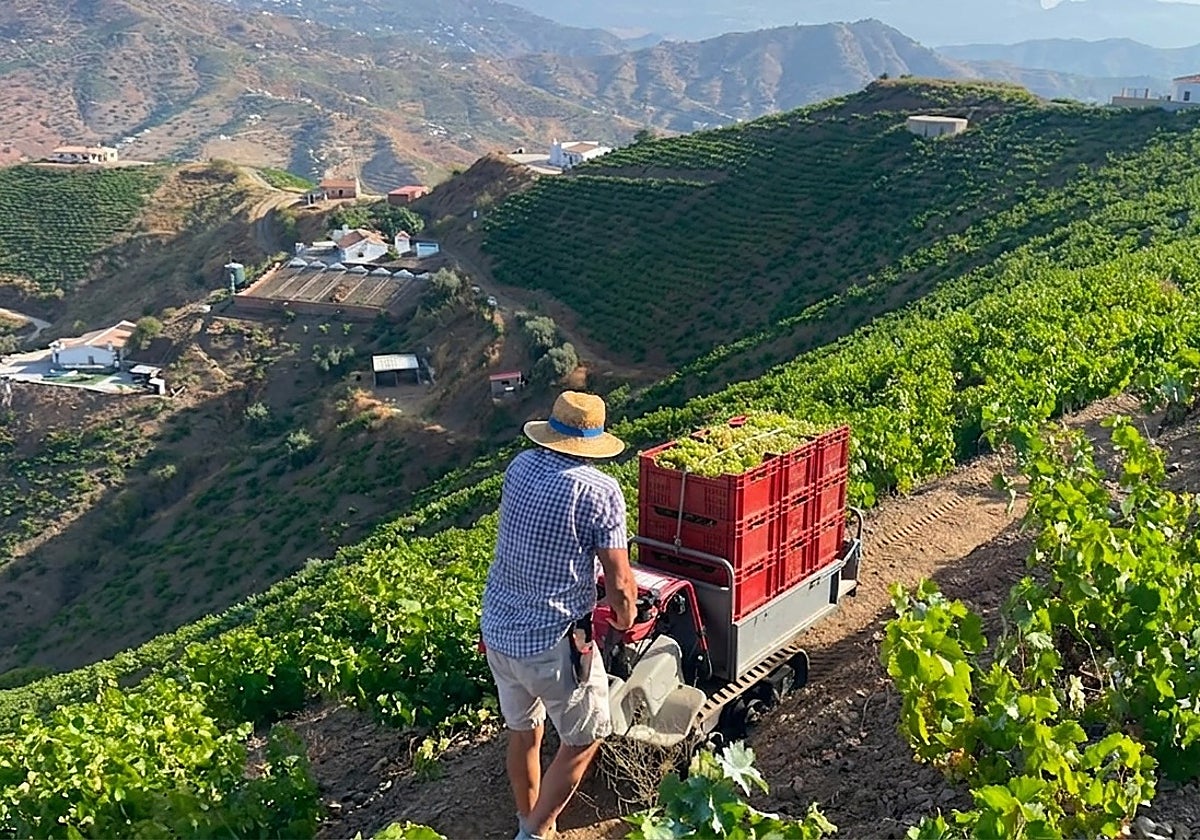

The crisis affecting Muscatel grape cultivation this year in the Axarquía area of Malaga province has led to town halls in the area to ... call on the central government, the Andalusian regional government and the provincial authority, the Dipitación de Málaga, to take urgent measures aimed at compensating the losses suffered by winegrowers as a result of the high temperatures and successive heatwaves this summer.
An agreement signed at the Mancomunidad association of town halls in the Axarquía in Torre del Mar sets out a range of measures including direct aid, tax relief and other financial or administrative compensation, aimed at maintaining the viability of vineyards. Particular concern centres on small family-run businesses in the inland towns and villages of the Axarquía, where the loss of a single annual harvest can jeopardise a significant proportion of the year’s income.
The Mancomunidad is calling for an extraordinary and urgent aid package for the Axarquía's vineyards as well as possible tax exemptions which fall within the regional government’s remit. The agreement calls for these measures to be channelled directly to the affected producers and to help offset part of the financial loss caused by the heatwave.
All the groups are calling for direct aid and tax relief following a season marked by the heat and heavy losses in the Muscat grape harvest
The demands addressed to the central government include a tax reduction for the 2026 income tax return, one-off aid per hectare and the removal of the minimum number of working days required to qualify for the subsidy and the agricultural income allowance. The agreement draws on the reductions applied to agricultural income tax for 2023, when the Treasury lowered the net yield indices for various activities affected by exceptional circumstances such as drought.
The Diputación is the third public body to which the petition is addressed and it is being asked to provide financial aid or other forms of support, while all three institutions are also being asked to provide funding to modernise the vineyards. Among the proposed measures, the automation of raisin-drying racks is specifically mentioned, one of the tasks traditionally requiring the most labour in the artisanal production of raisins.
Heat
The motion puts the losses at up to 70 per cent on some estates, after extreme temperatures coincided with a particularly sensitive stage in the grapes’ development. According to information gathered by the Mancomunidad, the heat stunted the fruit’s development exacerbating the situation for vineyards that were still recovering from a previous season ravaged by mildew.
In August, the sector began to warn of losses of around 40 per cent in parts of the Axarquía, and subsequently several mayors put the extent of the damage at up to 60 per cent and 70 per cent on certain plots. Losses stand at around 50 per cent in Almáchar, 40 per cent in El Borge and 30 per cent in Iznate, with lower percentages in Cómpeta and Sayalonga. These figures do not rule out the possibility that specific plots may have suffered greater damage.
The Mancomunidad also links the survival of these vineyards to the preservation of an internationally recognised agricultural system. The UN's Food and Agricultural Organization (FAO) lists the Malaga raisin production system in the Axarquía among its Globally Important Agricultural Heritage Systems (GIAHS), highlighting the traditional nature of cultivation, harvesting and drying in a region characterised by steep slopes and few agricultural alternatives.
![[]](http://static.vocstatic.com/voc26/latest/assets/images/favicon/surinenglish/apple-touch-icon-57x57.png)