
Agriculture
High temperatures threaten Axarquía Muscat grape harvest with losses of up to 40 per cent
The first warnings have come from El Borge and Almáchar, two of the main Muscat-producing villages where the problem has worsened just as many growers were about to begin the harvest
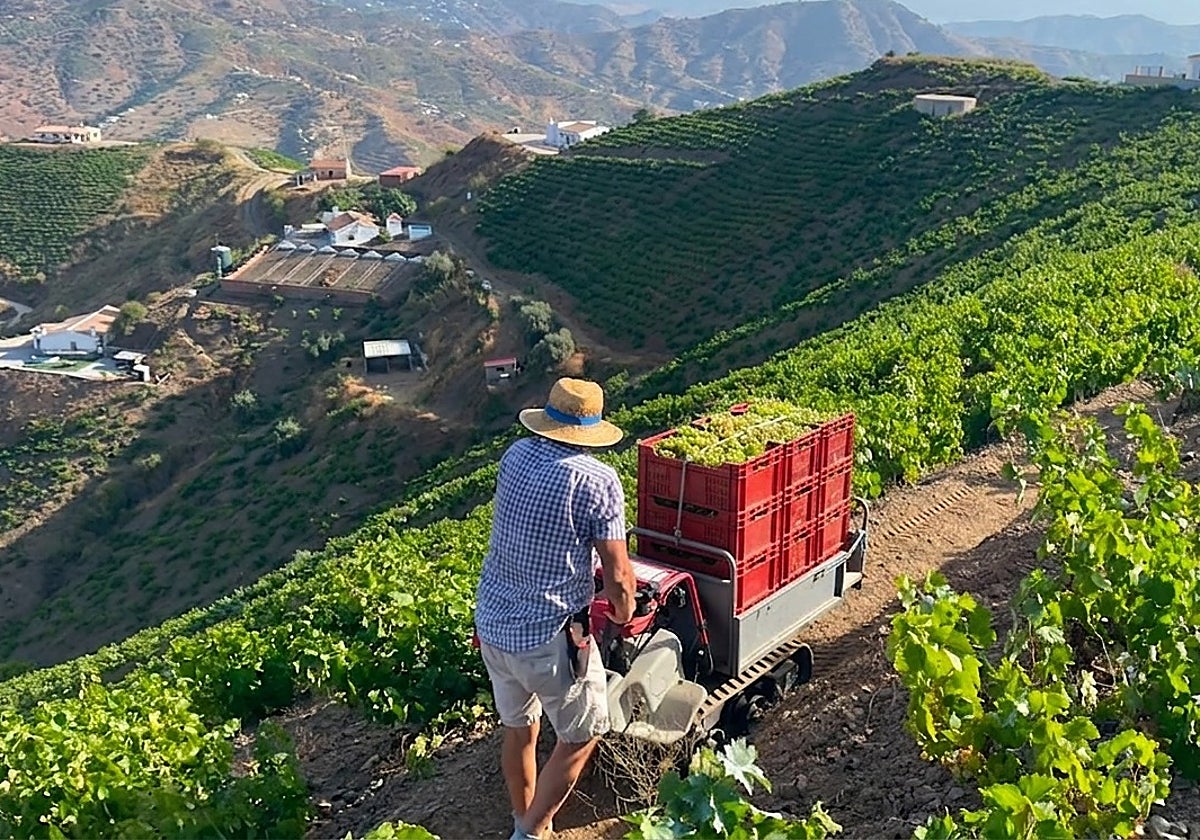

The intense heat experienced in recent weeks across Malaga province could mean severe cent losses in this year's Muscat grape harvest in the Axarquía. ... The farmers' organisation, ASAJA Malaga, warned on Thursday 13 August that the prolonged high temperatures have caused significant dehydration of the fruit and estimates, based on initial data provided by growers, that losses could reach around 40 per cent of the harvest initially forecast for the east of Malaga province.
The first warnings have come from El Borge and Almáchar, two of the main Muscat-producing villages in the Axarquía. According to the farmers’ organisation, the problem has worsened just as many growers were about to begin the harvest, following weeks of high temperatures which have subjected the vines to severe heat stress and reduced the water content of the grapes.
This situation stands in contrast to the forecasts the sector was making just two weeks ago. The regulatory council for the Malaga, Sierras de Málaga and Pasas de Málaga designations of origin estimated at the end of July that the provincial harvest would be around 2.6 million kilos , returning to levels closer to the norm after several seasons severely affected by drought and other issues. The harvest had begun on schedule on 24 July in the Axarquía.
El Borge and Almáchar are sounding the alarm over the dehydration of the grapes following weeks of hot weather ahead of the start of the harvest
Consequently, the cumulative rainfall since autumn – around 15 per cent above the historical average according to data provided by the Regulatory Council and the low incidence of mildew, which was a problem in 2025, meant that the season could be approached with ‘cautious optimism’. The body itself warned, however, that average temperatures were between one and two degrees higher than usual and that episodes of the ‘terral’ hot wind had begun to limit growth of the vines in some areas and a wildfire which started in Árchez in July also burnt some of the vines.
In just a few days, according to ASAJA, this threat has intensified, particularly in the Axarquía Muscat vineyards. The organisation maintains that the cumulative effect of the heat has caused significant deterioration of the fruit and reduced the volume that will ultimately be available for sale. The figure of 40 per cent is still an initial estimate by the farmers’ association, so it will need to be verified through a technical assessment in the field before the full extent of the damage can be determined.
Official assessment
ASAJA Málaga has already asked the Andalusian regional government to carry out an official assessment. The aim, according to the organisation, is to obtain a ‘technical and objective’ assessment that will reveal the actual losses suffered by growers and based on its findings, explore possible compensation or support measures for those affected.
The president of ASAJA Málaga, Baldomero Bellido, has highlighted the shift in forecasts that has taken place in a matter of weeks. “Farmers had gone into this season with higher expectations than last year, but with the harvest just around the corner, the impact of the high temperatures has completely changed the picture,” he said in a statement released on Thursday.
“We are talking about initial estimates of losses that could be around 40 per cent, so it is essential to ascertain the true extent of the damage as soon as possible and for the authorities to assess possible measures to support the sector,” added Bellido. ASAJA believes a swift response is necessary, as this crop is of significant economic, social and cultural importance to the villages in the inland areas of the Axarquía.
ASAJA is calling for an official assessment of the damage in order to consider possible support measures for growers across the Axarquía
The farmers’ organisation will continue to gather information from growers over the coming days and will remain in contact with the regional government's agriculture department as the harvest progresses. After several growing seasons marked by drought, the vineyards of the Axarquía had found some relief this year thanks to the rain and the good health of the vines. The extreme heat is now once again casting uncertainty over a harvest that seemed set to make up some of the ground lost in recent years.
![[]](http://static.vocstatic.com/voc26/latest/assets/images/favicon/surinenglish/apple-touch-icon-57x57.png)