
Health
West Nile virus in Andalucía: Symptoms, transmission and high-risk areas explained
How the virus spreads, who is most affected, and what measures regional authorities are taking to control mosquito populations this summer

Málaga
West Nile fever is a disease caused by the West Nile virus (WNV). It belongs to the genus Flavivirus, the same type of virus that ... causes diseases such as yellow fever, dengue and Zika, and is part of the Flaviviridae family: viruses that are mainly spread by arthropods (ticks and mosquitoes).
The virus was first identified in 1937 in Uganda, in East Africa. After a 35-year absence during the second half of the 20th century, it reappeared in New York (USA) in 1999 and in the Camargue region (France) in 2000.
The disease in Andalucía
The West Nile virus was first detected in Andalucía in the summer of 2020. Since 2022, the regional government of Andalucía (Junta) has been implementing the strategic plan for the surveillance and control of arthropod-borne diseases with public health implications from March to October.
For the 2026 season, the Junta has identified risk areas, with high-risk municipalities subject to special surveillance:
In the case of Malaga, the high-risk municipalities are Malaga city, Alhaurín de la Torre, Alhaurín el Grande, Almargen, Antequera, Cártama, Coín, Guaro and Pizarra.
Within Andalucía, Seville once again accounts for the highest incidence. As of 27 July, the Junta has detected positive cases in mosquitoes in Seville, Bujalance (Cordoba), Torredonjimeno (Jaén), Pulpí (Almeria), Salobreña (Granada) and Fuengirola and Mijas (Malaga).
The first confirmed case in humans this year was in Palomares del Río, Seville. To date, there have been a total of five cases in Andalucía: in addition to the one mentioned above, two in La Puebla del Río, one in Villamanrique de la Condesa and one in Coria del Río, all in the province of Seville.
How it is spread
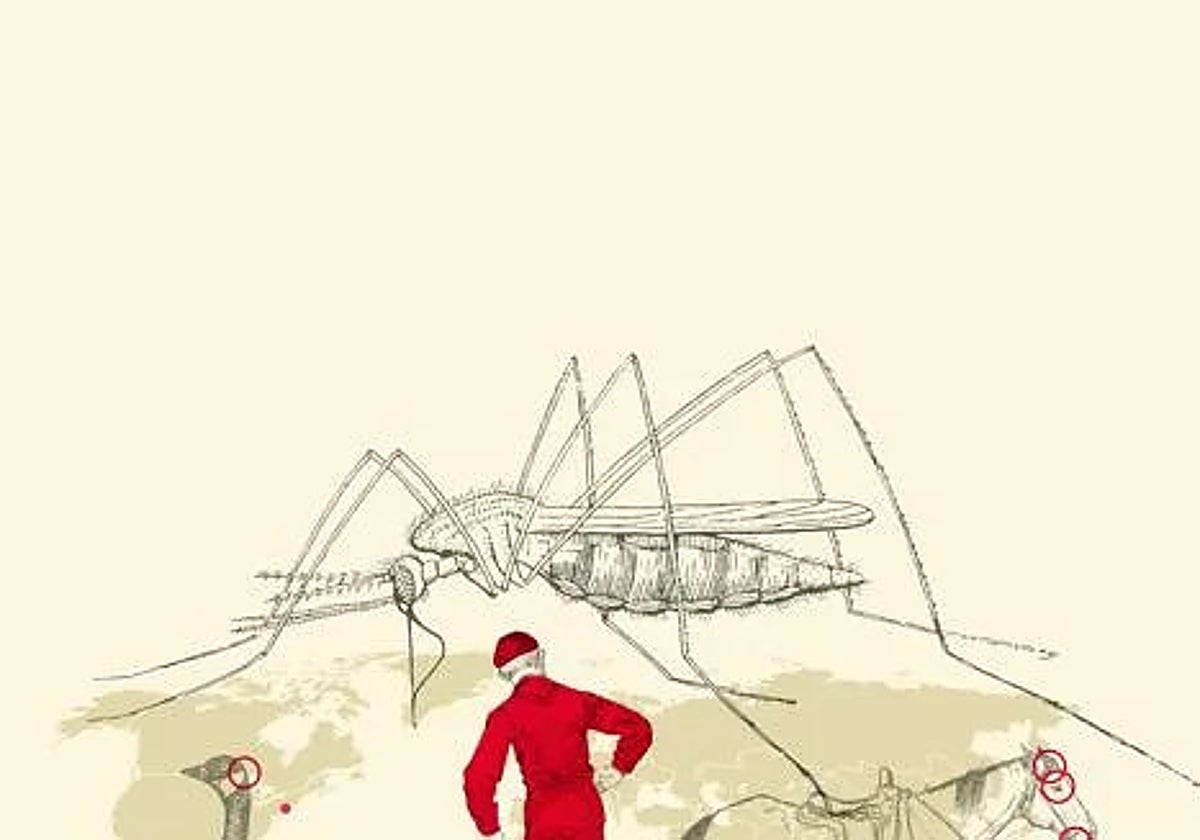
West Nile virus is a zoonosis: an infectious disease that can be transmitted from animals to humans. However, it does not originate in mosquitoes, but in wild and domestic birds, which act as its hosts.
Mosquitoes spread the disease by picking up the virus when they bite infected birds and transmitting it to other birds and, incidentally, to equines (particularly horses) and humans.
Both humans and equines are terminal hosts. In other words, even if they are infected, they do not transmit the disease, not even to healthy mosquitoes.
The incubation period for the disease can be up to two weeks.
Most infections with the West Nile virus are asymptomatic. This is particularly true in the case of birds. In horses and humans, the symptoms are usually mild, although they can lead to encephalitis or meningitis, which may even be fatal.
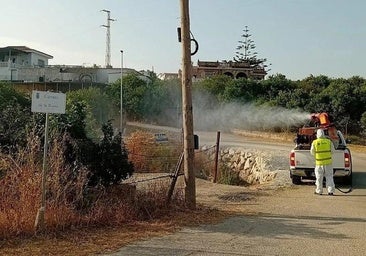
To prevent the spread of the disease, Andalucía is following a protocol for the surveillance and control of the virus in vectors: the entomological approach, using mosquito traps to detect the virus; human surveillance, establishing a protection perimeter in the event of a confirmed case in humans; and animal surveillance, to determine whether the virus is circulating among equines.
In addition, there are general recommendations to prevent the transmission of the virus.
We are currently in the peak time of the West Nile virus spread. From August until the end of September, mosquitoes carry higher levels of the virus. The arrival of colder weather kills the mosquitoes and prevents the spread.
![[]](http://static.vocstatic.com/voc26/latest/assets/images/favicon/surinenglish/apple-touch-icon-57x57.png)