
Solar eclipse 2026
Spain solar eclipse 2026: the risk lies in the painless but irreversible damage of watching the phenomenon without precaution
Malaga ophthalmologist Fernando Orellana offers tips and guidelines on how to safely watch the eclipse
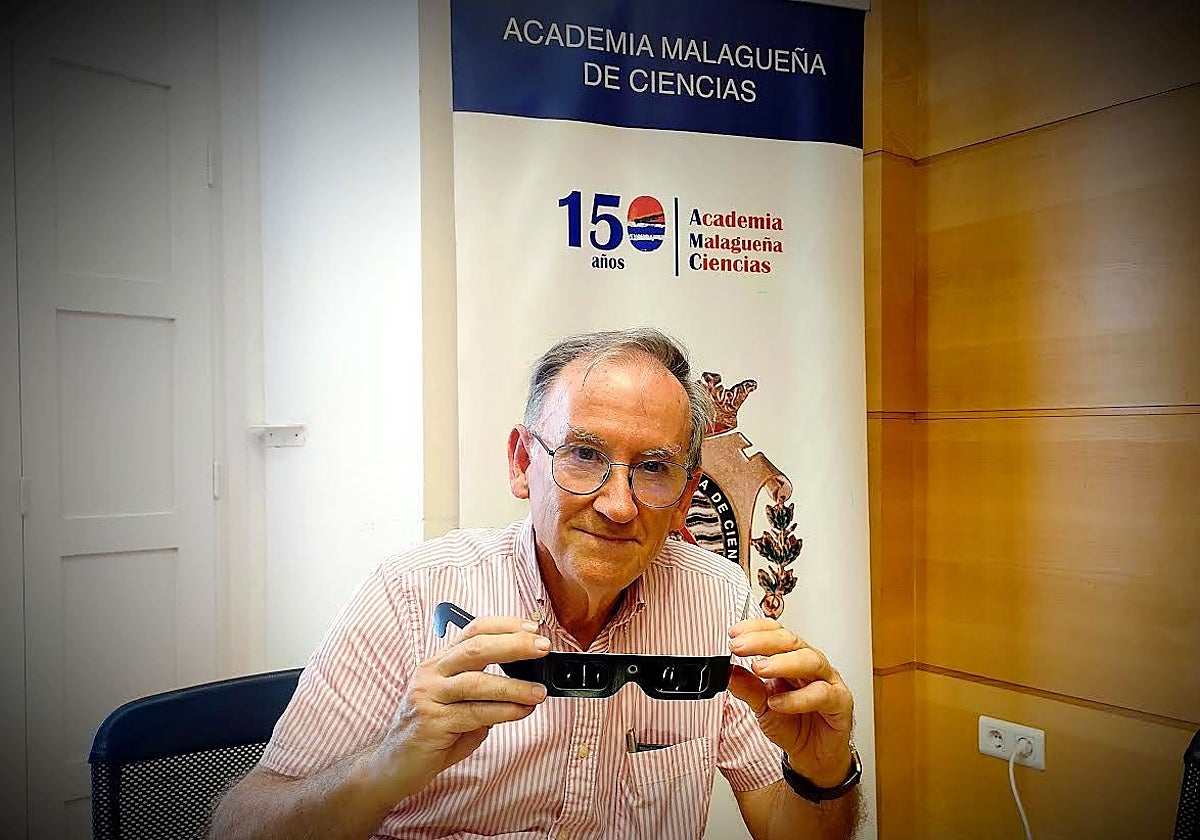

Looking at the eclipse without taking the necessary precautions can cause serious and irreversible damage to your eyesight. The health authorities cannot stress this enough.
Spain's Ministry of Health has published a rapid risk assessment in light of the exceptional astronomical event that Spain will experience between 2026 and 2028.
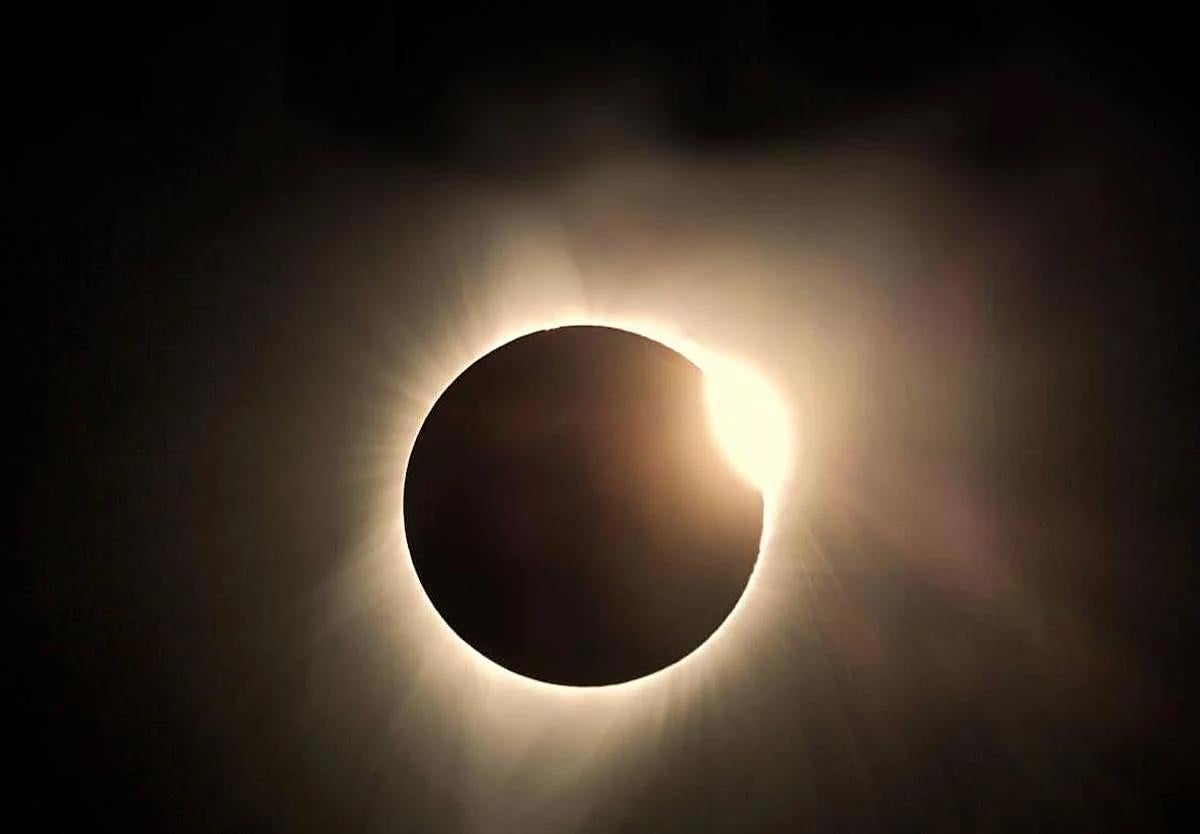
During this period, there will be three consecutive solar eclipses: a total eclipse on Wednesday, 12 August 2026, a second total eclipse on 2 August 2027 and an annular eclipse on 26 January 2028.
Related story
Related story
-
Solar ecluipse 2026
Inés Camacho
The main health risk is photoretinitis or solar retinopathy: a potentially irreversible retinal injury triggered by short-wavelength phototoxic radiation.
The most dangerous aspect of this phenomenon is that it is painless. The retina lacks pain receptors, so the damage occurs without the person feeling any discomfort at the time. This absence of pain encourages inadvertent and prolonged overexposure.
Once damage to the outer layers of the retina has occurred, the deterioration in vision is likely to be irreversible.
SUR discusses all this with renowned Malaga-based ophthalmologist Fernando Orellana, who also addresses the phenomenon in his capacity as president of the Malaga Academy of Sciences.
– What advice would you give on eye protection for this Wednesday's eclipse? We need to take it seriously, don't we?
- I'm absolutely serious. I've been going on and on about it to my family and friends for a month now. Let me give you an example that illustrates it well: there's a game we used to play as children with a magnifying glass: you'd pick up a piece of paper in a field in the sun and it would catch fire.
The magnifying glass has 12 dioptres, while the human lens has roughly 22 dioptres. If we focus the light on a single point, we cause a burn. That's the example.
What happens with eclipses? Firstly, we look at them: we fix our gaze on them. Under normal conditions, we see the sun. It's uncomfortable, so we look away, especially if it's high in the sky. When it's low, at sunset, it's less uncomfortable and if we keep staring at it, time can slip by and cause irreversible damage.
- It's not something you really notice, is it?
- Exactly, that's the risk. There are parts of the eye that are sensitive to pain, such as the cornea (ulcers are very painful) or the uvea. However, the retina has no pain receptors. You don't notice the burn until you see the effect. Once it has been burned, the damage is irreversible.
- Is there nothing we can do in that case?
- In the evening sun, as will be the case during this Wednesday's partial eclipse, the light consists mainly of infrared rays and some types of ultraviolet radiation. Infrared rays heat up and cause burns. Once a burn has occurred, it is irreversible. The surrounding inflammation can be alleviated to some extent, but the damage itself cannot be undone. Furthermore, as we are staring directly at the sun, the damage occurs in the central part of the eye, which is where our visual acuity is greatest.
– Does the fact that the eclipse in the province of Malaga will not be the same as in other areas reduce the risk or should we not let our guard down?
- You mustn't let your guard down at all. When the total eclipse takes place in Malaga on 2 August next year, there will be a moment when you can remove your protective eyewear: just when the sun is completely eclipsed. The danger lies in being overconfident, because irreversible damage can occur very quickly.
That's as far as infrared rays are concerned. As for ultraviolet rays in the afternoon, the atmosphere absorbs some of the type C rays, while type B rays can reach the lens of the eye and accelerate the development of cataracts. Type C rays in particular, which are barely noticeable, as they are low in intensity but highly penetrating, can contribute to the development of macular degeneration over the years. This is something to be taken seriously.
– Are sunglasses, X-rays and other remedies that are often talked about actually any use?
- Makeshift solutions won't do. On X-rays, even though they appear very dense, there are areas of lower density where a ray of sunlight can cause a burn. You must use sunglasses that are certified to the ISO standard and bear the EU's CE mark. Don't buy them from street stalls, as they may be selling counterfeits. Instead, purchase from a reputable retailer.
These protective glasses filter out 99.9 per cent of the radiation, minimising the risk. Yesterday, the Ministry of Health posted a video on its X science account, recommending that people put on their goggles while looking down before looking up at the sun. This may seem trivial, but it is essential because the damage can be serious and irreversible.
– I suppose that children, people with some form of cognitive disability and those with dementia are particularly vulnerable groups.
- Yes, children are less aware of the danger. There is a small silver lining, so to speak, in that we usually squint one eye when watching an eclipse, so the damage is usually limited to one eye, but it is still very serious. In my own case, mind you, despite having ophthalmologists in the family, a distant relative suffered a burn during a previous eclipse and still has a mark that won't go away.
– Is there a risk of going completely blind as a result of improper exposure to the phenomenon?
- No. The burn is small, but it's in the central part of the eye, where our best visual acuity is concentrated. Peripheral vision is preserved, but, of course, that eye is rendered useless for tasks such as reading.
![[]](http://static.vocstatic.com/voc26/latest/assets/images/favicon/surinenglish/apple-touch-icon-57x57.png)