
Solar eclipse 2026
Malaga's best spots for watching the eclipse on Wednesday
Expert astrophotographer Carlos Castro makes sure you won't miss the event of the year and suggests the best viewpoints in the province

Málaga
The eclipse on Wednesday, 12 August, may not be fully visible in Malaga province, but the moon will cover up to 95 per cent of ... the sun.
Anyone planning to watch it from Malaga province should choose a spot with a clear view towards the west and north-west, ideally from high ground.
SUR turns to Carlos Castro: a photographer, cameraman and "passionate" astrophotographer. Although he is heading to the north-west of León to capture (and broadcast live) the astronomical event, he offers his insight so that the people of Malaga can also enjoy the anticipated event.
Related story

"Find a spot where the view to the west and north-west is unobstructed. You'll have to look towards where the sun sets," Castro says. This is because the eclipse will take place in the late afternoon, from 7.30 pm onwards, although it will reach its peak at around 8.30 pm, shortly before sunset.
Castro says several apps can help people plan their viewing position, particularly anyone hoping to take photographs. He recommends visiting the chosen spot at the same time the previous evening to see exactly where the sun sets. Its position will barely change by the following day.
You can use a landmark, such as Malaga Cathedral, to line up your viewing position. Beaches will also provide good views, and thousands of residents and visitors are expected to head there to watch the eclipse.
What will people be able to see in Malaga?
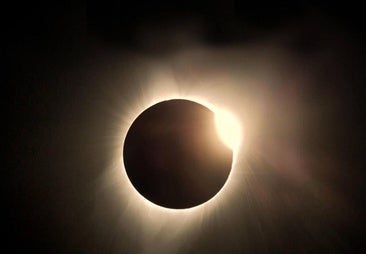
Malaga province will not experience totality, one of the most mesmerising and awe-inspiring sights a person can witness. Even so, the eclipse will cover as much as 95 per cent of the sun, giving viewers a good sense of the phenomenon.
The five per cent that remains may sound insignificant, but Castro says that even 99 per cent coverage would look "absolutely worlds apart" from a total eclipse, both in terms of the light and the overall sensory experience.
"The image you will see will be like when the moon appears as a very thin crescent in the sky," he says.
How to safely watch the eclipse
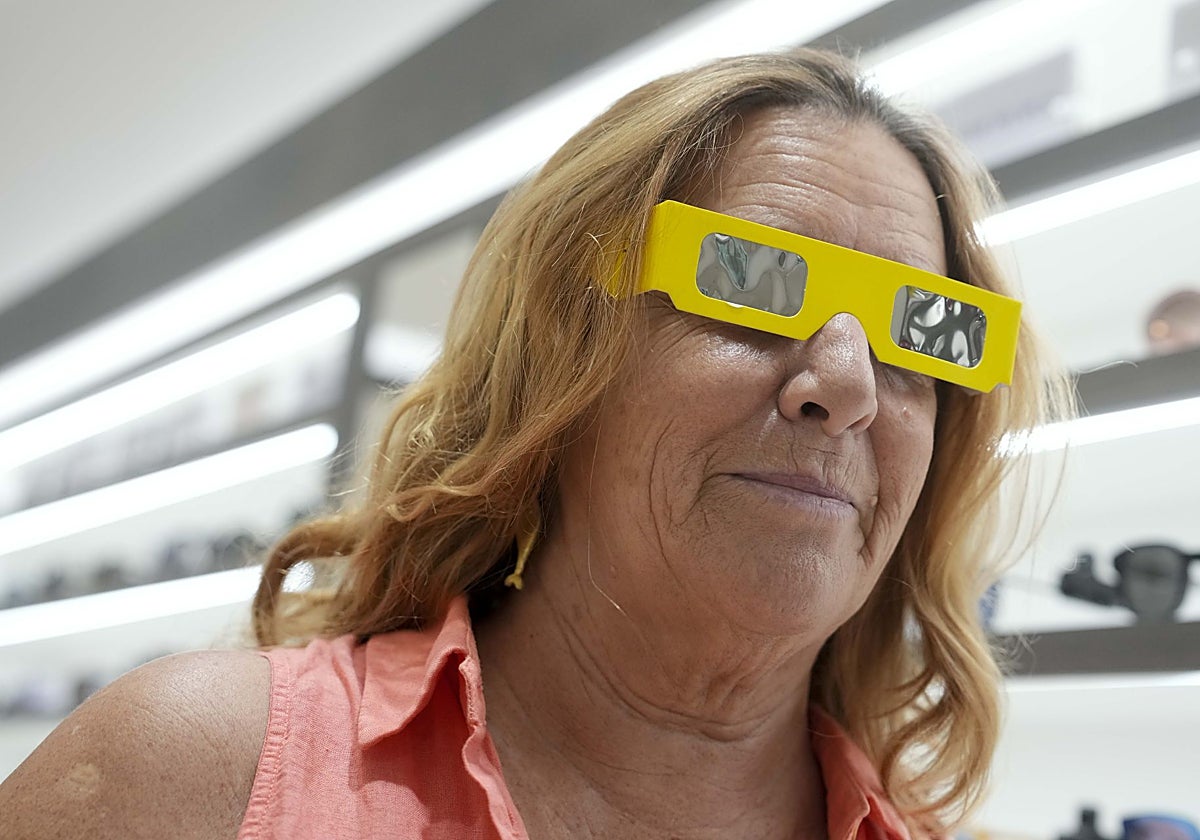
Choosing the right location matters, but so does protecting your eyesight. Castro stresses that viewers must wear proper eye protection throughout the partial phase.
In Malaga, that means wearing eclipse glasses for the entire event because the moon will never completely cover the sun. Only certified, approved solar-viewing glasses provide adequate protection.
"Homemade solutions such as X-rays, smoked glass or glass bottles are completely forbidden because they do not filter out the harmful radiation that can damage the retina," Castro warns.
People watching the total phase in areas where the moon completely covers the sun can remove their glasses during those brief moments of totality. That will not happen in Malaga this time.
One can obtain specialist eclipse glasses from opticians, research centres, science museums and other public organisations working in science, innovation and higher education.
Spain's ONCE will also distribute thousands of pairs through its vendors, with the sale starting on Monday, 3 August. In Malaga city, people can also get them from the MIMMA museum.#
Eye safety must come first. Eclipse glasses should comply with the ISO 12312-2 standard and must not have expired. Before using them, hold them up to the light and check for scratches, cracks, holes or other damage. Do not use damaged glasses.
Put the glasses on before looking towards the sun, look only briefly for a few seconds and then look away. Do not watch the eclipse continuously; take regular breaks. Remove the glasses only after looking away from the Sun.
Never look at the sun through binoculars, telescopes or cameras unless you have fitted professional solar filters to the front of the equipment.
A trial for 2027
Wednesday's eclipse will also serve as a preview of what Malaga can expect on 2 August 2027. In just under a year, the province will sit at the centre of a total solar eclipse that will attract thousands of astronomy enthusiasts from around the world.
The date may still seem a long way off, but the event has already attracted so-called "astronomy tourists", with the Costa del Sol expected to rank among their main destinations.
At 10.30am that day, with the sun high in the sky, darkness will descend over Malaga for several minutes.
"The sun will disappear completely behind the moon. There will be unnatural silence. Even the birds will fall silent. A breeze will rise and temperatures will drop by 8-10C. It will be a sensory experience involving every sense," astrophysicist Alberto J. Castro-Tirado tells SUR.
He describes a total solar eclipse as "the most impressive natural experience you can see", even surpassing the northern lights.
Malaga residents will be among the main beneficiaries of this extraordinary celestial event. Malaga will be the only provincial capital in mainland Spain where people could see totality.
They will have waited 157 years for the experience: the last time Malaga province witnessed a total solar eclipse came on 22 December 1870.
![[]](http://static.vocstatic.com/voc26/latest/assets/images/favicon/surinenglish/apple-touch-icon-57x57.png)