
Solar eclipse 2026
Andalusian Institute of Astrophysics to broadcast solar eclipse live using innovative technique
The IAA will be broadcasting a live, up-to-the-minute special to follow the eclipse on Wednesday 12 August via YouTube and ESA Web TV, featuring researcher Alejandro Sánchez de Miguel
Inés Camacho
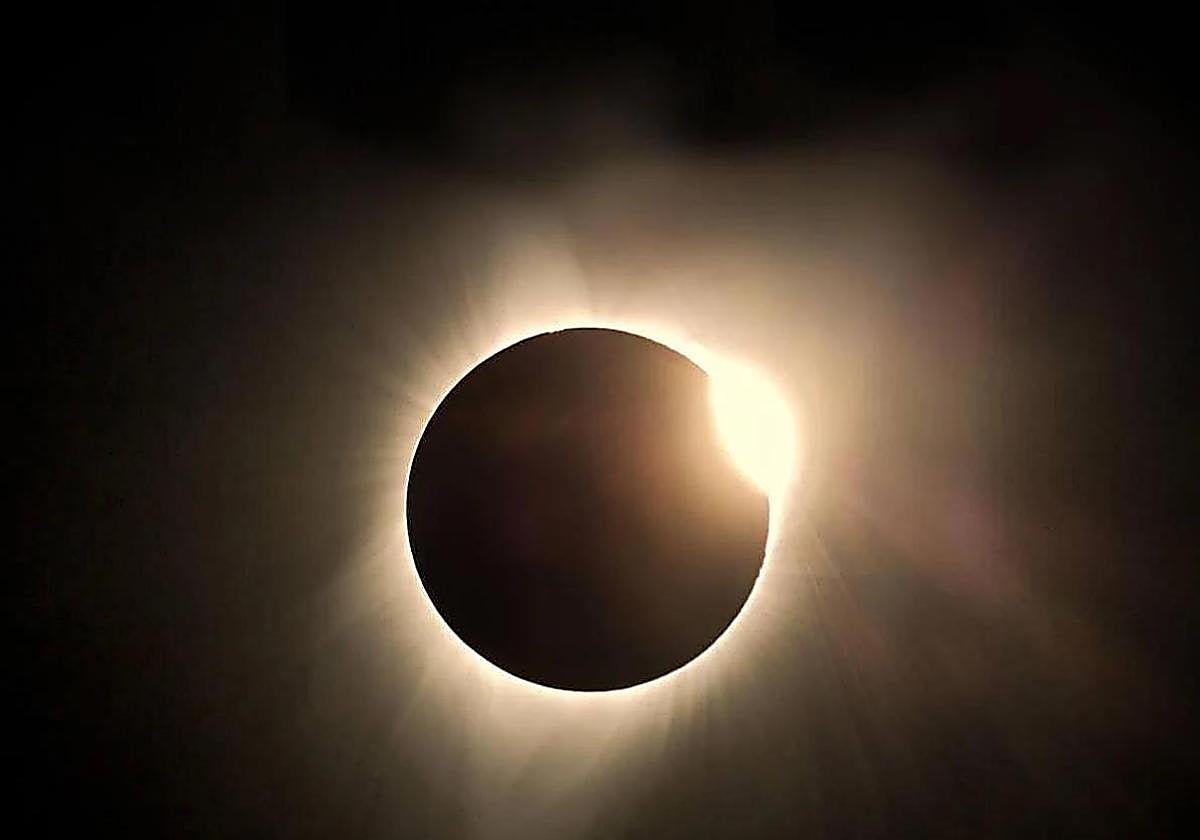
In the run-up to the solar eclipse due to take place on Wednesday 12 August, the Andalusian Institute of Astrophysics (IAA) has announced that it will be broadcasting this astronomical phenomenon live. The live stream will be available on platforms including YouTube and ESA Web TV, in collaboration with external and international organisations such as the European Space Agency, Stars4All and the Complutense University of Madrid.
Alejandro Sánchez de Miguel, a researcher at the IAA, is involved in the organisation and public outreach for next Wednesday’s solar eclipse. He has explained that the team will use an observation technique that may be unprecedented in this type of broadcast.
It involves an unusual technology with which they will attempt to capture the eclipse in high dynamic range (HDR), with the aim of approximating the human eye’s perception. In addition, the team will attempt to record the polarisation of the solar corona using a system of moving polarisers. Sánchez de Miguel points out that he already managed to achieve this result in still photography during the 2017 eclipse and that, on this occasion, the challenge will be to achieve it on video as well.
“The eclipse will be 95 per cent total, so it won’t be a total eclipse, but it will be a fairly deep partial eclipse,” explains the researcher when asked how the phenomenon will be seen from Granada. Although it will not be a total eclipse, it will be one of the deepest partial eclipses visible from the province. For this very reason, experts stress that it will be essential to use approved eclipse viewing glasses and to avoid looking directly at the Sun at any point during the event.
When asked about the best places to view the eclipse from Granada, Sánchez de Miguel replies that “anywhere with a good sunset” will be a good option. The researcher prefers not to single out any particular spot or specific viewpoint, in order to avoid crowds and encourage the public to spread out across different viewing points.
Following in the footsteps of other astronomical phenomena, Alejandro Sánchez de Miguel believes that this year’s eclipse will serve as a dress rehearsal for the total eclipse on 2 August 2027. The researcher warns that the Andalusian coast, particularly the provinces of Cadiz and Malaga, will need to prepare for a massive influx of visitors.
In the meantime, he encourages people to make the most of the fact that the eclipse this year will coincide with the end of the Perseid meteor shower, allowing people to enjoy two astronomical phenomena on the same day.
the researcher recommends checking information only through official sources, such as the Tres Eclipses website. Furthermore, he calls for tourists and visitors to be informed about the safety guidelines they must follow during this event, in order to avoid any risks while observing the eclipse.
![[]](http://static.vocstatic.com/voc26/latest/assets/images/favicon/surinenglish/apple-touch-icon-57x57.png)