
Almeria fire
Almeria wakes up to a glimmer of hope in Los Gallardos as aerial firefighting resources return to battle the blaze
The Infoca Plan brought its aircraft back into service on Saturday morning following the favourable development of the forest fire that has already claimed twelve lives
Miguel Cárceles
Almería
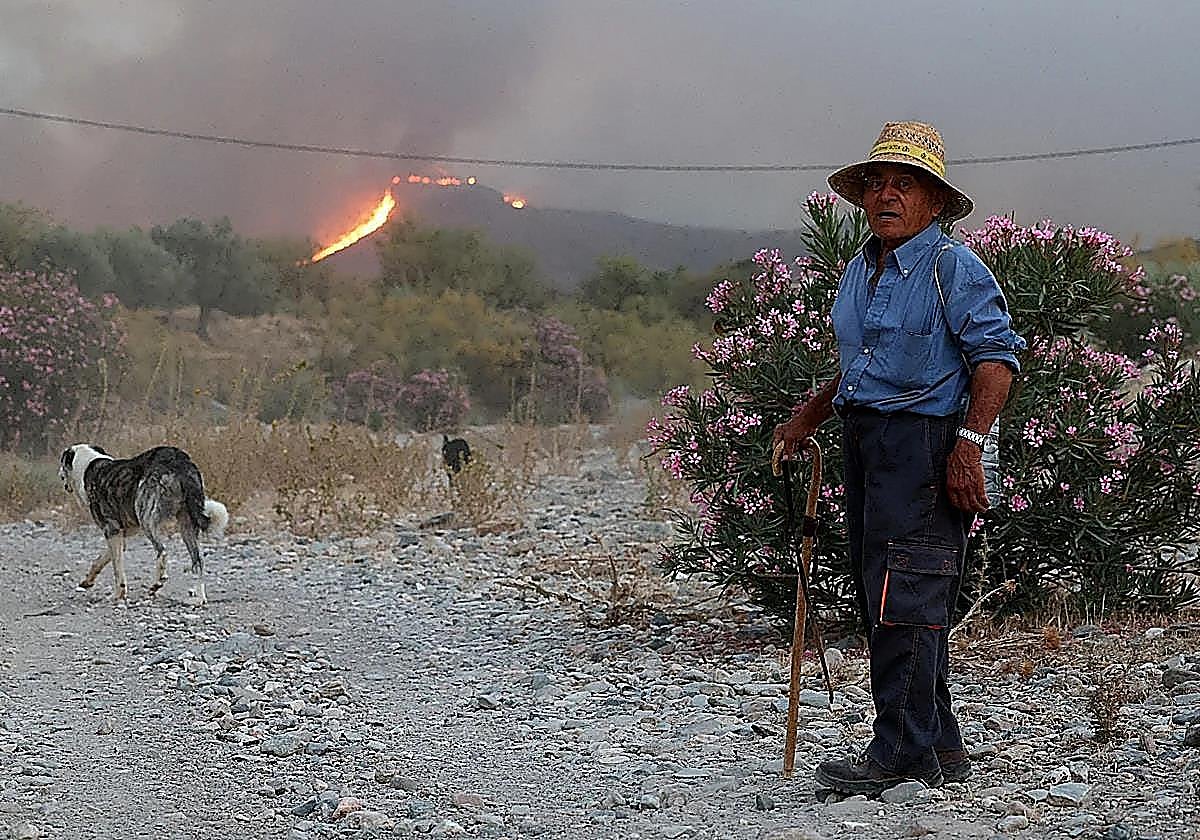
This morning, the province of Almería is coming to terms with the situation with a mixture of caution and deep sorrow following the devastating forest fire ... which broke out on Thursday afternoon in the municipality of Los Gallardos .
The first light of this Saturday has brought with it a significantly more favourable situation than in previous days, allowing for the gradual and phased deployment of aerial resources to the fire-fighting efforts.
The Infoca Plan began the coordinated deployment of a total of eight aircraft over the affected area, a strategic advance party, while the rest of the fleet that operated at the height of the emergency – comprising up to 32 aircraft – remains on high alert and fully available at bases across the province, ready to join the firefighting effort should weather conditions deteriorate again.
The respite provided by the weather conditions during the night has been the key factor in the spread of the flames beginning to show signs of stabilising.
Related story
-
Miguel Cárceles and Nerea Escámez
The Ministry of Defence has highlighted the intense and continuous work carried out in the dark by all the personnel deployed in the Levante Almeriense region, where the Military Emergency Unit (UME) maintains a contingent of 220 personnel, with the sole aim of containing the fire and bringing it to a definitive halt. Members of the Second Emergency Response Battalion carried out direct attack missions on the fire front throughout the night, constantly dousing the hottest spots and making decisive progress in containing a heavily damaged area of woodland.
The efforts of the military forces have been perfectly coordinated with the Andalusian regional government’s own response, which kept 134 firefighters from the Infoca Plan on the ground during the critical hours of the early morning.
This contingent received logistical support from eight fire engines, heavy machinery in the form of a bulldozer, and essential technical resources, including emergency medical units, communications specialists and meteorological experts who monitored every gust of wind in real time.
Thanks to this joint effort, the situation has taken a positive turn, allowing them to face Saturday with a degree of optimism, albeit within the context of the immense human tragedy that this event has already caused.
The best news from this morning’s update is that there are no new evacuees, with the situation having stabilised under Operational Level Two of the emergency plan.
The fire has not threatened any further properties in recent hours, meaning that since late on Friday night it has not been necessary to order any further compulsory evacuations in the region. This relative calm brings relief to the people of Almeria, who had witnessed the preventative evacuation in the preceding hours of various hamlets and residential areas in neighbouring towns such as La Alameda, El Chive, El Marchal, new areas of the municipality of Bédar, the hamlet of La Montaña, El Jauro and the municipality of Lubrín, which was at one point completely cut off due to the proximity of the fire and the thick smoke.
1,405 people evacuated
The figures for those affected by the compulsory evacuations paint a picture of unprecedented solidarity and institutional mobilisation in the province, with a total of approximately 1,405 people forced to leave their homes at short notice.
This number of evacuees includes both permanent residents and the many seasonal visitors who were in the villages of Alfaix, Almocáizar, Fuente del Albarico, Los Pinos, La Serena and the Pinar de Bédar housing estate.
The vast majority of these affected local residents and tourists were transported in an orderly manner to the sports hall in the neighbouring coastal town of Garrucha, a venue that has been temporarily transformed into the hub for social support and the provision of supplies to those affected.
The general improvement in fire-fighting efforts and the significant drop in the strength of the prevailing winds have also helped to alleviate the damage to road infrastructure that had been disrupting transport links in the eastern part of the province.
At three o’clock on Saturday morning, the relevant authorities authorised the reopening to traffic of the Autovía del Mediterráneo, the A-7, specifically the section between kilometres 709 and 714 – a crucial artery for the province that had remained closed for practically the whole of Friday due to safety concerns and poor visibility caused by smoke.
Despite the smooth flow of traffic on the main motorway, conditions are far from back to normal on the network of secondary roads in the vicinity of the accident.
The Guardia Civil’s traffic unit is maintaining the AL-6109 regional road closed, affecting the section between kilometre markers zero and 18.130. The Civil Guard command has reiterated an urgent appeal to all drivers and road users to completely avoid attempting to access the affected area, urging them to use alternative routes with the dual aim of safeguarding public road safety and ensuring the unimpeded passage of emergency and fire-fighting vehicles still operating in the area.
Search for residents
Alongside the fire-fighting efforts, the rescue operation is continuing its agonising search for anyone who may have been affected within the burnt-out area. Concern among local residents is at its highest in the surrounding towns, as, to date, a total of seven missing persons reports have been formally filed at Guardia Civil stations.
Related story

Furthermore, the emergency services coordinating on the ground have reported that the situation remains uncertain regarding a further 23 people who are currently listed as unaccounted for; as a result, ground searches are considered an absolute priority for the specialist rescue teams.
The most heart-rending aspect of this catastrophe ravaging the province of Almería is centred on the forensic facilities, where staff are already working round the clock to put a name to the tragedy.
The biology department of the Criminalistics Service of the Civil Guard’s General Directorate has taken charge of the investigations and is working intensively on the genetic analysis of the biological samples obtained at the Institute of Forensic Medicine in Almería.
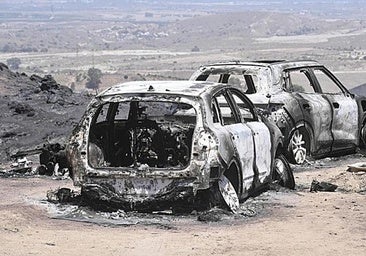
The primary objective of the Guardia Civil’s specialists is to achieve the unequivocal identification of the twelve bodies that have been recovered to date at the epicentre of the disaster - a complex but essential task in order to provide answers to the affected families.
![[]](http://static.vocstatic.com/voc26/latest/assets/images/favicon/surinenglish/apple-touch-icon-57x57.png)