
Almeria fire
Spain's deadliest fire of the century has claimed the lives of 12 people, with a further 23 still missing in Almeria
The victims, most of them foreign nationals, were trapped while fleeing the flames, which spread rapidly across the countryside
Miguel Cárceles and Nerea Escámez
Almeria
It was 4.37pm on Thursday when the first call came in to the emergency control centre. A fire had broken out in the Los ... Gallardos area of Almeria province, but there was no indication of the scale the incident was to reach.
This marked the start of the third deadliest fire in Spain’s history and the worst in Andalucía’s memory .
On Friday evening some 23 people were still unaccounted for, which is one of the main causes for concern. Rescue workers are trying to gain access to the houses burnt down by the fire “to see what we find”, added the Andalusian regional president.
Moreno has emphasised the need for caution regarding those missing. “It does not mean they are dead; sometimes they are simply in other areas and have not yet been identified,” he explained.
Spreading
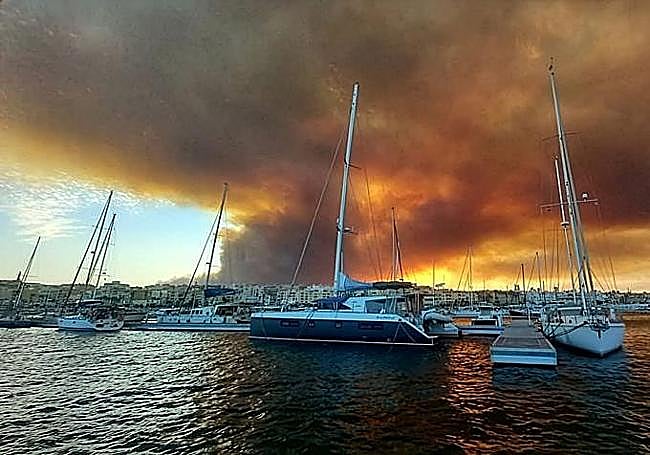
On Thursday evening after the initial reports concern began to spread among residents of the Almeria municipalities of Los Gallardos and Bédar, who began to see the flames spreading rapidly and the black smoke approaching their homes. Vera, Mojácar, Garrucha and even Águilas watched from a distance as a hellish scene unfolded.
The deployment of around fifty firefighters to tackle the blaze began to be spread across different areas to stabilise the flames, which had reached various locations with dense scrubland.
Related story
The aim was to contain the fire before beginning the final control and extinguishing operations. The emergency services involved joined forces to prevent the flames – fanned by the wind and high temperatures – from spreading towards inhabited areas.
At around 8.07pm on Thursday, the Regional Minister for Emergencies, Antonio Sanz, announced that Emergency Phase 1 had been activated and urged residents to exercise extreme caution in their homes, as well as to carry out a precautionary evacuation of those living in areas close to the flames, in the nearby town of Bédar.
It did not take long for the alert to escalate to phase two. At this point, the scale of the situation began to become apparent. There were already reports of evacuees with burns being taken to Torrecárdenas Hospital.
This announcement led to the immediate activation and deployment of the Military Emergency Unit (UME), bringing the total number of military personnel on the ground to 150, alongside Plan Infoca, the fire service and the Civil Guard.
"It was a deadly trap"
The night did not bode well, and the worst news was not long in coming. Reports began to emerge of people missing, and the worst-case scenario was confirmed at around 1.30am on Friday when the security forces found eleven people dead, most of them Belgian and British nationals, and one Spaniard; they also confirmed four seriously injured people – some of whom had been airlifted to Seville with burns – and at least 23 local residents whose whereabouts were unknown.
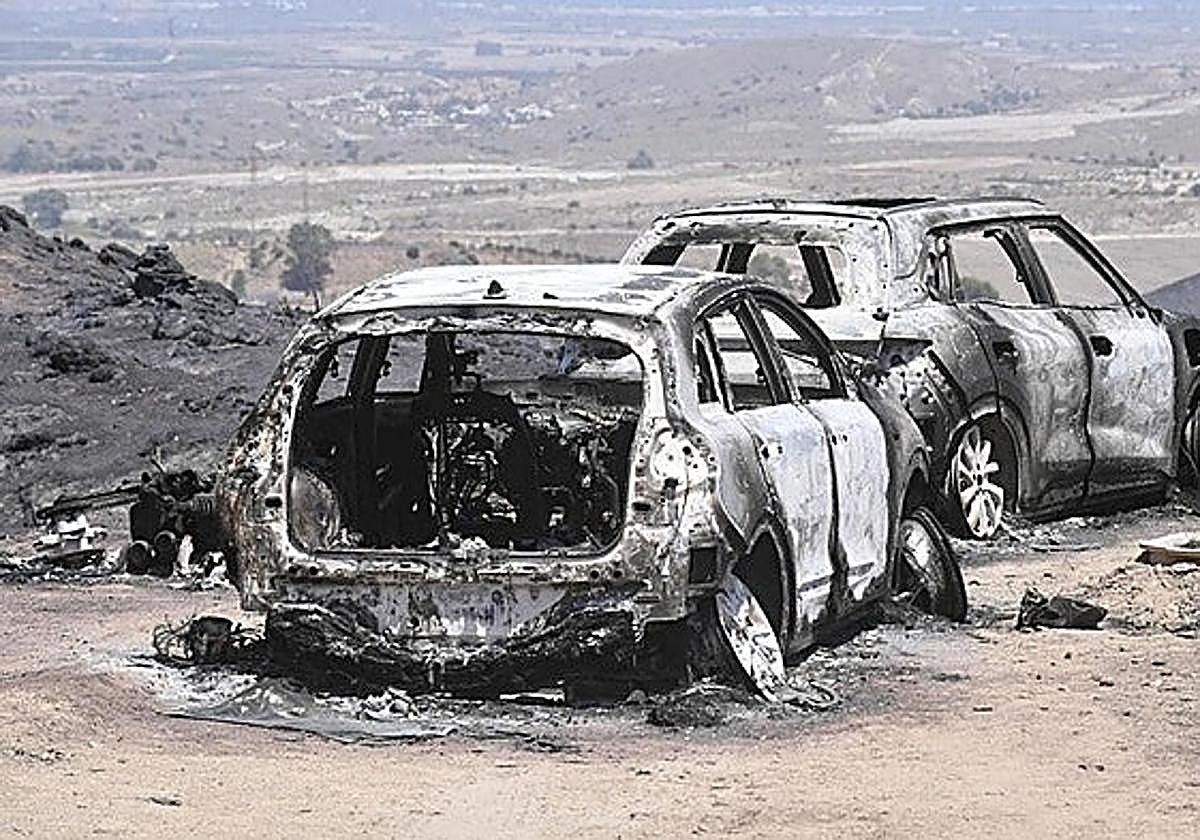
Some of the victims were found inside their vehicles as they made a desperate attempt to flee the fire
Faced with the growing danger, the civil authorities had ordered the residents of Bédar to stay in their homes. However, a group of residents, driven by desperation, chose to flee in their private vehicles, using alternative escape routes not authorised by the security forces monitoring the rural access roads in the area. This decision, driven by understandable panic at the imminent advance of the smoke and the small embers in the air, ultimately proved to be a dead end.
Some of the victims were found inside their vehicles as they made a desperate attempt to flee the fire. “It was a death trap,” said Sanz as he later took stock of the tragedy. Other victims were found on foot in the surrounding area, having presumably abandoned their cars in an attempt to gain higher ground by climbing the slopes of the ravine.
At the Levante fire station in Turre, from the early hours of the morning – although the frontline crews had not slept a wink while fighting the blaze – the operational command centre was set up to coordinate efforts and manage the needs of the firefighters who were battling tirelessly against some of the most ferocious flames in history.
Television crews, photographers and journalists were thronging the area to keep abreast of the latest developments, while politicians from the Andalusian Regional Government and the Spanish Government, as well as representatives from the affected and involved local councils, made their way to the nerve centre from which instructions were being issued to prevent the tragedy from escalating further.
However, the weather conditions put the firefighters under severe strain, as Friday was marked by strong gusts of wind – at least 20 kilometres per hour – and scorching heat.
"We've never seen anything like it"
Residents of neighbouring towns such as Los Gallardos could see the flames drawing ever closer, without really knowing how to react; information was trickling in through official channels, but it seemed insufficient given the circumstances.
“We’ve never seen anything like this,” said one of the staff at a petrol station, describing how waves of UME troops and firefighters would arrive every few minutes to rest before returning to the front line.
Throughout the afternoon, the wind seemed to be picking up, and the firefighting teams continued to work marathon shifts, one after another. From the operational command post, the key figures could be seen moving back and forth as they worked across a blackened landscape that has transformed the appearance of the Levante region of Almeria.
Winds of 20 kilometres per hour and scorching heat, combined with the difficult terrain, are hampering fire-fighting efforts
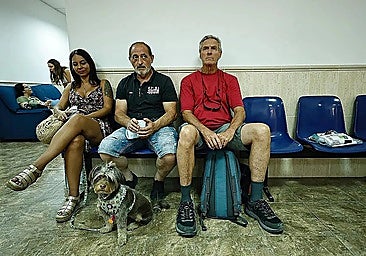
The other crucial task was to comb through all the affected and neighbouring areas to locate any further victims or people affected by the flames. With this in mind, several teams from the Guardia Civil in Almeria, supported by units from other parts of Spain, were deployed across the land and scattered country houses that had already been affected by the fire, which, according to the latest figures from Friday afternoon, had already burnt 4,000 hectares.
Some of the teams evacuated at least 50 residents from El Marchal, in Lubrín, to keep them safe from the fierce fire raging in the area. The Guardia Civil’s major disaster response team from the forensic service was also deployed to the scene to identify the bodies, along with the Reserve and Security Group and public safety and traffic patrols, according to a statement from the Guardia Civil.
On Friday, the Guardia Civil’s mountain unit ventured into a hard-to-reach ravine in Bédar to attempt to recover bodies, according to sources close to the investigation, although no details have yet been released regarding the outcome of the rescue operations or the number of bodies found at that location within the municipality.
Throughout, the authorities have emphasised that one of the main objectives is to identify the victims and locate those who have not yet been found, as, as of Thursday afternoon, only two missing person reports had been filed.
For this reason, DNA sampling will be crucial to the process. To facilitate this, a reporting centre has been set up at the Guardia Civil station in Garrucha for relatives who are unable to locate their loved ones.
An appeal was therefore made to the immediate family members of those not yet found to visit one of these offices in order to speed up the identification process.
As of late on Friday, the plan was to keep the command centre operational until Sunday at the Levante Almeriense fire station.
![[]](http://static.vocstatic.com/voc26/latest/assets/images/favicon/surinenglish/apple-touch-icon-57x57.png)