
Politics
Spain's Prime Minister announces 505-million-euro migrant integration plan amid clashes with the right
The campaign, which complements the regularisation of more than one million foreigners, includes courses for learning Spain's co-official languages, "norms and values"
Paula De las Heras
Spanish Prime Minister Pedro Sánchez has launched a 505-million-euro integration and citizenship plan as the debate over immigration intensifies following a major regularisation drive that has already received more than one million applications, well above the 750,000 initially expected.
The plan comes alongside the government's wider push to regularise more than one million foreign nationals. It includes programmes to teach Spain's co-official languages and to promote knowledge of "norms and values", at a time when migration has become one of the central political battlegrounds ahead of the next general election.
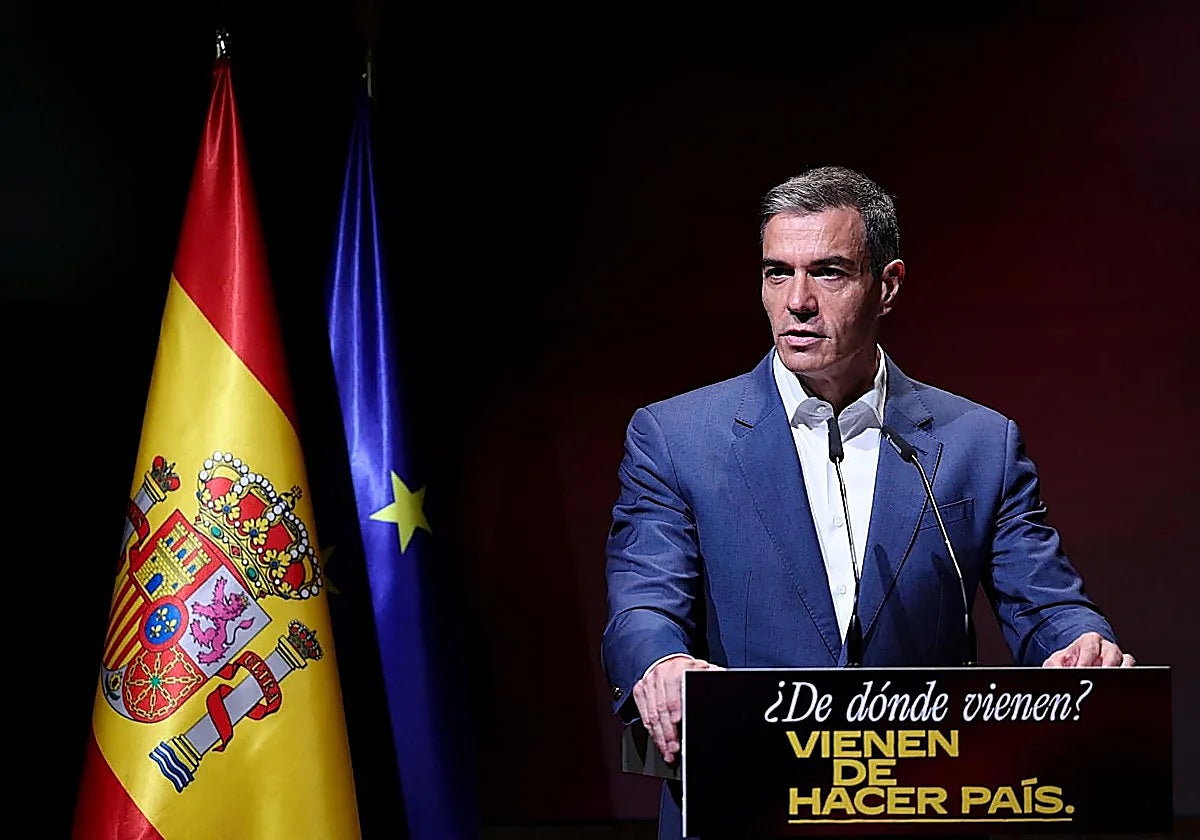
Speaking in Madrid on Tuesday, Sánchez presented the government's campaign: '¿De dónde vienen? Vienen de hacer país', which could be translated as 'Where do they come from? They come from building this country'.
Related story

He set out his approach as a clear contrast to the PP and Vox opposition, who argue for "national priority", as well as to international figures such as US president Donald Trump.
"Governments make choices and those choices define not only the country we are, but the country we want to become," Sánchez said.
He also defended Spain's migration model, arguing the country should "protect human rights" and recognise the dignity of people who live and work in Spain. "Spain has never moved forward by building walls," he said.
However, he also acknowledged that "coexistence is not free of tensions", which he said fall largely on regional and local authorities. The rise of hard-right Vox, along with parties such as the anti-Islam Aliança Catalana in Catalonia, underlines the political sensitivity of the issue.
Sánchez set out four main pillars for the new strategy.
The first focuses on "regular status and orderly flows". He announced a new labour movement strategy to create legal and safe migration routes, along with plans for a future state human movement agency. He said the agency would "bring together scattered resources to improve coordination", while maintaining border control and security functions.
The second pillar centres on work as the main route to integration. The government will allocate more than 35 million euros to help migrants enter sectors with labour shortages and will offer over 100,000 vocational training places.
The third pillar addresses social cohesion. The government will spend nearly 30 million on language learning, including Spain's co-official languages, and on education about Spanish laws and democratic values. It will also strengthen efforts to tackle hate speech and support victims of discrimination.
"Those who arrive must respect our laws and learn our languages, both official and co-official," Sánchez said. "In Spain the rules are clear: democratic values, equality between men and women, freedom of expression and respect for the law. Integration cannot stop at demand, we must make it possible."
The fourth pillar aims to make citizenship effective through stronger public services and anti-discrimination measures.
The government says that migration supports economic growth and helps sustain the welfare state. According to its figures, almost half of Spain's GDP growth since 2022 links to immigration.
That argument directly challenges the positions of the PP and Vox, who associate migration with insecurity and pressure on public services.
Sánchez also rejected claims of a "pull factor". He said irregular arrivals have fallen by one-third so far this year compared with the same period in 2025 and dropped by 70 per cent in the Canary Islands.
The dispute places immigration at the centre of Spain's political debate, with Sánchez positioning his government against the right-wing parties, which have also questioned routes to citizenship under the democratic memory law (human rights legislation seeking to redress the victims of the Spanish Civil War and the Franco dictatorship).
Access the broad Spain national news archive
![[]](http://static.vocstatic.com/voc26/latest/assets/images/favicon/surinenglish/apple-touch-icon-57x57.png)