
Housing
Spain builds just over half the homes new households need
The Canary Islands and Valencia show the greatest disparity, with barely 30 properties for every 100 new households, while foreign buyers are setting new records for property purchases
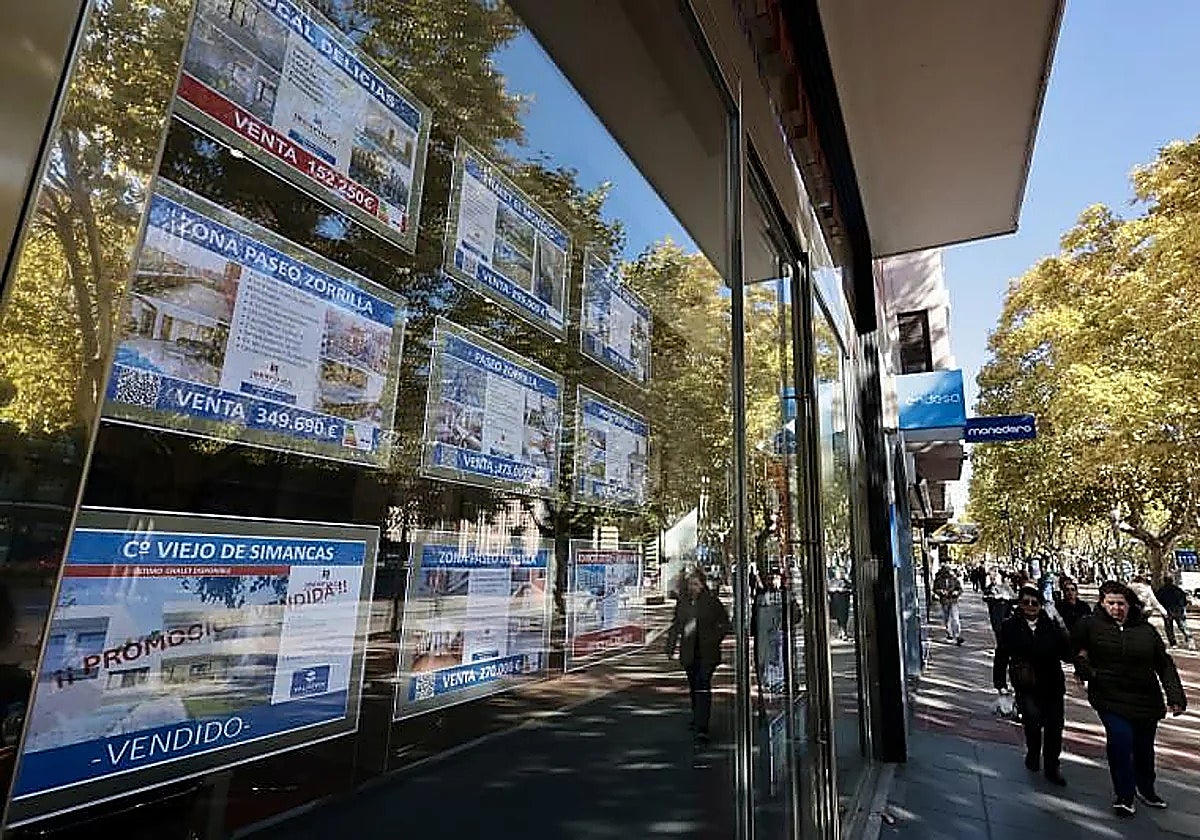

The difficulty in accessing housing is the main concern for Spaniards ahead of the general election on 29 November and the topic is dominating the political debate ... .
Although the Spanish economy is currently performing well, the sharp rise in property prices in some of the major cities and coastal areas has fuelled social unrest.
The housing shortage in Spain is nothing new: it is a phenomenon that has been getting worse for years. This is the conclusion a recent study by research firm Oxford Economics has reached.
Related story

Over the last decade, just 58 homes have been built in Spain for every 100 new households. The lack of new-build housing is particularly acute in some areas: in the Canary Islands, the figure stands at just 28, while in Valencia it is 32. In Barcelona, the country's second-largest city, only 39 homes were built for every 100 new households.
Furthermore, Barcelona would need around 19,000 new homes a year until 2030 just to accommodate the projected growth in the number of households, which is almost 80% more than its highest annual figure for completed homes in the last decade, according to the report.
Madrid would require a further 29,000 flats. This does not even take into account the accumulated shortfall. The Balearic Islands are among the most affected areas, where the rate of construction is also below the national average.
According to the Oxford study, lengthy planning processes and the limited availability of land ready for development will make it difficult to meet these needs.
Spain is therefore facing a national property crisis that is distinctly regional in nature. "The geographical concentration of economic activity in Spain and the recent growth driven by immigration have increased demand for housing in urban centres. Added to this have been the boom in tourism, the growth in short-term rentals and interest from foreign buyers," the report says.
Domestic demand falls
Foreign buyers accounted for 16% of property sales in Spain during the third quarter of 2026, the highest percentage on record, according to Estadística Registral Inmobiliaria del Colegio de Registradores. Experts, however, do not attribute this increase in the proportion of foreign buyers to them purchasing more properties, but rather to the fact that domestic demand is experiencing a significant decline.
"Interest rates are higher, prices are rising and, as a result, the number of Spaniards able to afford a home is falling," property expert Iñaki Unsain says.
Another consequence of the housing shortage is that rents are set to rise unstoppably. In fact, they are forecast to return to double-digit growth in 2026, almost three times the eurozone average, while growth in real disposable income per household is set to slow to below 1%, according to the report.
By area, the research firm estimates that the house price index in Madrid will rise by a further 31% between now and 2030, with even greater growth expected in Valencia (33%), Alicante (30%), Malaga (29%), the Balearic Islands (29%) and the Canary Islands (29%), all exceeding the national average of 27%. Barcelona will see a more moderate, though still substantial, increase of 23%.
