
Rail transport
Adamuz accident investigators warn of risk of another tragedy due to unresolved safety flaws
Aitat's experts believe that had the break in the track at Adamuz been detected, it would "in all probability" have prevented the derailment
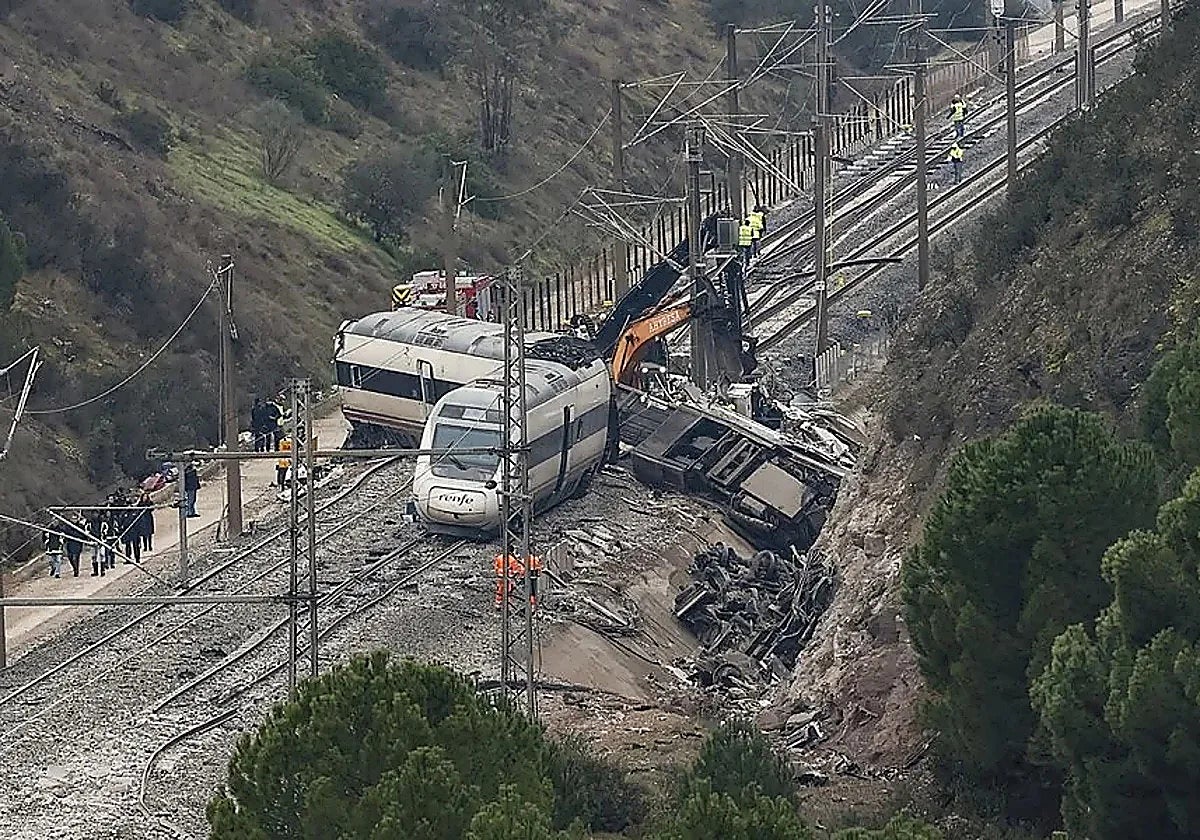

The investigation into the Adamuz derailment and subsequent train crash has revealed that the security system still fails to detect a similar fracture in the ... track before another train passes.
The Aitat investigation authority has released a 21-page report and sent it to Judge Cristina Pastor Recover, alongside the latest updates in the investigation and security recommendations.
The Aitat report states that identifying the fracture would "in all probability" have prevented the derailment of the Iryo and its subsequent collision with the Alvia, in which 46 people died on 18 January. It is this possibility of averting the collision that forms the focus of the investigators' warning.
Related story
-
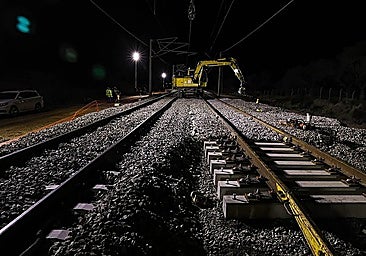
Adamuz rail accident
Melchor Sáiz-Pardo and Javier Arias Lomo
The report warns: "The existing information on the limitations of track circuits for detecting rail breaks has not led to a solution that guarantees their detection during operation." Aitat states that, given the current state of the infrastructure, these devices do not ensure the identification of fractures similar to the one at Adamuz.
The concern extends to the high-speed rail network as a whole. The document contains data from rail infrastructure company Adif: since 2017, 44 instances of broken rails have been recorded. Only 18 were detected by track monitoring systems. A further 17 were identified by infrastructure workers and the remaining nine by train drivers.
The report describes how a fracture may go unnoticed while traffic continues. The fastenings initially hold the ends of the rail in place, but the successive passage of trains can cause deterioration. At high speed, the stresses on the track cause the fracture to progress until it leads to a derailment.
22 hours and 47 trains
Aitat's analysis reveals evidence consistent with the track having remained broken for approximately 22 hours and having withstood 47 trains passing over it prior to the accident involving the Iryo. Investigators have reconstructed this period using electrical records and the impact marks found on the wheels of several trains.
At 9.47pm on 17 January, following the passage of a Renfe train, the voltage in the affected circuit dropped from 2.182 to 1.540 volts. That level remained unchanged until the accident. No similar variation occurred on the track next to it, which rules out common environmental factors as an explanation.
According to the report, the change was recorded in the maintenance support system, a tool for monitoring the performance of the facilities. However, this system does not issue real-time alerts. The information subsequently enabled the reconstruction of a fault that had persisted for several hours.
The current found alternative paths through the return and earthing connections, despite the break in the rail. The voltage decreased, but remained above the detection threshold. The document explains why the break was not detected by the track circuit.
This shortcoming was already known. The analysis draws on documentation relating to the original design of the Madrid-Seville line, which establishes a link between the ability to detect faults and the electrical configuration. It also points out that none of the options set out in the specifications to improve this detection were adopted.
The report notes that a 2018 test to validate the system intended to replace the original equipment confirmed that, with the existing installation, the breakage detection requirement was not being met. Despite this limitation, the final approval of the railway product was announced on 17 March 2020.
The issue resurfaced in the safety documentation for the refurbishment. The initial risk was classified as "intolerable", with a severity rating of "catastrophic" and a frequency rating of "occasional". However, detecting track breaks was excluded from the project requirements and the hazard was subsequently listed as cancelled in the register.
The replacement of the circuits in 2024 renewed the equipment, but did not eliminate this shortcoming. The analysis highlights that "there is no evidence of integrated risk management" that takes into account the conditions of the various systems throughout the infrastructure's lifespan.
Inadequate measures
Adif Alta Velocidad considered the risk to have been mitigated through inspections, monitoring and testing. Aitat's report says that these preventive measures are necessary but insufficient to detect a fracture that has already occurred. A rail may break without any previously identifiable defect or after such a defect has gone unnoticed during inspections.
The analysis focuses on the detection of fractures, without concluding the investigation. The cause of the fracture is still pending specialist tests. Without waiting for those conclusions, the Aitat board approved a recommendation on 28 October to take action to address the risk.
The recommendation addresses the AESF (state railway safety agency) and designates Adif Alta Velocidad as the body responsible for implementing the measures. It requires an assessment of the technical solutions currently available and those that may be developed, an assessment of their effectiveness and the identification of any faults before the next train passes.
