
Ceuta migration crisis 2026
Spain's interior minister demands chief of police's explanation regarding report attributing raid in Ceuta to Moroccan forces
The national police are focusing on an intelligence operation in Rabat following the mass border influx into the autonomous city of Ceuta

CENIF report findings at a glance
-
State-sponsored operation: The document explicitly rules out spontaneous social media mobilisation or criminal human-trafficking gangs. It concludes that the Moroccan Gendarmerie designed, coordinated, and executed the border breach.
-
Photographic proof: The investigation includes extensive visual evidence showing Moroccan agents actively guiding and channeling thousands of people from Castillejos toward strategic crossing points, specifically the El Tarajal breakwater.
-
Geopolitical maneuver: Security analysts describe the event as an offensive counter-intelligence maneuver by Rabat. The deliberate goal was to challenge Spanish border integrity, expose a perceived failure of the National Intelligence Centre (CNI), and reinforce Morocco's sovereignty claims over the autonomous cities of Ceuta and Melilla.
-
Border control proof: As proof of Rabat's absolute control over the migratory flow, the report notes that Moroccan authorities completely neutralized and blocked a subsequent mass rally planned for 15 August.
A report by the national CENIF centre for immigration and borders directly attributes the organisation and execution of the mass influx of some 72,000 people in Ceuta on 30 and 31 July ... to the Moroccan security forces.
This conclusion, now in the hands of the National High Court and the public prosecution, clashes head-on with the Spanish government's handling of the crisis. It has triggered a major storm within the Interior Ministry.
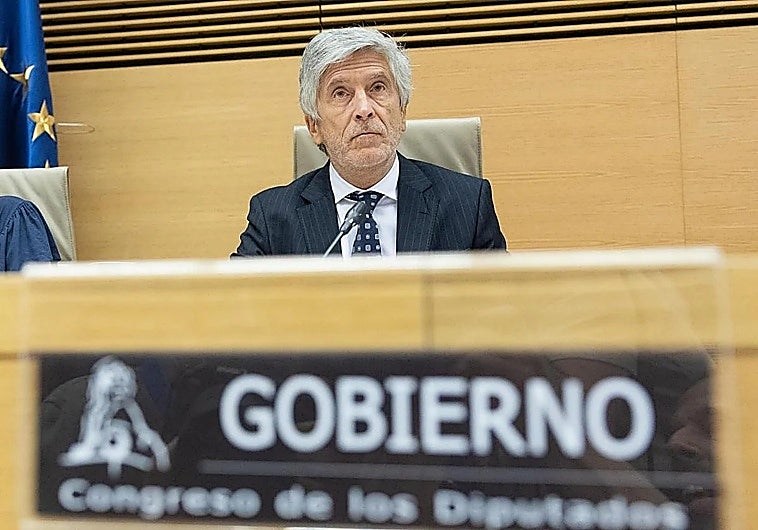
Minister Fernando Grande-Marlaska has asked the Director-General of the Police, Francisco Pardo, to verify the accuracy of the document, clarifying when this information first became available and why they did not immediately forward it to Consejo de Seguridad Nacional, especially following the declaration of a situation of national security interest on 25 August.
The analysis rules out the possibility that the migration crisis is the result of a spontaneous mobilisation organised by criminal gangs or calls on social media. The CENIF concludes that the migration movement was used as a cover for an operation Morocco had designed and coordinated in advance.
The investigation, based on extensive photographic evidence and a pre-event risk assessment, indicates that members of the Moroccan Gendarmerie guided and channelled thousands of people in Castillejos towards strategic crossing points such as the El Tarajal breakwater.
Related story

In his letter to Francisco Pardo, Marlaska stresses the significance of the matter, describing the information as "essential for the government to be able to take the appropriate decisions in the exercise of its constitutional functions of directing domestic and foreign policy and defending the state".
Institutional and legal fallout in Madrid
-
The revelation has triggered a major political storm due to a complete breakdown in communication within the state security forces:
-
Withheld intelligence: Minister Marlaska was left unaware of the document. He only learned of its existence after the police forwarded it directly to the National High Court (Audiencia Nacional) and public prosecutors.
-
National security failure: Marlaska has demanded to know exactly when the police obtained this data. He questions why it was not shared before 25 August, the day the government officially declared the situation to be of "national security interest."
-
Clash with foreign policy: The report's findings directly contradict the stance presented in the Spanish Parliament by Prime Minister Pedro Sánchez's administration, which has consistently praised migration cooperation with Morocco.
The Interior Ministry states that a report of this scope should have been made available immediately to Consejo and the unified command headed by Minister of Territorial Policy Ángel Víctor Torres.
The lack of internal communication and the substance of the report now open up a new front for the government, which will have to account for the actions of the Moroccan security forces and the protection of the EU's southern border.
Analysts directly link this operation to Morocco's long-standing sovereignty claim over Ceuta and Melilla, describing it as an offensive counter-intelligence manoeuvre.
The document identifies the deliberate aim of calling into question the Spanish security forces' ability to anticipate threats and, in particular, the effectiveness of the CNI national intelligence centre.
As evidence of Rabat's tight control over such movements, the police have highlighted that Morocco had completely thwarted and neutralised the subsequent rally on 15 August, in contrast to the free passage on 30 and 31 July.
The police have forwarded the documentation to the court, which will determine whether there was evidence of an offence against the independence of the state. The CENIF's findings provide legal grounds for the investigation to be taken further, while casting doubt on the official narrative and the government's foreign policy.
![[]](http://static.vocstatic.com/voc26/latest/assets/images/favicon/surinenglish/apple-touch-icon-57x57.png)