
Economy
Spanish government report recommends raising minimum wage by 4.9% to 1,281 euros
The advisory committee is proposing a 60-euro-a-month increase to offset inflation, but there is no consensus on this proposal and the UGT union is calling for it to be amended before endorsement


Madrid
The Spanish government has set itself the target of approving the new increase in the minimum wage for 2027 before the elections. Second Deputy Prime ... Minister Yolanda Díaz has set a deadline to have the report containing their recommended increase ready before the November bank holiday weekend.
The accident in Urda has thrown the government's plans into disarray, but the Ministry of Labour already has in its possession an initial report advising that the minimum wage be raised by 4.9% to 1,281 euros gross per month, paid in 14 instalments, in order to fulfil two mandates: to maintain it at no less than 60% of the average net wage and to prevent it from losing purchasing power in the face of soaring inflation.
This, however, does not enjoy the consensus of all parties and the UGT trade union is calling for it to be amended before endorsement. The trade union takes issue with the statement in the document that, if the income tax deduction were adjusted, those on the national minimum wage would receive a net pay slightly above 60% of the average net wage in 2026. Unless that statement is amended, they will not support it, union sources have told Sur.
Related story
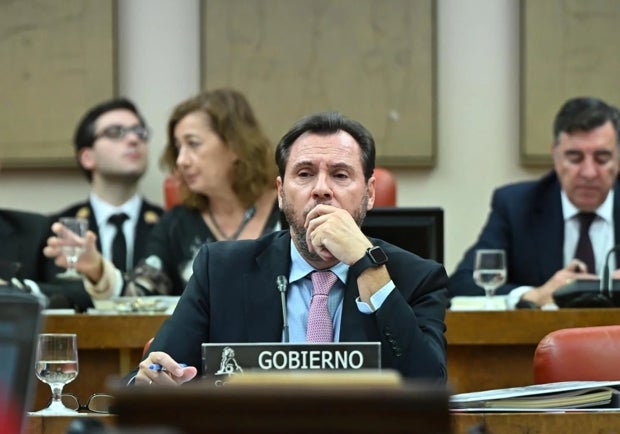
This initial proposal for a pay rise would represent an increase of 60 euros a month on the current 1,221 euros, bringing the gross annual salary to 17,934 euros, a rise of 840 euros, against a backdrop where year-on-year inflation stood at 4.9% in October.
Three scenarios
However, this is not the only proposal. The 45-page preliminary document sets out three scenarios depending on the objectives pursued and the tax treatment that ultimately applies to this income.
The main recommendation is based on the assumption that the minimum wage will continue to be effectively exempt from personal income tax, as has been the case in the last two financial years through a state tax relief scheme for the lowest earned incomes: a commitment both the current government and the PP, should it come to power, have made. On that basis, the experts consider a 4.9% increase necessary to offset the loss of purchasing power.
The committee proposes, however, a second option: limiting the increase to 2.7%, up to 1,254 euros per month paid in 14 instalments. This would be sufficient for the net wage of a person on the minimum wage to reach 60% of the estimated average net wage for 2026, the benchmark for experts. The calculation puts this target at 16,409 euros net per annum, equivalent to 1,172 euros per month in 14 instalments.
However, this alternative would not offset the rise in prices. That is why the report favours the 4.9% increase, which combines meeting the wage benchmark with maintaining purchasing power. The commission warns, however, that its calculations are based on the estimated average net wage for 2026, meaning there is a time lag: if wages rise again during 2027, the minimum wage could fall below 60% of the actual average wage for that year.
The third scenario introduces a significant change: what would happen if the minimum wage were to become subject to personal income tax and no tax relief were approved to offset that tax burden? In this scenario, which is unlikely, experts estimate that the minimum wage would need to be increased by 11%, to 1,356 euros gross per month paid in 14 instalments, to ensure that the worker would continue to receive the same net reference amount. The calculation is based on the case of a single person with no dependent children or parents and no disability and applies an average withholding rate of 7.03%, in addition to Social Security contributions.
Experts stress that there is still a lack of data to accurately measure compliance with the minimum wage and its effects on employment. They are therefore calling for improvements to the statistics and for information from the Social Security and the tax agency to be linked. The committee considers that the national minimum wage has helped reduce wage inequality, but points out that its impact on household poverty also depends on factors such as the number of people in work and family composition.
