
Housing crisis
Housing crisis comes to a head in Malaga with no real short term solution
Delays in social housing projects and the shortage of land available for development in the province paint a bleak picture
Jesús Hinojosa / SUR
The crisis caused by difficulties in accessing housing has worsened in recent years to such an extent - both in Malaga province and across the rest of Spain - that it has become a structural problem within society.
In recent weeks, Maricarmen’s eviction has put a face to a tragedy that is hitting young and old alike, and has sparked a public outcry demanding urgent measures to put a stop to this situation of collective failure, in which more and more people are unable to become independent and others find themselves on the streets because they cannot afford rents that have become unaffordable.
In the case of Malaga and its province, the situation is further exacerbated by the fact that this is an area where prices have continued to rise in recent years, reaching unprecedented levels.
Housing has become out of reach for many families who see no end in sight to this crisis, which has erupted in Malaga with remarkable intensity. The still very limited supply of homes, coupled with growing demand driven by the appeal of the Malaga region as a first or second home for people from outside the area, offers no short-term solution and is forcing the authorities to think creatively to find ways to turn this worrying situation around fast.
The shortage of new housing in the province of Malaga is clear. In fact, according to the national statistics institute, some 55,494 new households were formed in or moved to the province of Malaga between 2021 and 2025 but only 29,119 new homes were built.
The situation is very difficult for those hoping for subsidised social housing (VPO) as demand far outweighs supply.
Another problem is the shortage of land available to build new homes and the low capacity to generate more electricity for new developments.
Victims of the current housing crisis are varied.
A 'vulnerable' family
Cristina Bermúdez is a single mother with two children and has been looking all over Malaga for a two-bedroom flat to rent.
She has another complication added to the high prices: she is classed as a vulnerable family and as agents told her she “didn’t fit the profile landlords were looking for”. She is a victim of domestic abuse and her eldest child has autism giving him a 48% disability.
Her housing problems started when the flat she was renting was going to be sold and her contract ended. She had been paying 450 euros a month and now she was being asked for 900, 1,000 or 1,200 euros. Her salary was 1,400 euros and her son has a benefit of 450 euros, much of which goes towards therapy. She went to live “provisionally” with her mother in Lucena (Cordoba). That was two years ago. She has entered five draws for social housing with no luck, but she still clings to her hopes to continue bringing her children up in Malaga soon.
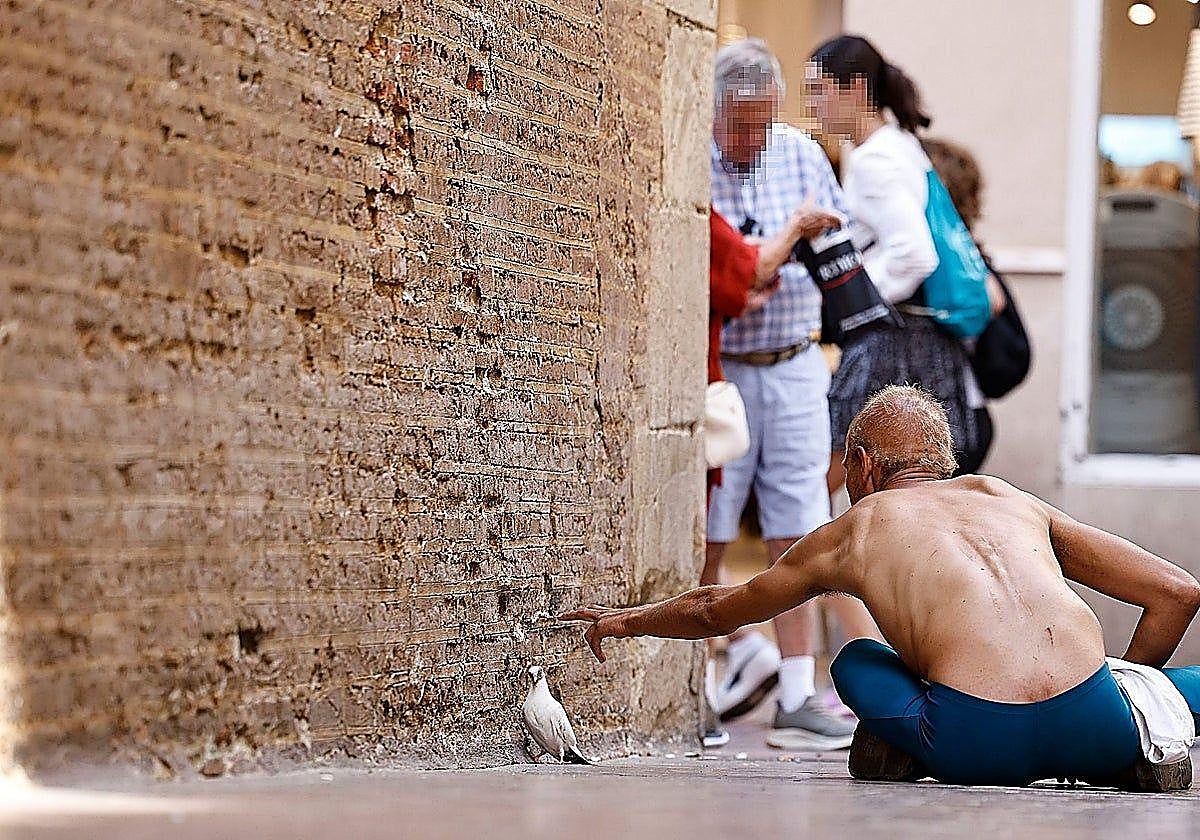
Left on the street
Teresa Tirado, 71, a twice cancer sufferer, suddenly found herself sleeping in doorways and on benches. “When I ended up on the street I wanted to die,” she says from the makeshift campsite in the Plaza de la Constitución.
Before she had lived in Malaga paying 400 euros a month in rent, but her landlord decided to put it up to 1,200. “I told him I couldn’t pay; I only earned 900 euros,” she recalls. In June she was evicted and spent some time in lodgings thanks to help from the Cruz Roja and the support of the Un Techo por Derecho campaign group.
Then in August she started sleeping rough, “wherever I can find to sleep five or six hours”. She was among the first to join the housing crisis protest camp in the Plaza de la Constitución.
“I’m not asking anyone to give me anything; I want to pay rent at a price I can afford.”
Teresa is now retired but has worked all her life, even being secretary of the Malaga press association. Her situation could happen to anyone, she explains.
However, her plight took a turn for the better on Friday when she was awarded a second-occupation property, according to Malaga town hall. The property is a two-bedroom rented flat allocated through the FRES programme (Families at Risk of Social Exclusion), an initiative managed by the municipal housing institute. The monthly rent will be approximately 90 euros.
Related story
-
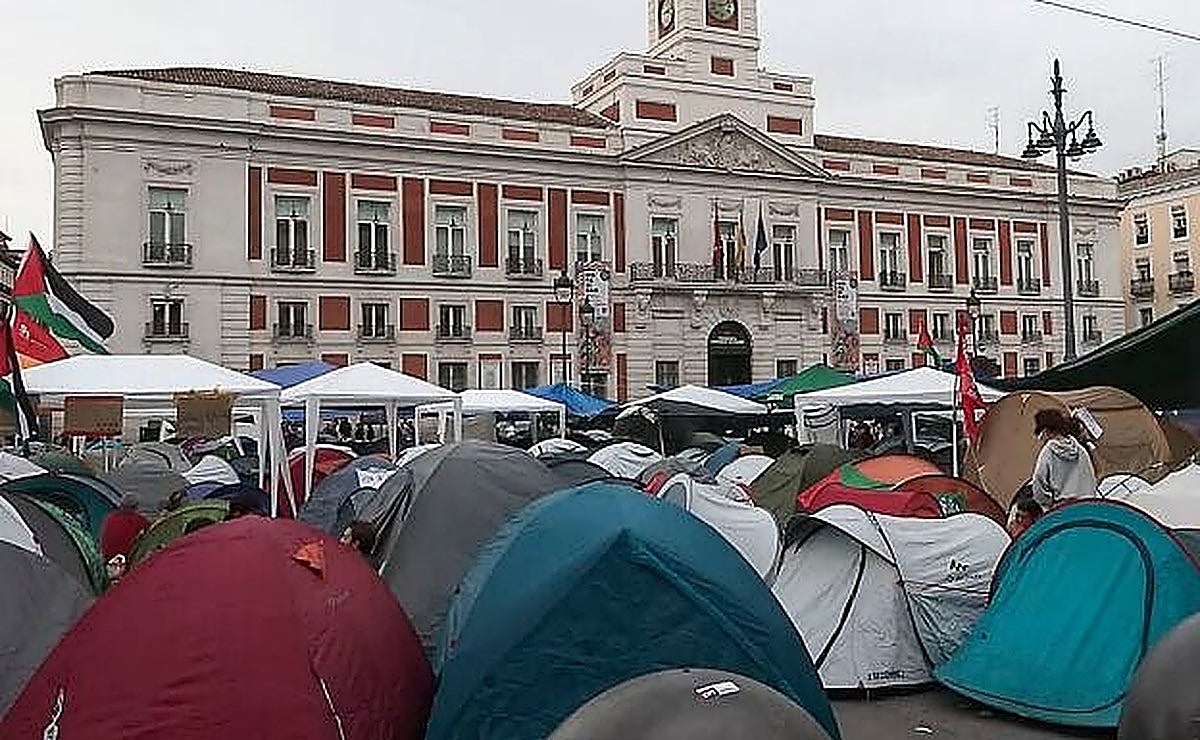
Housing crisis Spain 2026
Pedro Marín
Forced to leave the area
Francisco Javier Rodríguez Barranco, 65, is well known in Malaga cultural circles. He is an award-winning writer and owns a small publishing company Azimut. Nearly two years ago he had to move out of his apartment as his landlord decided to end the rental contract. He had four months to find somewhere else but after searching in Malaga and its surrounding area he ended up in Algeciras.
A former pilot in the Spanish air force, he is a doctor in Hispanic philology and was honorary lecturer at Malaga University as well as a publisher.
“I was going through a tough time financially and had to leave Malaga because I couldn’t find anything here. I had lived half my life in Malaga. It’s unfair,” he concludes.
The landlord
José Antonio Pinto, of Torremolinos, was renting out his flat for a reasonable amount but now his tenants have not paid for three and a half years and his two daughters, 33 and 28, are still living at home.
It is not all investment funds; half of rented homes in Malaga province belong to individual owners facing two problems: tenants turning into squatters and the slow judicial system to get them out.
He and his siblings rented out their mother’s flat out of necessity. In 2021 they asked for 650 euros. “Below the market price but we didn’t want to speculate,” he says. After two years the tenants split up and stopped paying. Now he is stuck in the judicial system to regain the property.
![[]](http://static.vocstatic.com/voc26/latest/assets/images/favicon/surinenglish/apple-touch-icon-57x57.png)