
Climate change
The sea around Spain getting warmer leads to more flooding
Both the Atlantic and Mediterranean are experiencing significant rises in temperature every year, which will lead to torrential rain and flooding

Madrid
The sea is warming in northern and southern Spain, which would ultimately lead to more unpredictable flooding.
A study analysing 40 years of temperature measurements ... shows that the Atlantic experienced an overall warming of 0.98C and the Mediterranean warmed by 1.43C.
In addition, the summer season is starting earlier and becoming more intense in both areas over this period.
Related story
"Annual temperature anomalies for the 40-year series show a clear upward trend over the last two decades, both in the Mediterranean basins and in the Atlantic, of 0.025C per year, and in the Mediterranean, with 0.037C per year," the study says.
"In both areas, sea warming has intensified particularly over the last ten years, with the greatest anomalies recorded in 2023 in the Atlantic (+1.18C) and in 2022 and 2023 in the Mediterranean (+1.21C), compared with the annual average for the series."
This week, the Cantabrian Sea reached 25C and the Mediterranean 33C.
What is known as the Mediterranean arc, which encompasses not only the Mediterranean coastline but the entire mainland Spain, including the north, is one of the areas most affected by global warming.
What are the consequences? "The fact that sea temperatures are rising so much affects biodiversity and accelerates climatic processes. For example, increased water evaporation leads to more frequent stormy spells or more intense storms," member of Fundación Nueva Cultura del Agua Rubén Ladreda says.
"We can expect extreme weather events to occur more frequently and with greater intensity. This will have consequences, to which we must adapt."
The explanation lies in the water cycle. "It begins with the evaporation of liquid water from the Earth's surface, mainly the sea, which rises into the atmosphere and condenses as the temperature drops. It forms clouds, with a flow of water droplets which, when the accumulation is significant, returns to the Earth's surface, either in solid or liquid form," Ladreda states.
"As this process intensifies with rising temperatures, which lead to greater evaporation, many more stormy episodes and extreme weather events occur, which can cause precipitation to be more sudden. We do not know when or where they might occur, but we do know that they will happen. That is our new climatic reality," Ladreda says.
The main problem is in areas of large-scale construction and urban development. "We have encroached on flood-prone areas that had historically not been settled," Ladreda says.
"The earliest civilisations settled alongside the great rivers because the floods fertilised the riverbanks. For millennia, that fertile land was used for agricultural production, but human settlements did not occupy the floodplains. Over time, the development of new technologies and the taming of the land have led us to occupy these areas and to alter the landscape in a certain way, believing that all risks had been eliminated. Yet this is not the case when faced with extreme weather events."
Mismanagement
The northern seas showed record-breaking anomalies in June and October 2023, while the southern seas exhibited unprecedented patterns between May and November 2022, with temperatures approaching 30C.
"The waters surrounding the Iberian Peninsula are warming 67 per cent faster than the global average and have set several records during 2026 at buoys in the Cantabrian Sea, the Atlantic and the Mediterranean. This is the case with the Sa Dragonera buoy (Mallorca), which last week exceeded 33C for the first time," Greenpeace warns.
Another impact of ocean warming is the weakening of sea breezes, which have decreased by 17 per cent and even 25 per cent in coastal cities.
There is less thermal cooling, particularly during heatwaves and air quality deteriorates, impacting rainfall patterns , "particularly in deep summer convection, which is responsible for severe storms".
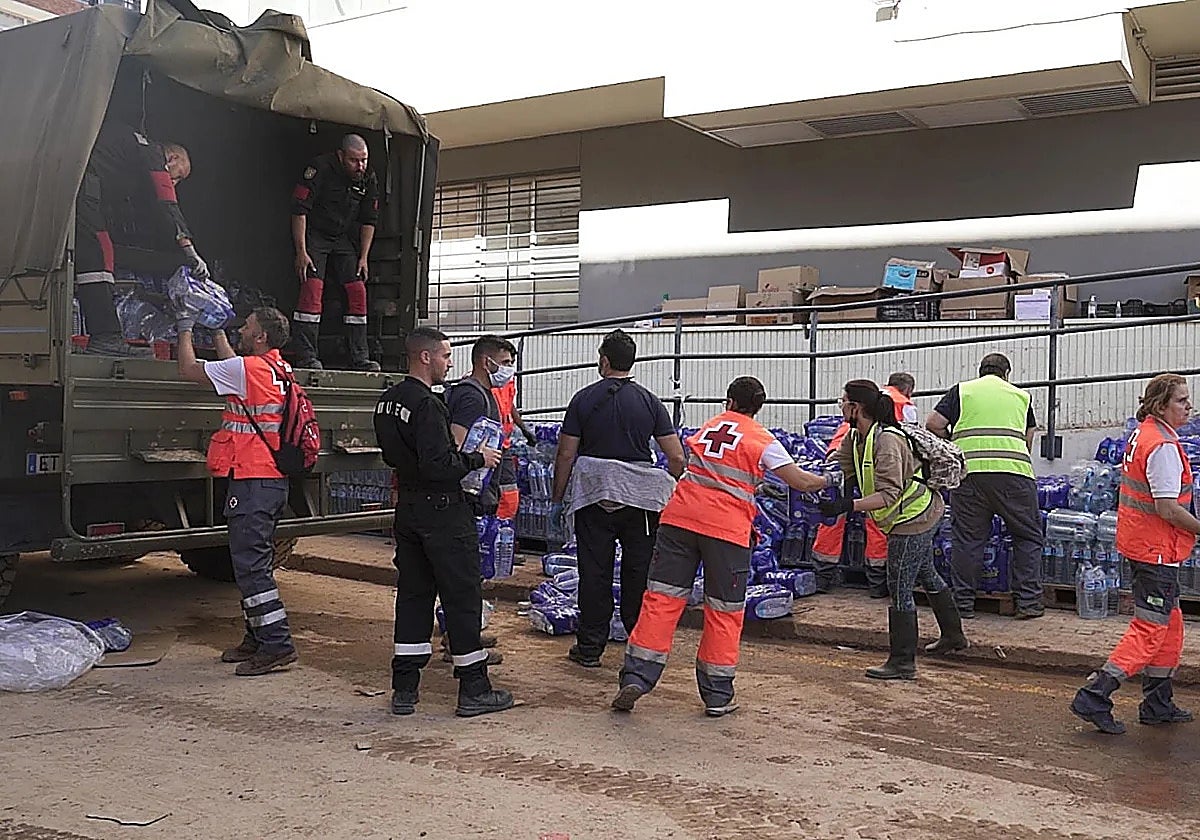
"Firstly, as seen with the dana over Valencia, it can affect people's lives, which is the most serious consequence, and cause significant economic damage in urban centres, industrial, agricultural and leisure areas," Ladreda continues.
"All this begins with the warming of the waters, mainly the seas, but it is also due to poor land-use management, such as when flooding is caused by rivers. It is exacerbated by climate change, but that is not the root cause, as was the case with the floods in Bilbao in the 1980s or at the Biescas campsite in the 1990s."
This approach should shift from a model of "dominating nature" to one of "adapting to nature", with measures such as avoiding living in flood-prone areas, restoring river basins and training the public on how to reduce risks.
"The consequences of climate change can affect people's health and food production. This is key. Agricultural productivity is clearly being undermined, which is leading to social consequences such as famines, migration and human catastrophes linked to economic factors," Ladreda concludes.
"The people who have contributed least to this climate crisis are the ones who are most vulnerable, because they lack the capacity to adapt."
![[]](http://static.vocstatic.com/voc26/latest/assets/images/favicon/surinenglish/apple-touch-icon-57x57.png)